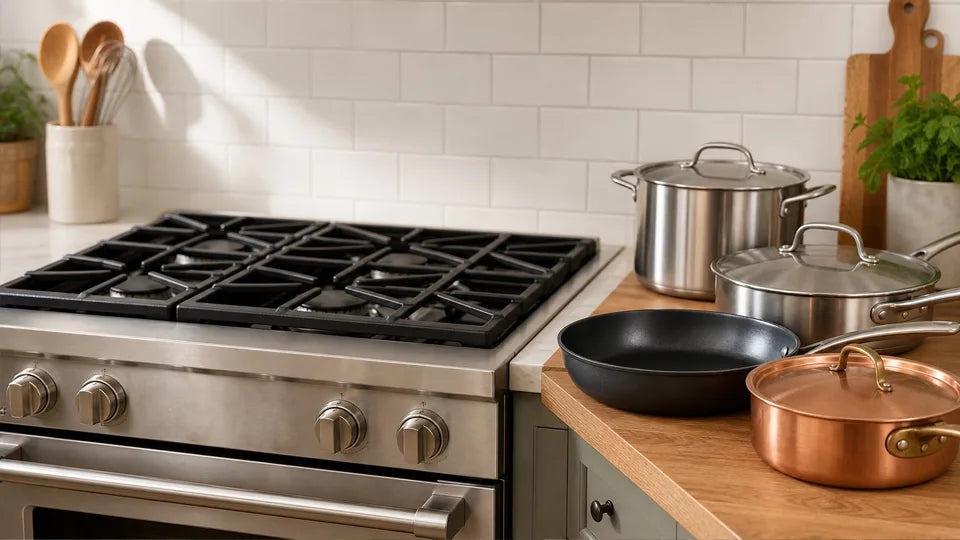
How to Choose Pots and Pans for a Gas Stove
The best pots and pans for gas stove cooking distribute concentrated flame heat, sit securely on the grates, and respond predictably to burner changes. A useful set should also match your burner sizes so the flame stays under the base, not up the sides or near the handles.
Gas gives you visible, immediate control, but the flame does not heat the pan evenly across the entire base. Construction, thickness, shape, and burner adjustment therefore matter more than a material label alone.
How Does a Gas Flame Heat Cookware?
A gas burner transfers energy beneath the vessel. Because the flame forms separate jets or a ring instead of one continuous surface, the base may receive more energy in some zones than others.
| Flame Behavior | Likely Effect | Useful Response |
|---|---|---|
| Compact flame ring | Concentrates heat near the center | Use a smaller pan or lower output |
| Broad flame pattern | Covers more of a wide base | Center a compatible wider pan |
| Flame beyond the rim | Heats walls and nearby handles | Reduce the burner immediately |
A larger flame is not more effective if much of its heat misses the bottom of the pan.
Flames Concentrate Heat Near the Base
Flames strike the bottom first, so the base must spread heat toward cooler areas. Thin or poorly conductive construction may produce a hot ring that mirrors the burner pattern.
Wide Flames Can Heat the Walls
A flame beyond the base can heat sidewalls, handles, and finishes while wasting fuel.
Burner Output Changes Heating Speed
Higher burner output can heat faster, but it cannot fix a poor match between pan size and flame coverage. Use this sequence:
- Center the empty, room-temperature pan on the grate.
- Begin with a low or moderate flame beneath the base.
- Add cooking fat or ingredients according to the recipe and pan-care directions.
- Adjust gradually after observing how quickly the entire base responds.
Which Construction Distributes Flame Heat Evenly?
Layered construction can spread concentrated flame heat across a broader surface. The best construction balances heat conductivity, durability, and responsiveness.
| Construction Feature | Main Contribution | Gas-Stove Relevance |
|---|---|---|
| Conductive aluminum core | Moves heat laterally | Reduces concentrated hot zones |
| Cladding through the walls | Extends distribution above the base | Supports sauces and liquid-rich dishes |
| Moderate, balanced thickness | Combines stability with response | Makes flame adjustments easier to judge |

Conductive Cores Reduce Concentrated Hot Spots
Aluminum conducts heat more readily than stainless steel, so it is often placed inside stainless construction. The University of Kentucky Cooperative Extension notes the same use of aluminum or copper to improve conductivity in its guide to cooking with heat.
Useful construction signs include:
- A conductive layer extending across the full base
- A base that remains flat and stable on the grate
- Walls suited to the liquid volume and cooking method
- Care instructions that clearly state appropriate burner settings
Clad Walls Spread Heat Beyond the Base
Full-wall cladding can distribute heat into the sides of a saucepan, sauté pan, or Dutch oven, helping reduce the temperature gap between the hot base and cooler sidewalls.
Balanced Thickness Improves Temperature Response
Very thin cookware may respond quickly yet develop hot zones or distort. Very heavy cookware changes temperature slowly. Balanced construction supports stability while remaining responsive.
How Should Pan Size Match the Burner?
The pan should sit securely and keep the flame beneath its base. Diameter, weight distribution, grate contact, and burner coverage all affect performance.

Small Pans Belong on Smaller Burners
A small saucepan on an oversized burner can expose its walls and handle area to flame. A smaller burner makes low-volume simmering easier to control.
Wide Pans Need Broader Flame Coverage
A wide frying pan or sauté pan benefits from broader coverage, but the flame should remain inside the base perimeter. Conductive construction helps when the burner ring heats a narrow central area.
Stable Bases Must Fit the Grates
The vessel should rest without rocking or tilting. This differs from pots and pans for glass top stove use, where smooth, flat contact is central; pots and pans for electric stove coils also need a stable base. For gas, check the following:
- Confirm that every support point contacts the pan securely.
- Keep the pan centered rather than balancing it near the grate edge.
- Use a rear burner when the vessel and handle arrangement make that safer.
- Avoid a pan whose base is too small for the grate opening.
Which Materials Work Well on Gas?
Many cookware materials can work well on gas, but material alone does not determine performance. Construction, cooking surface, weight, and care decide how a pan behaves.
| Material or Surface | Gas-Stove Strength | Main Consideration |
|---|---|---|
| Clad stainless steel | Durable structure with improved distribution | Bare steel needs oil and technique to reduce sticking |
| Ceramic nonstick over a conductive body | Easier release for delicate foods | Use low to medium or moderate flame |
| Cast iron | Strong heat retention | Heavy and slower to respond |
Clad Stainless Steel Distributes Direct Heat
Stainless steel contributes strength and corrosion resistance, while an inner layer spreads flame heat. Texas A&M AgriLife notes that stainless cookware benefits from an aluminum or copper core for this reason in its consumer cookware guide.
Bare stainless steel is not naturally nonstick. Frying generally requires controlled preheating, suitable oil, and time for browned food to release.
Nonstick Cookware Needs Moderate Flame
Nonstick performance depends on the coating, conductive body, and care. Like most coated cookware, ceramic nonstick performs best when used within the recommended heat range; low to medium heat is usually enough for everyday gas cooking.
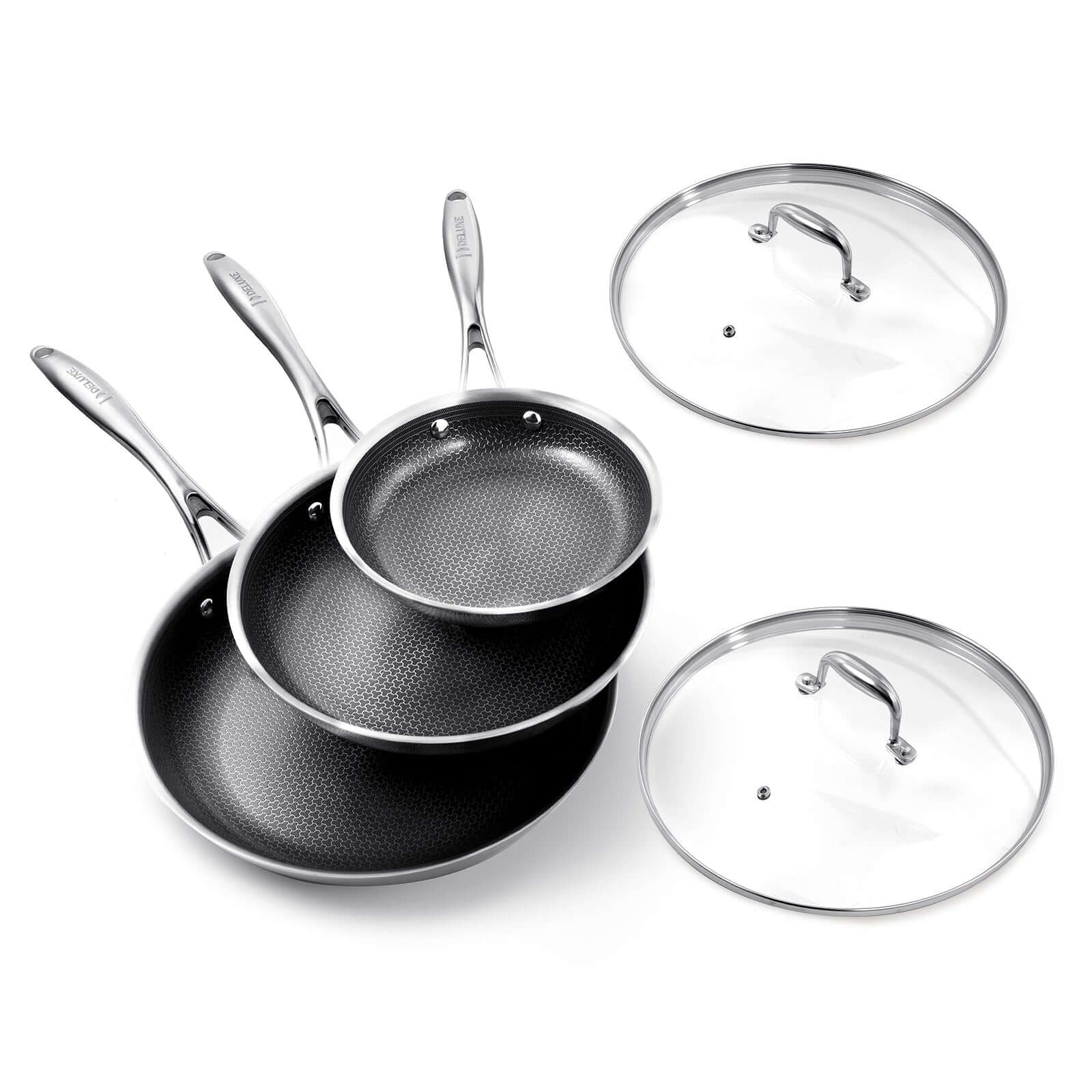
For shoppers considering hybrid cookware, our design combines raised 304 stainless steel with ceramic-coated cooking channels, supported by a reinforcing stainless-steel layer, an aluminum core, and a 430 magnetic stainless-steel base. In other words, it is a layered hybrid design rather than cookware made only from stainless steel or only from ceramic.
Cast Iron Retains Heat for Longer
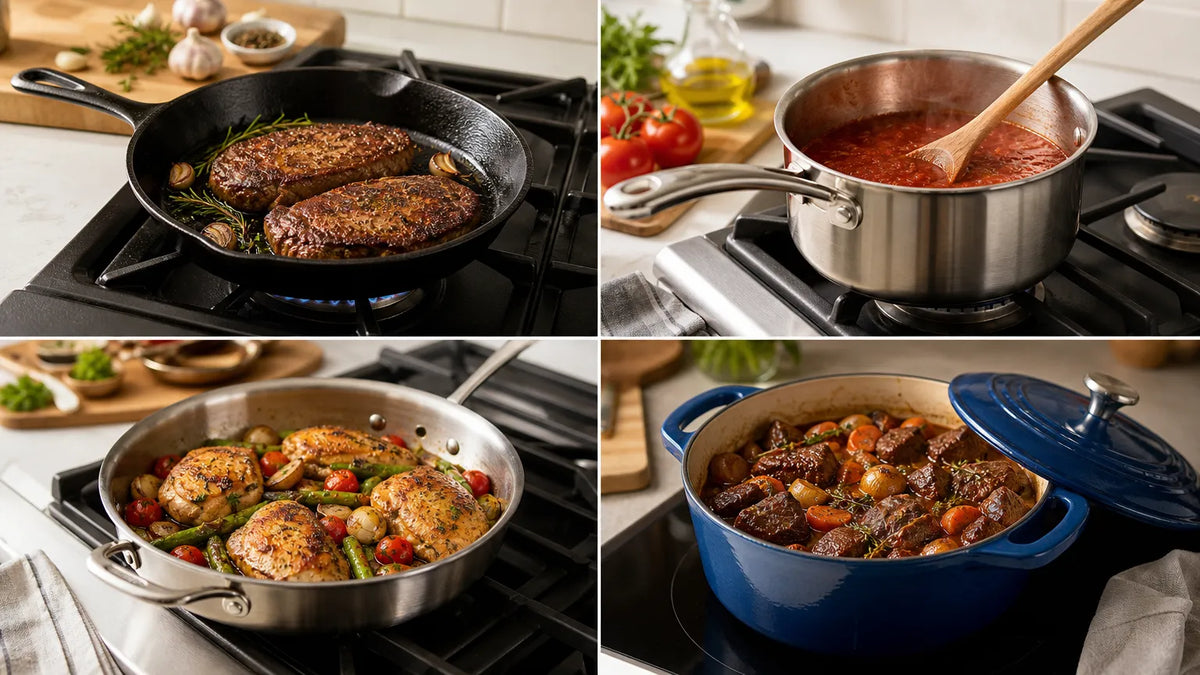
Cast iron warms slowly but holds substantial heat once hot. It can suit steady frying, baking, or braising, although its weight and slow response require deliberate burner changes.
What Should You Check About Handles?
Handle placement affects control and comfort. Secure attachment, manageable balance, and distance from nearby flames matter when a pan is full.

Long Handles Should Avoid Nearby Flames
Long handles should point away from the stove edge and should not extend above an active adjacent burner. The U.S. Fire Administration advises turning pot handles away from the edge to reduce the chance of a pan being knocked or pulled in its cooktop fire-safety guidance.
Secure Grips Improve Filled-Pan Control
An empty pan can feel different when full. Consider grip shape, hand clearance, balance, and whether a helper handle supports larger vessels.
Metal Handles May Become Hot
Metal handles can heat through conduction, nearby flames, or oven use. Hollow designs may reduce stovetop heat transfer, but use a dry oven mitt whenever temperature is uncertain.
How Can You Prevent Flame Damage?
To prevent flame damage, start with the right burner size, careful placement, and controlled preheating. Discoloration, scorched residue, and coating stress become more likely when flames travel up the walls or an empty pan heats too long.

Keep the Flame Beneath the Base
The visible flame should stay under the pan. This directs energy toward the cooking surface and limits avoidable heating of coatings and handles.
Avoid Prolonged Empty Preheating
An empty vessel can rise in temperature quickly, particularly over concentrated gas flames. Gentle, brief preheating followed by the appropriate oil or ingredients gives the cook more control and follows our use and care guidance for hybrid cookware.
Reduce Heat Before the Pan Overheats
Warning signs include smoking oil, darkening residue, or flames beyond the base. Lower the burner before the surface or exterior overheats.
Choose the Best Pots and Pans for Your Gas Stove
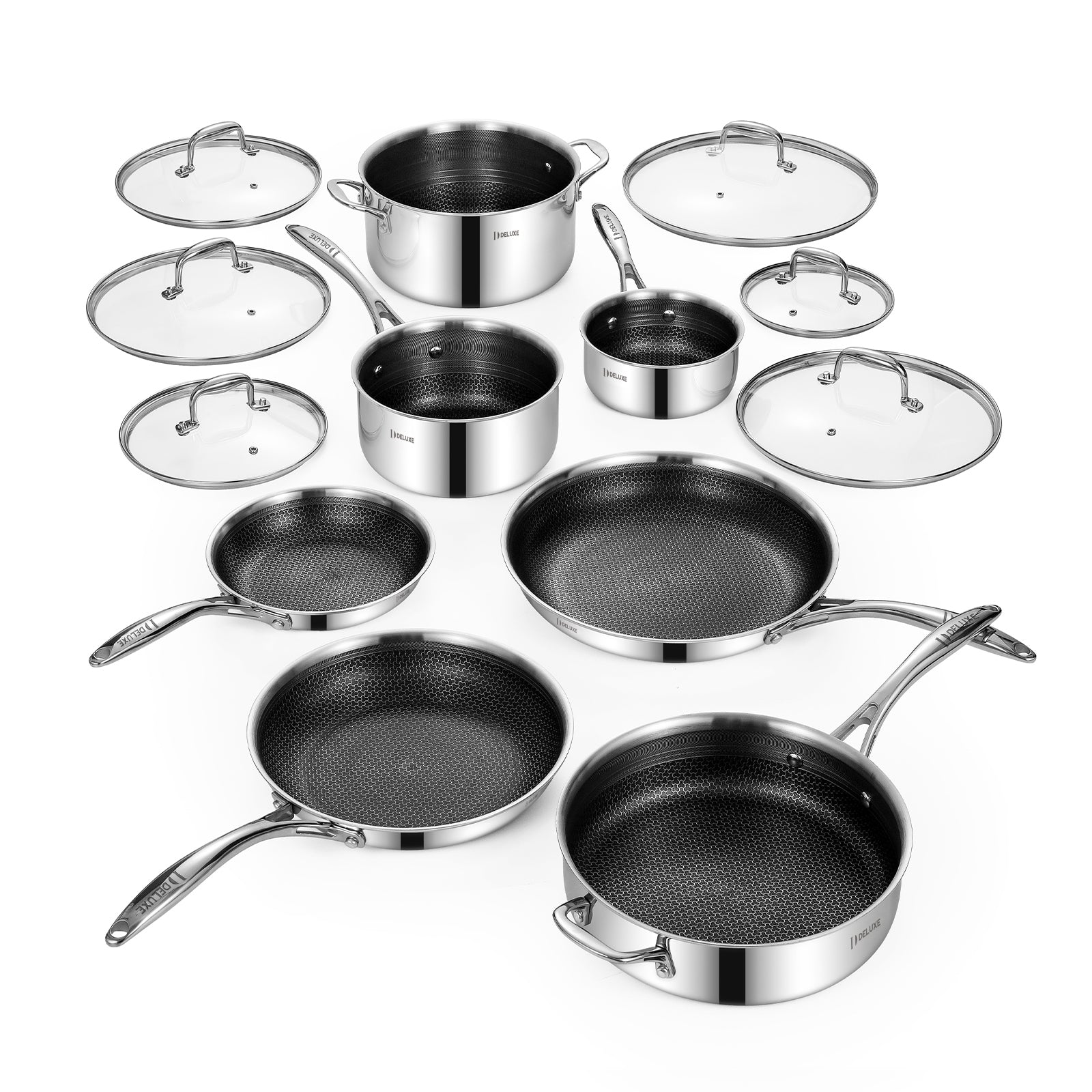
The best pots and pans set for gas stove use combines a stable base, conductive construction, manageable handles, and dimensions suited to frequent burners. Our 13-piece hybrid cookware set brings together frying pans, saucepans, a sauté pan, a Dutch oven, and matching lids. Review our cookware set collection and choose the pieces that fill real gaps in your kitchen.
Common Questions About Cookware on Gas Stoves
Q1. Can Gas Flames Discolor the Outside of a Pan?
Yes, gas flames can leave exterior discoloration. A removable dark film may be grease or combustion residue, while blue or rainbow-colored heat tint can behave differently. Use only cleaning methods approved for the exterior finish, since abrasive treatment may damage a coating.
Q2. Why Do Pans Develop Hot Spots on Gas Burners?
Usually, separate flame jets create a ring-shaped heating pattern. Uneven browning in the same positions can also indicate a misaligned burner cap or blocked port, so inspect and clean the appliance only as its manual directs. Persistent irregular flames may require qualified service.
Q3. Should Flames Touch the Sides of Cookware?
No, flames generally should not climb the sidewalls. Some burner manuals may allow the flame to approach the base edge, but the appliance and cookware instructions take priority. If the handle area heats unusually fast, stop and select a smaller burner or lower setting.
Q4. Are Thin Pans Better for Gas Stoves?
Not necessarily. A thin pan may suit quick water heating when it remains stable, but thick sauces and delicate foods expose unevenness more readily. Compare base construction and balance instead of judging quality from wall thickness alone.
Q5. Why Does Gas-Stove Cookware Develop Soot Marks?
Usually, soot indicates incomplete combustion or residue burning on the cookware exterior. A yellow or irregular flame may warrant cleaning or professional inspection of the burner according to the appliance manufacturer's guidance; the pan alone may not be the cause.