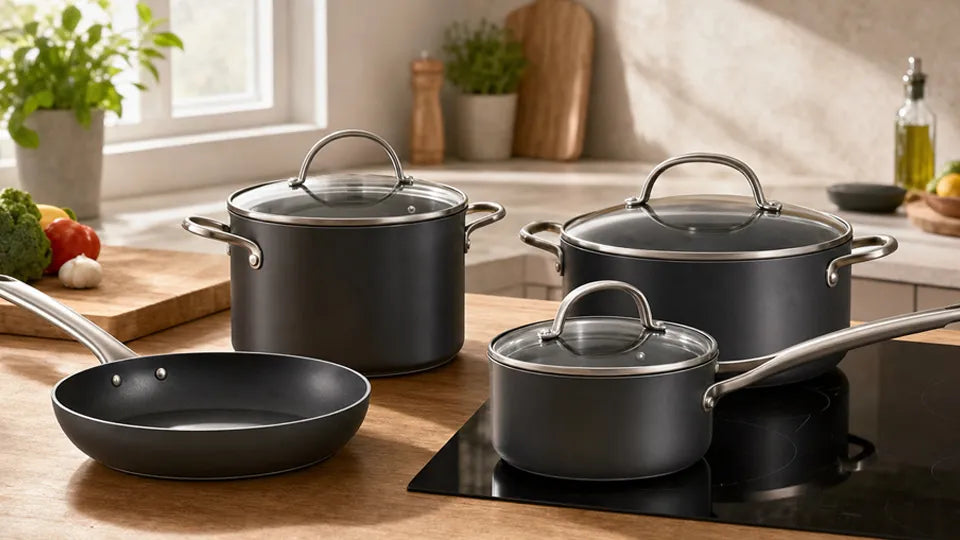
Which Induction Pots and Pans Does a Home Cook Actually Need?
Most home cooks need three or four well-chosen induction pots and pans, not every shape sold in a large bundle. A frying pan, saucepan, larger pot, and optional Dutch oven can cover everyday breakfasts, sauces, grains, pasta, soups, and one-pot dinners. The right mix depends on household size, recipes, storage, and whether each magnetic base matches the cooktop’s detection range. Start with meals and functions, then select sizes, materials, and sets instead of allowing an advertised piece count to make the decision.
Which Meals Should Guide Your Cookware Choices?
Your weekly meals provide a more useful buying list than a generic “essential cookware” chart. Review what you cooked during the last two weeks, note the vessel used for each dish, and identify repeated limitations such as crowding, boil-over, or an unused oversized pot. This turns cookware selection into a practical capacity decision.
Quick Meals Need Versatile Small Pieces
A medium frying pan can handle eggs, vegetables, sandwiches, and smaller portions of protein. A saucepan supports oatmeal, rice, reheating, and simple sauces. These pieces are easier to lift, wash, and store than oversized cookware when the food volume is modest.
Choose a base diameter that your cooktop can detect. The U.S. Department of Energy’s induction overview explains that induction uses an electromagnetic field and requires a flat, magnetic cookware base.
Family Dinners Require Greater Capacity
Larger households often benefit from a wide sauté pan or large pot because crowded food steams instead of browning, and pasta needs enough room for water and movement. Capacity should be judged by the food inside, not from the empty vessel’s appearance.
Before choosing the largest available size, check burner spacing, cabinet clearance, and lifting comfort. A filled pot can become difficult to drain safely even when it fits the element.
Specialty Dishes May Justify Extra Cookware
A specialty piece earns storage space when it solves a repeated cooking problem. Examples include a Dutch oven for frequent braises, a steamer insert for regular steaming, or a second frying pan when two breakfast components must cook at once.
Avoid buying a specialized shape for a dish prepared only once or twice a year. A versatile core vessel may deliver the same result with a minor technique adjustment.

Which Induction Pieces Form a Useful Core?
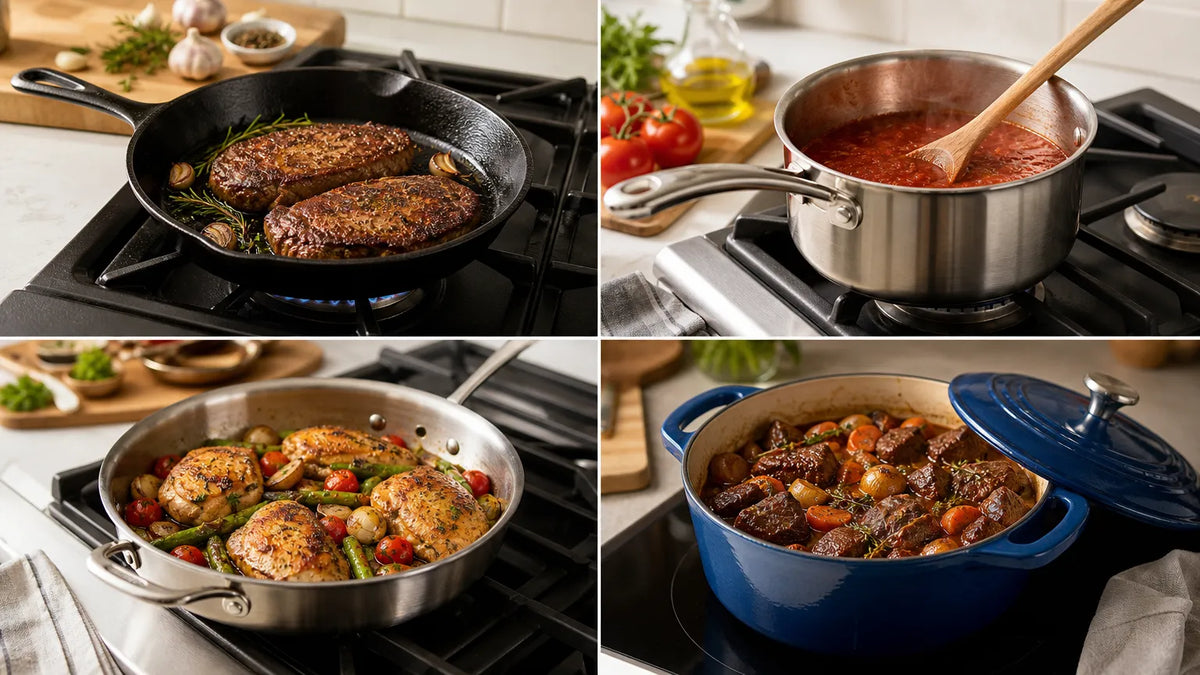
A practical core includes different functions rather than several versions of the same pan. Begin with a frying pan and saucepan, add a larger pot for volume, and consider a Dutch oven if slow cooking or oven-to-table meals are common. Every item still needs a flat magnetic base and model-specific induction compatibility confirmation.
A Frying Pan Handles Everyday Foods
A frying pan has low, sloped sides that make turning, tossing, and evaporation easier. It works for eggs, vegetables, cutlets, and many one-pan portions, though the exact surface should match the food and heat level.
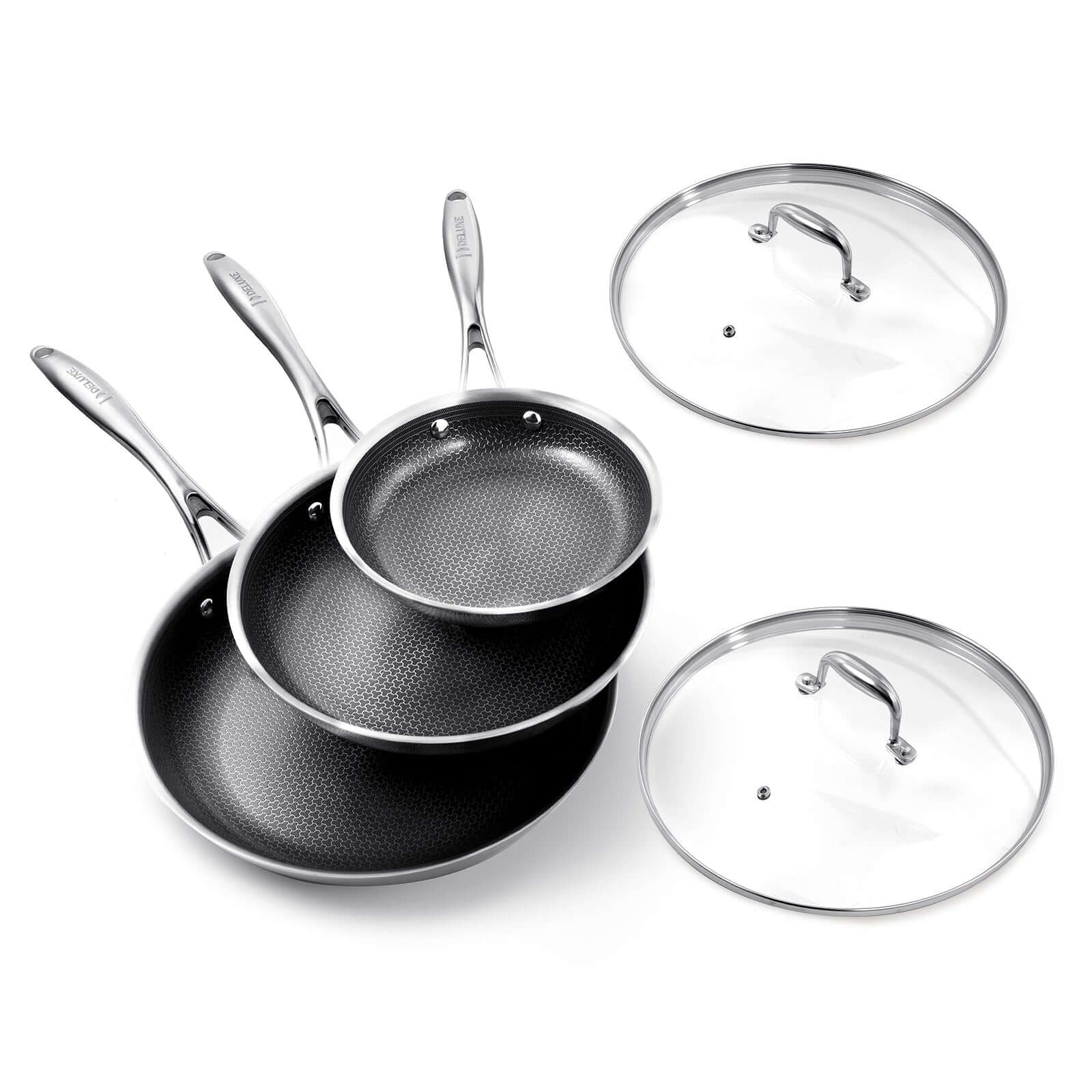
Bare stainless steel supports fond and pan sauces but requires preheating and oil control. A verified nonstick surface can simplify delicate foods when maintained according to its care guide.
A Saucepan Covers Smaller Liquid Dishes
A saucepan combines taller sides with a long handle for sauces, grains, oatmeal, and reheating. Choose a capacity that leaves room above bubbling food because filling to the rim increases spill and boil-over risk.
A lid can help control evaporation, but confirm that it is included. Do not assume every saucepan includes the same lid material, knob limit, or oven rating as the pan body.
A Large Pot Manages Pasta and Soups
A larger pot gives pasta, stock, chili, and soup sufficient volume. The best size depends on portions, freezer preparation, and how much water you can comfortably carry and drain.
Use stable handles and avoid overfilling. For foods that require a safe internal temperature, the USDA minimum temperature chart advises measuring with a food thermometer rather than relying only on appearance.
A Dutch Oven Supports One-Pot Meals
A Dutch oven’s deeper body and lid suit braising, soup, beans, bread, and oven finishing when the exact model permits those uses. Heavier construction can retain heat, but material, weight, and coating vary widely.
Confirm the base diameter, total filled weight, lid components, and oven restrictions. A magnetic base alone does not prove that every part can enter the oven.

What Sizes Match Your Household?
Size should reflect typical portions plus enough working space for stirring, evaporation, and safe handling. Household count is a starting point rather than a fixed formula because meal prep, leftovers, and entertaining can change volume. Measure your existing useful cookware before replacing it.
Small Pieces Suit One or Two People
Smaller pans reduce unused surface area and are easy to clean after modest portions. They can also be better detected on smaller zones when the base meets the appliance minimum.
Do not choose so small that ingredients stack and steam. If you regularly cook several portions for lunch, a medium vessel may be more efficient than repeating batches.
Medium Pieces Cover Most Family Meals
Medium frying pans, saucepans, and sauté pans often balance capacity with manageable weight. They can handle multiple servings without dominating the cooktop or sink.
Check the exterior base rather than the rim diameter. Induction detection and heating occur through the magnetic area closest to the element.
Large Pieces Support Guests and Meal Prep
Large pots and wide pans can support entertaining, batch cooking, and freezer meals. They require enough burner coverage and storage, and their loaded weight may call for two secure handles.
If a large base exceeds one zone, use a bridge or flexible-zone function only when the cooktop manual allows it. Never assume two independent elements can safely be combined.
How Do Similar Pots and Pans Differ?
Similar-looking vessels differ mainly in side shape, capacity, handle design, evaporation, and heat retention. Understanding these functional differences prevents duplication and helps you choose a smaller, more coherent collection.
Sauté Pans Hold More Than Frying Pans
Straight sides let a sauté pan hold more liquid than a frying pan of a similar base diameter. A lid and helper handle can make it useful for shallow braises, covered cooking, and larger one-pan meals.
The tradeoff is less convenient tossing and slightly slower evaporation. Choose it because you need capacity and containment, not simply because it looks deeper.
Stockpots Offer More Capacity Than Saucepans
A stockpot prioritizes volume and usually uses two short handles. A saucepan is smaller and easier to control with one long handle, making it more practical for sauces and side dishes.
A small household does not automatically need a stockpot. A medium Dutch oven or larger saucepan may cover occasional pasta and soup if the capacity is adequate.
Heavy Dutch Ovens Can Retain Heat Well
Heavy Dutch ovens, particularly cast-iron models, can resist rapid temperature changes better than lightweight cookware. Heat retention still depends on the material, wall thickness, total mass, and construction of the exact vessel. “Dutch oven” describes a form rather than one universal material, so compare cast iron, enameled, stainless, and hybrid models separately.
For braising, liquid commonly reaches only partway up the food rather than fully submerging it. Full submersion is closer to stewing, although recipes vary.
Where Does Nonstick Cookware Add Value?
Nonstick cookware adds the most value where easy release and cleanup matter, while bare stainless steel remains useful for fond, browning, and pan sauces. Many kitchens benefit from both instead of asking one surface to perform every task. Care instructions should decide heat, utensils, washing, and oil use.
Delicate Foods Benefit From Easier Release
Eggs, pancakes, and tender fish can be easier to turn on a well-maintained coated surface. Use a thin coating or small amount of suitable oil when recommended rather than assuming the pan requires none.
Keep heat within the maker’s normal guidance. Prolonged excessive heat can shorten the life of a ceramic nonstick coating.

Quick Meals Benefit From Easier Cleanup
A coated pan can reduce residue during fast breakfasts or weeknight cooking. Allow cookware to cool before washing, since sudden temperature changes may stress the body or coating.
Use the cleaning tools permitted by the manufacturer. Even when a product is labeled dishwasher safe, hand washing may be recommended to preserve coating performance.
Browning Tasks May Favor Stainless Steel
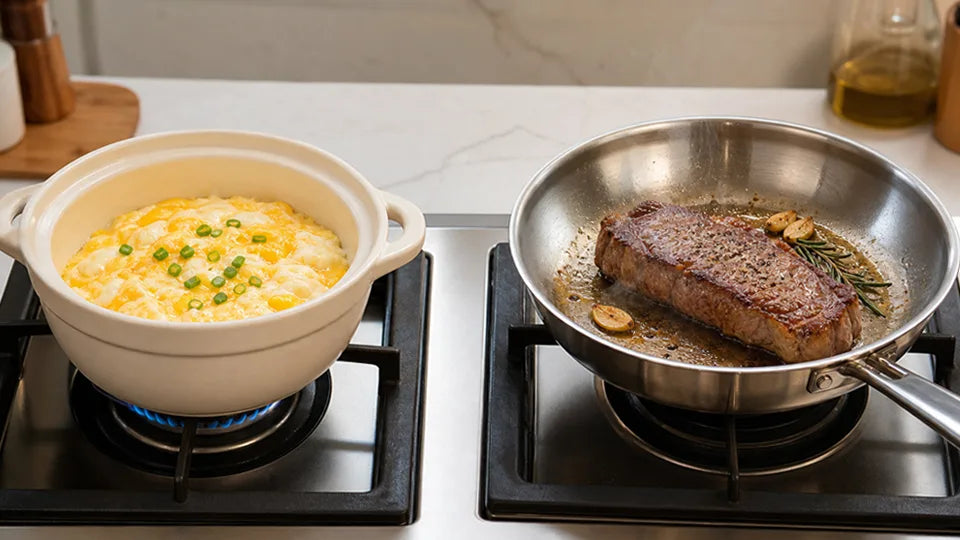
Bare stainless steel allows deliberate fond development and deglazing. It requires more technique because the surface is not naturally nonstick, but it gives the cook direct control over browning.
Color is not a reliable food-safety test. The USDA food thermometer guidance recommends using a food thermometer, generally checking the thickest part of meat, poultry, or fish while following food-specific placement instructions.
How Can You Avoid Buying Too Many Pieces?
Avoid excess by assigning one regular job to every vessel before purchase. Compare actual vessels, eliminate duplicate capacities, and delay specialty cookware until a repeated need appears. This method works for sets and individual purchases.
A short cabinet audit can keep the decision focused:
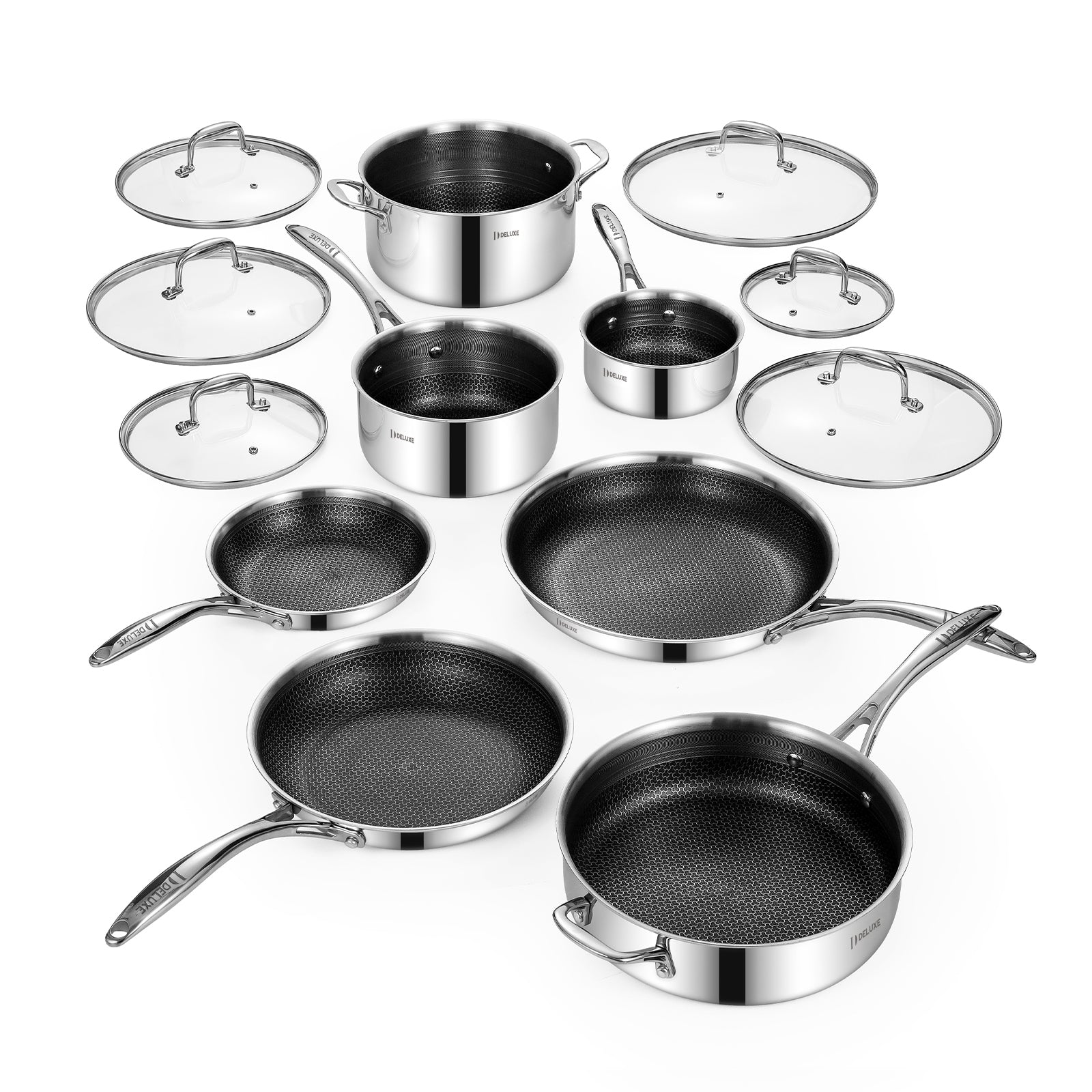
- Count cooking vessels. Lids and accessories may contribute to an advertised piece count, so the useful comparison is the number of frying pans, saucepans, sauté pans, and larger pots.
- Assign one regular function to each piece. Two pans can be useful when they support simultaneous cooking or different surfaces, but nearly identical sizes may create unnecessary duplication.
- Record the missing capability. A specialty piece is easier to justify when an existing vessel repeatedly lacks the required depth, capacity, shape, or heat retention.
Our 13-piece hybrid cookware set combines cooking vessels and matching lids, so its current contents are best compared with the cookware already in the cabinet. Existing pieces can remain in service when they are flat, stable, compatible, and still perform their jobs safely. This approach keeps storage and budget available for genuine gaps or future replacement needs.

Build Your Induction Pots and Pans Collection
Use your weekly meals and current cookware gaps to decide which pieces deserve space in your kitchen. If you prefer coordinated hybrid construction, compare the verified contents of our cookware sets with your current inventory. A useful collection is measured by regular use, compatible bases, manageable filled weight, and correct care, not by the number printed on the box.
FAQs About Induction Pots and Pans
Q1. Can You Use Two Induction Pans at the Same Time?
Usually, yes, if both bases fit their cooking zones without crowding the controls or handles. Available power may be shared between zones on some cooktops, so check the appliance manual.
Q2. How Can You Test Existing Cookware for Induction Compatibility?
A simple magnet test provides an initial check: the magnet should stick firmly to the flat exterior base. The final confirmation should come from the cookware label and cooktop manual because some appliances also require a minimum magnetic base diameter.
Q3. How Should You Store Lids From an Induction Cookware Set?
Store lids vertically in a rack or separately from coated cooking surfaces when possible. Avoid placing heavy lids directly on a coating without protection.
Q4. Can You Mix Different Cookware Brands on One Induction Cooktop?
Yes. The cookware does not need to come from one brand, but every piece must meet the cooktop’s magnetic, dimensional, and placement requirements. Follow the individual care instructions for each surface and construction.
Q5. Do Induction Pots and Pans Require Special Utensils?
Not because of induction itself. Utensil choice depends on the cooking surface, so a tool suitable for bare stainless steel may not be appropriate for a coated pan. Follow the cookware maker’s instructions to avoid unnecessary surface damage.