What Is Hybrid Cookware? Pros, Cons, and Who Should Buy It
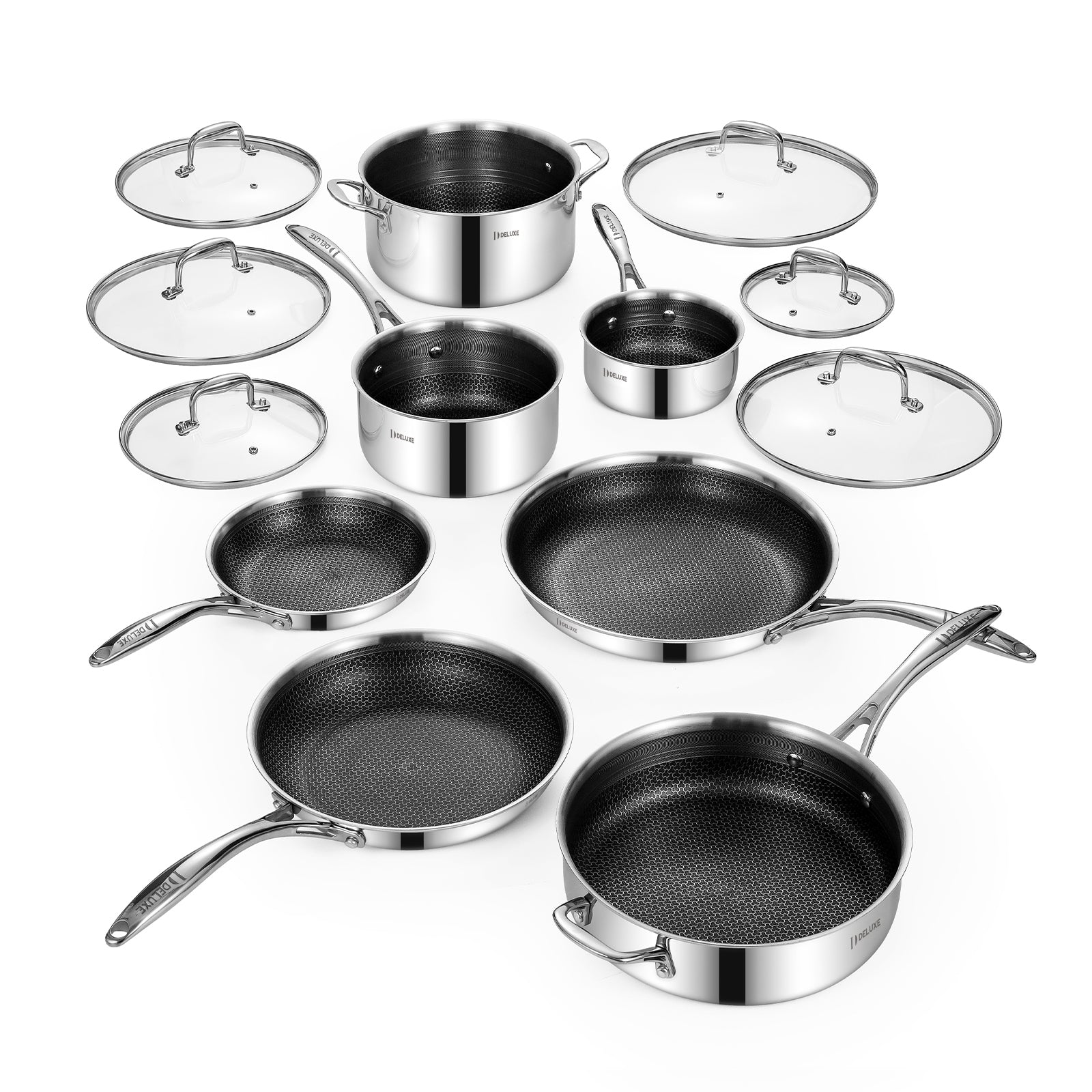
Hybrid cookware combines two or more cooking-surface technologies, typically stainless steel with a nonstick or ceramic cooking surface. The goal is to provide home cooks with effortless food release compared to bare stainless steel, superior durability over traditional nonstick pans, and versatile performance for everyday frying, searing, and sautéing.
If you are tired of food sticking to traditional steel pans but want to avoid replacing scratched nonstick skillets every few seasons, hybrid cookware serves as an ideal middle ground.
This comprehensive guide explores what hybrid cookware is, how its multi-layer construction works, its advantages and limitations, and whether it deserves a spot in your cookware set.
What Is Hybrid Cookware?
Hybrid cookware refers to cookware engineered to combine the strengths of different cooking materials into a single vessel.
Most hybrid pans fall into one of several engineering designs:
- Stainless steel structural exterior with an integrated nonstick cooking surface
- Raised stainless steel geometric matrix over a recessed nonstick or ceramic layer
- Hybrid carbon-steel designs offering natural patina release with lighter handling
- Multi-clad constructions bonding stainless steel, aluminum, and ceramic compounds
The primary advantage is clear: enhanced searing power compared to pure nonstick, smoother food release than raw steel, and significantly better scratch resistance than standard nonstick skillets.
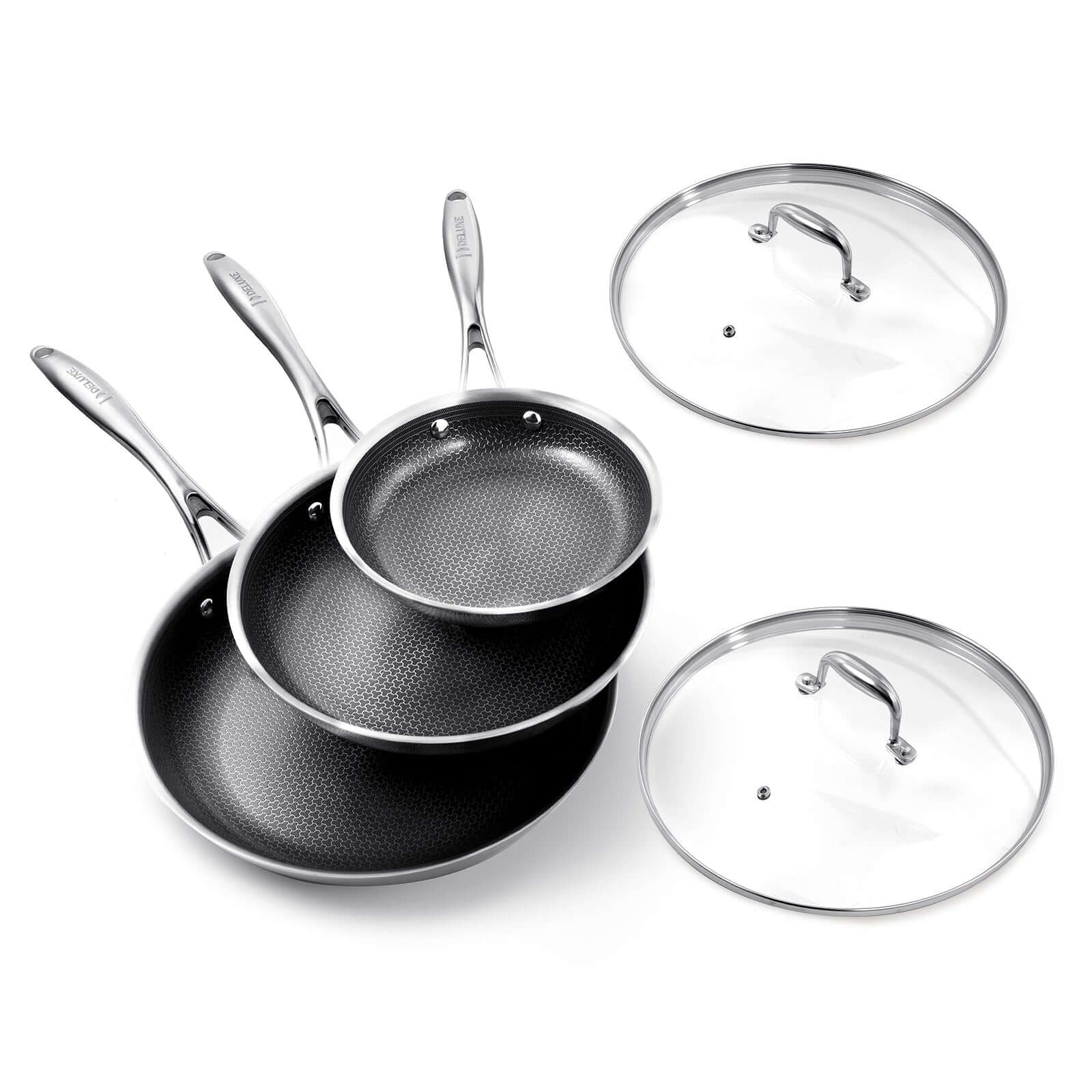
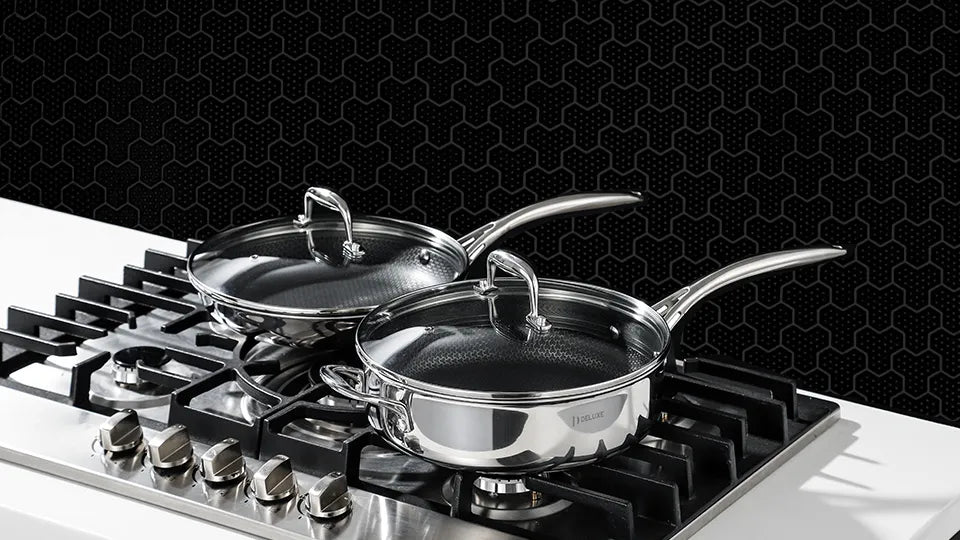
The most recognizable design features a laser-etched stainless steel hexagonal or lattice matrix over a recessed nonstick layer. The elevated metal ridges shield the nonstick valleys from utensil contact while the lower valleys ensure clean food release.

How Does Hybrid Cookware Work?
Hybrid cookware functions by delegating distinct cooking roles to specialized metallurgical layers.
The magnetic outer base provides induction capability, the conductive aluminum core distributes heat evenly, and the cooking surface integrates stainless steel durability with smooth nonstick food release.
The Stainless Steel Component
Stainless steel delivers structural rigidity, warp resistance, and superior browning capabilities.
High-grade stainless steel cookware is inherently durable, oven-safe, and ideal for creating flavorful pan sauces via a fond foundation.
In hybrid cookware, raised stainless steel ridges bear the mechanical abrasion of cooking utensils, protecting the delicate nonstick valleys beneath.
The Nonstick or Ceramic Component
The recessed nonstick coating ensures effortless release when preparing delicate ingredients such as eggs, flaky fish, and crepes.
While some hybrid pans utilize PTFE-based formulations, modern high-end options incorporate ceramic nonstick cookware technology.
When selecting non-toxic cookware, always verify whether a product is explicitly certified as PFAS-free and PFOA-free.
The Core and Base Construction
Premium hybrid pans utilize multi-clad encapsulated construction.
For instance, tri-ply clad stainless steel encapsulates a heavy-gauge aluminum core between steel sheets, eliminating hot spots and ensuring uniform thermal retention across the cooking surface.

Is Hybrid Cookware Safe?
Hybrid cookware is completely safe for residential and commercial cooking when used within recommended temperature thresholds.
Because "hybrid" describes a construction style rather than a specific chemical formulation, always verify the coating specifications on the product label.
Key safety and performance standards to look for include:
- 100% PFAS-free and PFOA-free coatings
- Heavy-metal-free construction (lead and cadmium-free)
- High oven-safe temperature ratings (up to 500°F)
- Full induction cooktop compatibility
For official regulatory safety standards regarding food-contact coatings, the FDA provides detailed regulatory data on PFAS in food packaging and cookware.
Similarly, food safety authorities like Health Canada's Safe Cooking Guidelines emphasize that pan safety depends on maintaining moderate heat limits and avoiding scratched surfaces.
Hybrid Cookware Pros and Cons
Advantages of Hybrid Cookware
Hybrid cookware is engineered as an all-in-one culinary solution for high-frequency weekday cooking.
- Significantly easier food release than traditional stainless steel pans
- Superior searing, browning, and fond development compared to traditional nonstick pans
- Enhanced scratch resistance and utensil tolerance
- Universal cooktop compatibility, including induction, gas, and electric glass
- Versatile performance across frying, sautéing, pan-roasting, and simmering
For most home cooks, a hybrid frying pan serves as the ultimate daily kitchen workhorse.
Disadvantages of Hybrid Cookware
Despite its versatility, hybrid cookware has operational limitations to keep in mind:
- Requires moderate cooking heat and cannot be treated like indestructible raw cast iron
- Nonstick release properties gradually diminish over years of heavy use
- Higher initial price point compared to basic nonstick skillets
- Less thermal mass for ultra-heavy searing than thick cast iron
Because hybrid pans contain nonstick layers, the Singapore Food Agency's pan safety recommendations advise avoiding extreme dry overheating and harsh abrasive scouring pads.
Material Comparison: Hybrid vs. Others
| Cookware Type | Searing Power | Food Release | Durability | Maintenance Level |
|---|---|---|---|---|
| Hybrid Cookware | High | High (with fat) | High | Low to Moderate |
| Stainless Steel | Exceptional | Moderate (requires technique) | Lifetime | Moderate (soaking needed) |
| Traditional Nonstick | Low to Moderate | Effortless | 1–3 Years | Low (delicate care) |
| Carbon Steel | Exceptional | High (when seasoned) | Lifetime | High (seasoning required) |
| Cast Iron | Maximum | High (when seasoned) | Lifetime | High (hand dry & oil) |
Traditional stainless steel remains unmatched for creating rich pan reductions, but requires precise temperature timing to avoid sticking. High-quality frying pans made of clad stainless steel will easily last decades.
Conversely, traditional nonstick pans provide effortless release for delicate eggs, but carry a notably shorter lifespan. Hybrid cookware bridges this gap, offering durability with practical release when maintained according to proper care guidelines.
What Can You Cook in Hybrid Cookware?
Hybrid pans excel across a wide range of everyday culinary recipes.
Recommended Culinary Applications
- Pan-seared salmon fillets and delicate white fish
- Crispy fried eggs and omelets with minimal butter
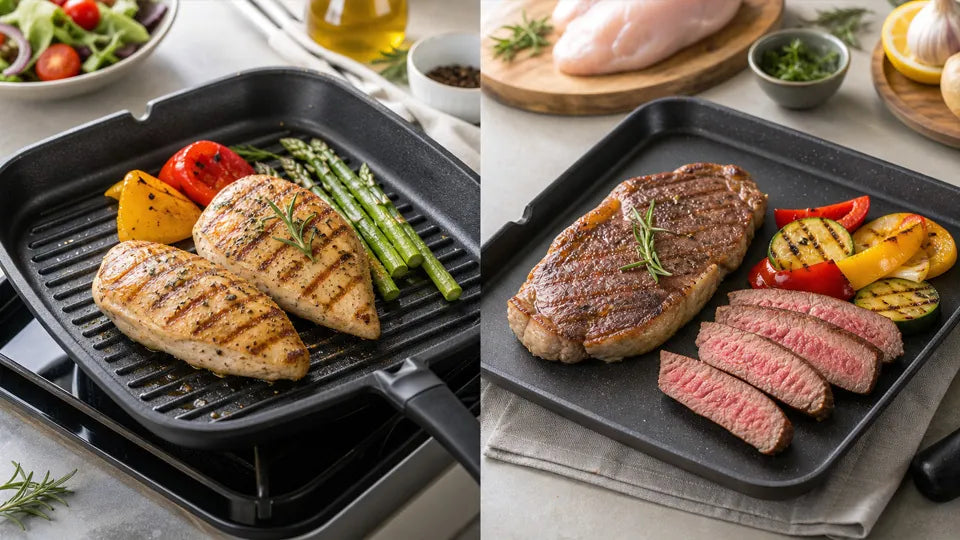
- Golden pan-seared chicken breasts and thighs
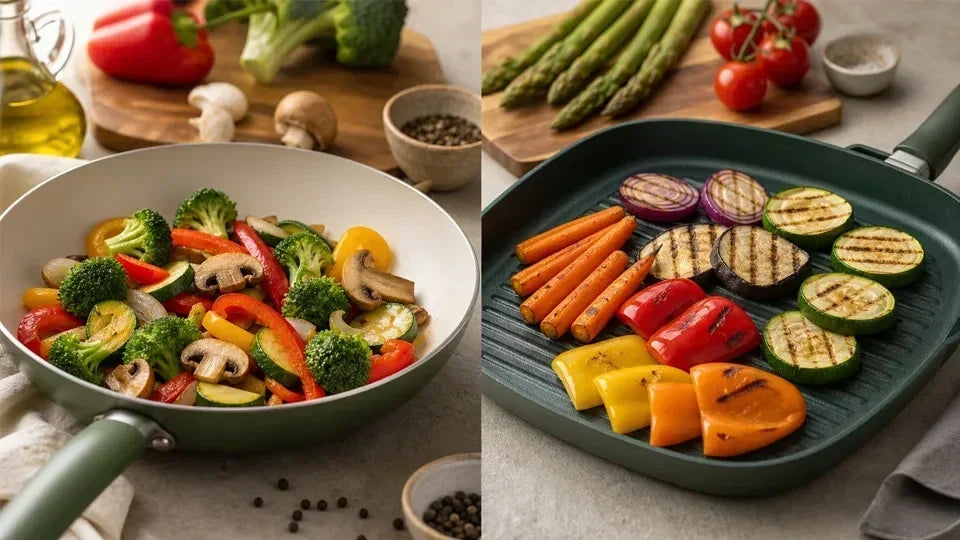
- Crisp-tender stir-fried vegetables and fried rice
- Pan-toasted grilled cheese sandwiches and melts
- Light reductions and skillet pasta dishes
A deep hybrid sauté pan is especially practical, combining high splatter-reducing sidewalls with the thermal performance needed for one-pan dinners.
Less Optimal Uses
- Extreme high-heat dry broiling or commercial-grade flash searing
- Use with aggressive serrated metal knives or electric beaters
- Cooking requiring massive thermal mass, such as smash burgers

How to Use Hybrid Cookware Correctly
Adhering to proper heat and cleaning techniques ensures your hybrid pan maintains peak nonstick performance for years.
1. Cook Over Low-to-Medium Heat
Because the aluminum core conducts thermal energy efficiently, medium heat is all you need for most searing and frying tasks. Avoid preheating an empty pan on maximum heat.
2. Always Cook with a Small Amount of Cooking Fat
Hybrid pans are engineered to cook with minimal fat, but adding a teaspoon of butter or high-smoke-point oil (such as avocado or grapeseed oil) creates a natural thermal barrier that enhances food release and flavor.
3. Avoid Aerosol Cooking Sprays
Aerosol nonstick sprays contain chemical propellants and emulsifiers (like lecithin) that polymerize at low temperatures, forming an invisible, sticky film that degrades nonstick release over time.
4. Allow the Pan to Cool Before Washing
Thermal shock from plunging a scorching-hot pan into cold sink water can warp the metal cladding. Let the pan cool to room temperature before washing with warm water, mild soap, and a soft sponge.

What to Look for When Buying Hybrid Cookware
When evaluating hybrid cookware brands, focus on objective engineering specifications:
- Bonded Multi-Ply Construction: Look for at least 3-ply clad construction combining magnetic stainless steel with an aluminum thermal core.
- Non-Toxic Coating Certification: Ensure the coating is third-party certified PFAS-free, PFOA-free, and lead/cadmium-free.
- High Oven-Safe Rating: Quality hybrid pans feature cast stainless steel handles rated oven-safe to 500°F.
- Flat, Warp-Resistant Base: A precision-machined flat bottom ensures maximum surface contact on modern induction and glass cooktops.
Final Thoughts on Hybrid Cookware
Hybrid cookware represents an innovative fusion of stainless steel durability and nonstick convenience. It allows you to achieve deep browning and pan sauces without the frustrating cleanup often associated with traditional steel cookware.
By cooking over medium heat, using a light touch of cooking oil, and skipping aerosol sprays, a premium hybrid pan will deliver exceptional everyday performance for years to come.
Frequently Asked Questions
Is hybrid cookware better than stainless steel?
Hybrid cookware provides superior everyday convenience and easier food release. Pure stainless steel remains better for extreme high-heat searing, heavy deglazing, and lifetime durability.
Does hybrid cookware require seasoning?
No. Stainless steel and nonstick hybrid pans are ready to use immediately after an initial hand wash. They do not require the seasoning or oil-curing procedures needed for raw cast iron or carbon steel.
Is hybrid cookware good for cooking eggs?
Yes. When used over low-to-medium heat with a small amount of butter or oil, hybrid pans release eggs and omelets cleanly without sticking.
How long does hybrid cookware last?
A high-quality multi-ply hybrid pan typically lasts 5 to 7+ years with proper hand-washing and moderate heat use—significantly outlasting conventional 1-to-2-year nonstick pans.
Is hybrid cookware completely nonstick?
Hybrid pans are designed as semi-nonstick hybrid surfaces rather than zero-friction synthetic coatings. They perform best when paired with proper preheating and a light layer of cooking fat.