Are Your Frying Pans PFOA-Free? What You Need to Know About Cookware Safety
In the modern kitchen, we often scrutinize the ingredients in our food while overlooking the tools used to prepare them. For decades, non-stick convenience was the primary selling point for frying pans, but recent scientific discoveries have shifted the focus toward chemical safety. Consumers are now prioritizing PFOA-free cookware to avoid "forever chemicals" that can leach into meals. This educational guide explores the history of non-stick chemicals, the differences between various coatings, and how to identify the safest materials for your family's health.
What Is PFOA, and Why Was It Used?
Perfluorooctanoic acid, commonly known as PFOA, belongs to a large group of man-made chemicals called PFAS (per- and polyfluoroalkyl substances). For over half a century, it was a staple in the manufacturing of non-stick coatings. Understanding PFOA in nonstick pans requires looking back at how these products were engineered to repel water, oil, and heat.
The Role of PFOA as a Processing Aid
PFOA was not intended to be a final ingredient in your frying pan. Instead, it served as a surfactant or processing aid during the application of PTFE (Teflon) coatings. It helped the non-stick material spread evenly across the metal surface. While most of the chemical was meant to be "burnt off" during high-heat manufacturing, trace amounts often remained in the finished product, leading to potential exposure for the end-user.

Why PFOA Is Classified as a Forever Chemical
The carbon-fluorine bond is one of the strongest in organic chemistry. This means PFOA does not break down easily in the environment or the human body. Once it enters the bloodstream—whether through contaminated water or fumes from overheated pans—it stays there for years. This persistence is why the global community has moved toward banning its use in consumer goods.
Environmental and Health Concerns
Studies have linked long-term PFOA exposure to a variety of health issues, including thyroid disorders, liver disease, and certain types of cancers. Beyond individual health, the production of PFOA has led to widespread environmental contamination, affecting water supplies near manufacturing plants. These concerns triggered a major industry shift toward non-toxic cookware alternatives.
The Global Phase-Out and Regulations
In the United States, major chemical manufacturers agreed to a voluntary phase-out of PFOA starting in 2006, which was largely completed by 2015. Internationally, the Stockholm Convention on Persistent Organic Pollutants has placed strict restrictions on its production. Today, while new pans sold in major markets are generally PFOA-free, older pans in your cupboards might still contain these legacy chemicals.
Look for the "PFOA-Free" Label on Packaging
When shopping for new kitchen tools, the marketing jargon can be overwhelming. Understanding how to navigate labels is the first step in securing a safe cooking environment. However, a "PFOA-free" claim does not always mean the pan is entirely chemical-free.
Decoding Standard Certification Labels
Reliable manufacturers will clearly print "PFOA-Free" on the box or the base of the pan. Some may also include certifications from third-party testing agencies like the FDA or European equivalent bodies. If a pan is labeled as PFAS-free cookware, it means it excludes not just PFOA, but the entire class of related fluorinated chemicals, providing an even higher level of safety assurance.

The "Lead and Cadmium Free" Connection
Chemical safety is not just about non-stick coatings. Many high-quality, toxin-free pans will also state they are free of lead and cadmium. These heavy metals were historically used in the glazes of some ceramic pans or the pigments of colorful exteriors. A truly safe pan will address the entire material composition, not just the interior cooking surface.
Being Wary of "Greenwashing"
Some budget brands use green leaves or "eco-friendly" imagery without providing specific technical details. Always look for the explicit chemical names. If a pan is marketed as "PFOA-free" but still uses PTFE, you are still dealing with a fluorinated plastic coating. For those seeking the absolute safest cookware material, transparency regarding the manufacturing process is vital.
Checking the Country of Origin
While not a definitive rule, countries with strict environmental regulations (such as those in the EU or North America) often have more rigorous testing for PFOA-free cookware. Importing cheap, unbranded cookware from regions with lax chemical oversight increases the risk of encountering banned substances or contaminated recycled metals.
Is There a Difference Between PFOA and PTFE?
This is perhaps the most confusing aspect of cookware safety. Many consumers use these terms interchangeably, but they refer to two very different things: one is a processing chemical, and the other is the coating itself.
Defining PTFE (Teflon)
PTFE stands for polytetrafluoroethylene, a synthetic fluoropolymer. This is the slippery plastic coating that makes a pan "non-stick." PTFE itself is generally considered stable and non-toxic at room temperature. The concern arises when PTFE is manufactured using PFOA or when it is heated beyond its safety threshold.

The PFOA vs. PTFE Relationship
Think of PFOA as the "glue" or "helper" used to create the PTFE coating. Modern PFOA-free cookware still uses PTFE, but it uses alternative, supposedly safer surfactants to achieve the non-stick effect. This means that while the pan is "PFOA-free," it is still a plastic-based product that can release "Teflon flu" fumes if left on a high-heat burner.
Understanding the Off-Gassing Threshold
When PTFE-coated pans reach temperatures above 500°F (260°C), the coating begins to degrade. This thermal decomposition releases microscopic particles and gases. While the health benefits of toxin-free pans often focus on avoiding PFOA ingestion, avoiding PTFE fumes is equally important for respiratory health, particularly for those with pet birds, who are extremely sensitive to these gases.
Identifying "PTFE-Free" Options
If your goal is to avoid all synthetic fluorinated plastics, you must look for "PTFE-free" labels. These pans typically use mineral-based or ceramic coatings rather than plastic polymers. This distinction is the core of understanding PFOA in nonstick pans; you can have a pan that is PFOA-free but not PTFE-free, but a PTFE-free pan is almost always PFOA-free by default.
Choose Ceramic as a Mineral-Based Alternative
Ceramic coatings have become the most popular choice for those moving away from traditional non-stick surfaces. Despite the name, these pans are not made of solid clay but are metal pans coated with a thin layer of silica-based material.
The Sol-Gel Manufacturing Process
Ceramic coatings are created using a "sol-gel" process that converts a liquid silane into a gel-like mineral layer. Because this process does not require fluorinated chemicals, ceramic is inherently PFAS-free cookware. The result is a glass-like surface that is naturally slick without the need for synthetic plastic polymers.
Superior Heat Resistance
One of the major health benefits of toxin-free pans made of ceramic is their ability to withstand higher temperatures without off-gassing. Most ceramic pans can handle up to 800°F without releasing toxic fumes, whereas traditional non-stick starts to fail at half that temperature. This makes ceramic a safer choice for searing or accidental overheating.
Limitations in Longevity and Durability
While ceramic is safe, it is not invincible. The mineral coating is more brittle than PTFE and can develop microscopic cracks over time. To maintain its non-stick properties, you must avoid metal utensils and harsh abrasive cleaners. Most users find that ceramic pans require more careful handling and have a shorter "peak non-stick" lifespan than high-end PTFE pans.
Best Practices for Ceramic Care
- Avoid High Heat: Even though they can handle it, cooking on medium heat preserves the silica structure.
- Hand Wash Only: Dishwasher detergents are often too abrasive for mineral coatings.
- Use a Buffer: Place a paper towel or protector between pans when stacking to prevent chipping.

Do Stainless Steel Pans Contain Harmful Chemicals?
For many chefs, high-grade stainless steel is considered the safest cookware material because it contains no coatings at all. It relies on the inherent properties of the metal alloy rather than a chemical layer for its performance.
Understanding Alloy Composition
Food-grade stainless steel is typically labeled as "18/10," referring to the ratio of chromium and nickel. These metals are added to prevent rust and corrosion. While some people worry about nickel leaching, the amount released into food is negligible for the vast majority of the population, unless you are cooking highly acidic foods (like tomato sauce) for very long durations.
The Benefits of a Non-Reactive Surface
Unlike non-stick surfaces that can react with high heat or acidic ingredients, stainless steel is virtually non-reactive. This ensures that the flavor of your food remains pure and untainted by chemical residues. It is a true "lifetime" material that will not peel, flake, or degrade, making it a cornerstone of non-toxic cookware collections.
Mastering the "Leidenfrost Effect"
The main complaint about stainless steel is that food sticks. However, this is a matter of technique, not material failure. By preheating the pan and using the "water drop test" (the Leidenfrost effect), you can create a temporary physical barrier that allows food to glide. This eliminates the need for chemical non-stick coatings entirely.
Comparing 304 vs. 430 Grades
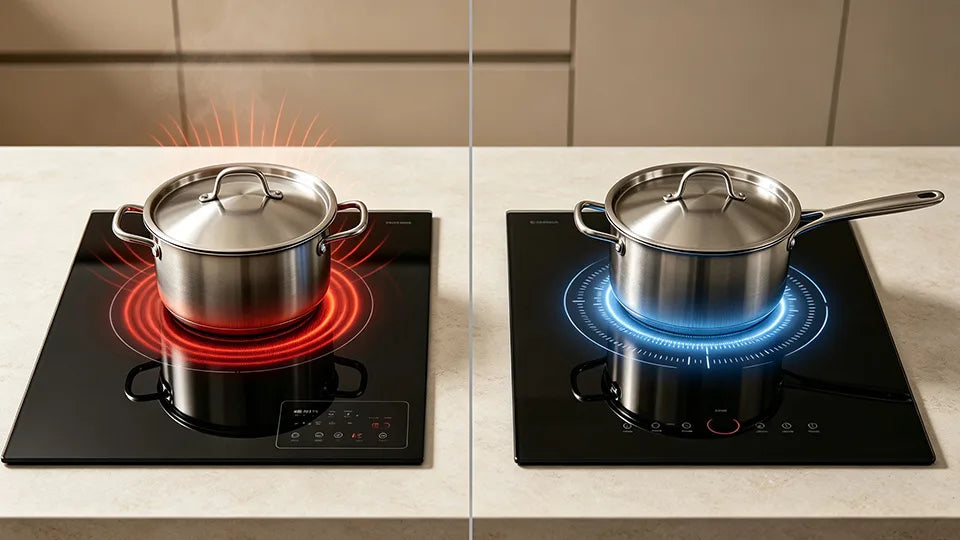
When searching for the safest cookware material, you might see different grade numbers. 304-grade is the standard for high-quality interiors due to its corrosion resistance. 430-grade is often used for the exterior base because it is magnetic, making the pan compatible with induction stoves. Neither grade contains PFOA or other organic pollutants, making them a safe, stable choice for any home.
Dispose of Old, Scratched Non-Stick Pans
The danger of non-stick chemicals is significantly magnified when the physical integrity of the pan is compromised. If your pans are more than a decade old or show signs of wear, it is time for an upgrade.
The Risk of Flaking and Ingestion
When a non-stick surface is scratched, the underlying metal is exposed, and the edges of the coating can begin to flake off. These microscopic flakes of PTFE (and potentially PFOA in older pans) can end up in your food. While the human body may pass some of these particles, the cumulative effect of ingesting degraded plastic is a primary concern for health-conscious cooks.
Identifying a "Danger Zone" Pan
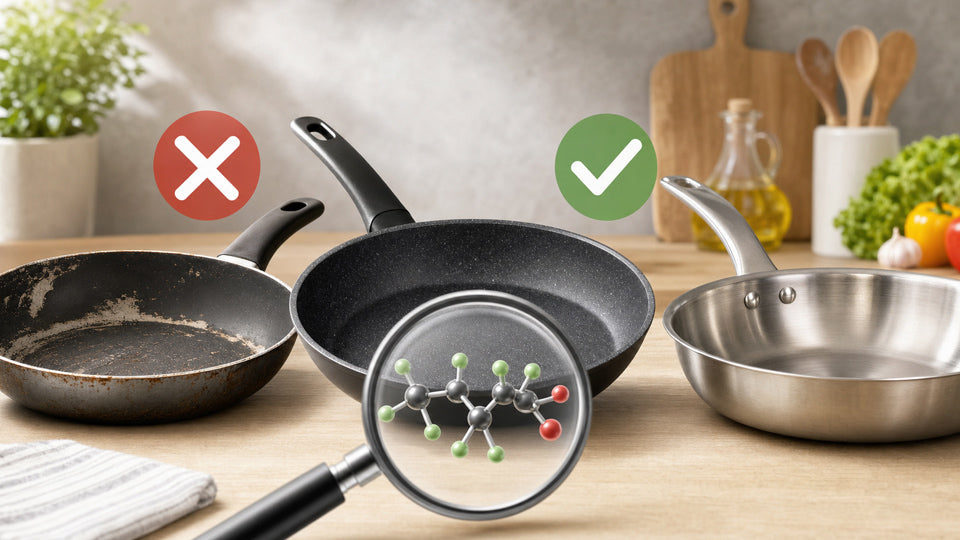
If you see deep silver scratches through a black coating, or if the surface feels "pitted" or rough to the touch, the pan has reached its end of life. Additionally, if the pan has developed a sticky, brownish residue that cannot be washed away, the polymer has likely broken down due to overheating, and its chemical stability is no longer guaranteed.

Safe Disposal Methods
Non-stick pans cannot usually be placed in standard curbside recycling because the bonded coating is difficult to separate from the metal. Look for specialized metal recyclers or "take-back" programs offered by eco-conscious brands. Some cities have hazardous waste days where they accept old chemical-coated items to ensure they are handled properly rather than ending up in a landfill.
Transitioning to a Safer Kitchen
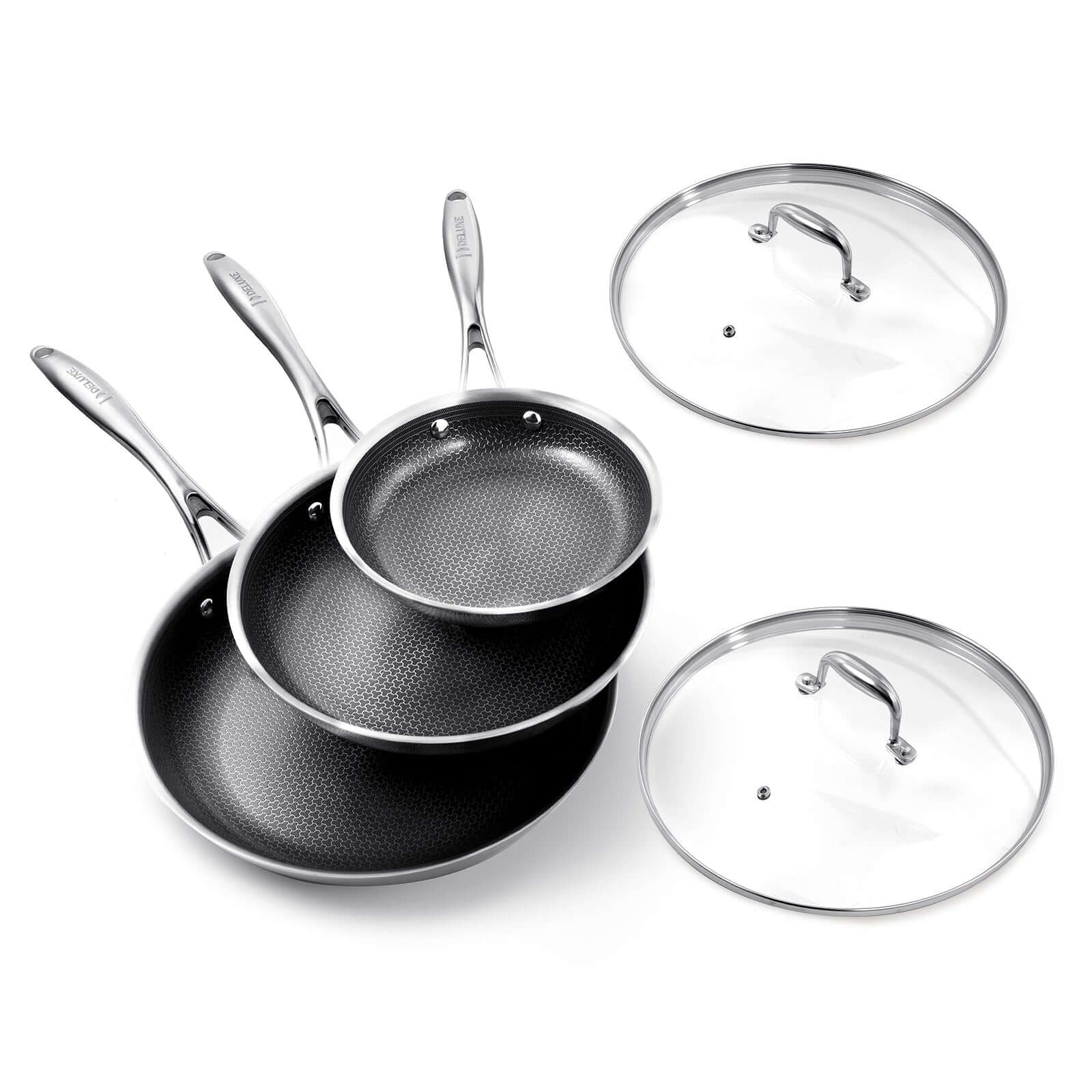
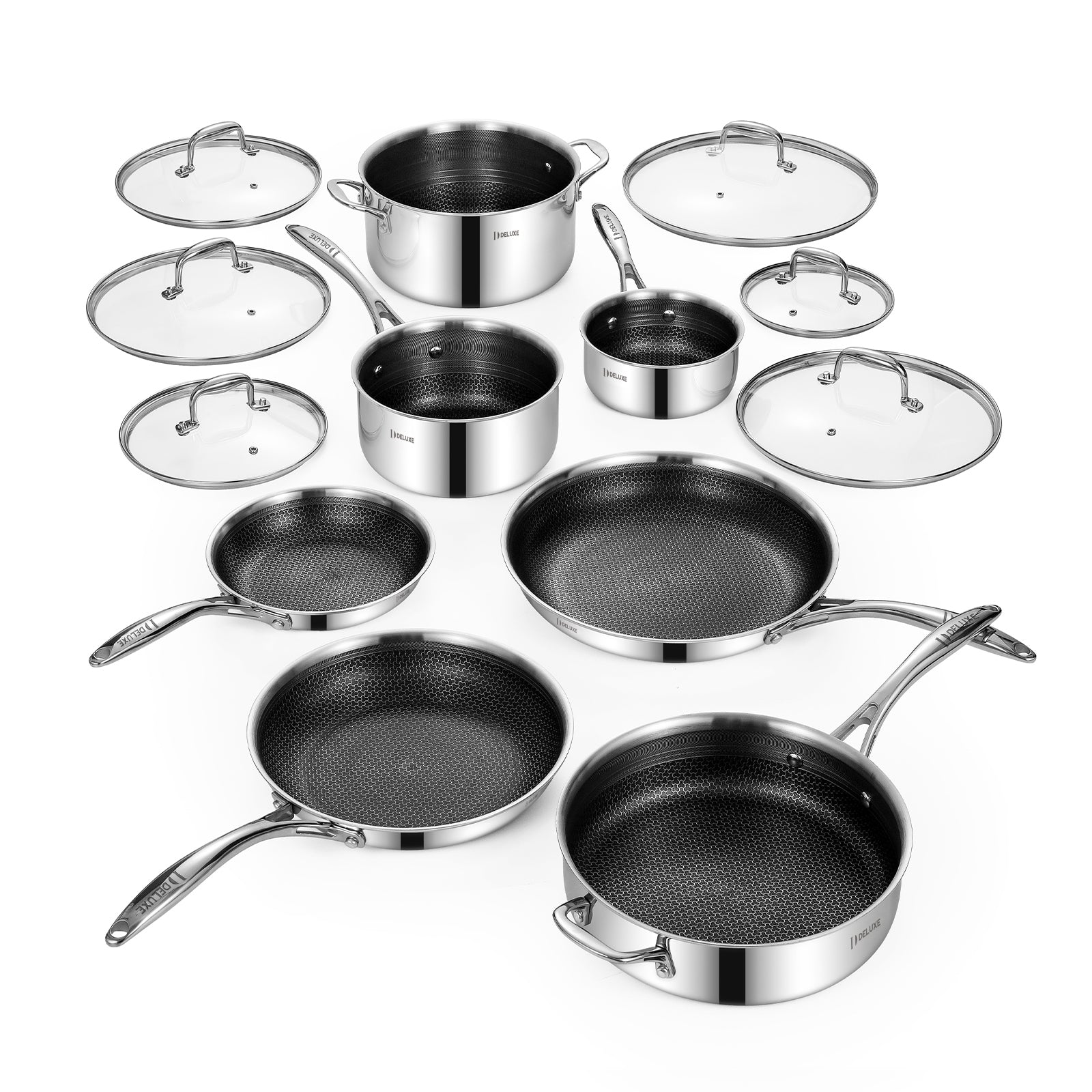
Replacing your entire set at once can be expensive. Start by replacing your most-used frying pan with a high-quality PFOA-free cookware option, such as a ceramic or stainless steel model. Over time, as other pans show wear, you can phase out synthetic coatings entirely, eventually creating a kitchen environment that prioritizes long-term health over short-term convenience.
Conclusion: Safe Kitchen Choices
The journey toward a healthier kitchen begins with understanding PFOA in nonstick pans and the chemicals that replaced them. While PFOA is largely a thing of the past in new products, remaining vigilant about PTFE and PFAS is essential for modern safety. By opting for ceramic, stainless steel, or certified PFOA-free cookware, you protect your family from unnecessary chemical exposure. Invest in quality materials today, and enjoy the peace of mind that comes with a truly non-toxic cooking experience.
Common Cookware Safety Questions
Can I still use a pan if it has a small scratch?
No, it is generally safer to stop using a scratched non-stick pan. Once the surface is broken, the coating is more likely to flake off into your food, and the exposed metal underneath may not be food-grade. For the best health outcomes, replace the pan as soon as any visible peeling or deep scratching occurs.
Does "PFOA-free" also mean the pan is "Teflon-free"?
No, not necessarily. "PFOA-free" simply means the specific chemical PFOA was not used in the process. Many "PFOA-free" pans still use PTFE (the chemical name for Teflon). If you want to avoid Teflon entirely, you must look for pans that are specifically labeled as "PTFE-free" or "Ceramic."
Is cast iron a safe PFOA-free alternative?
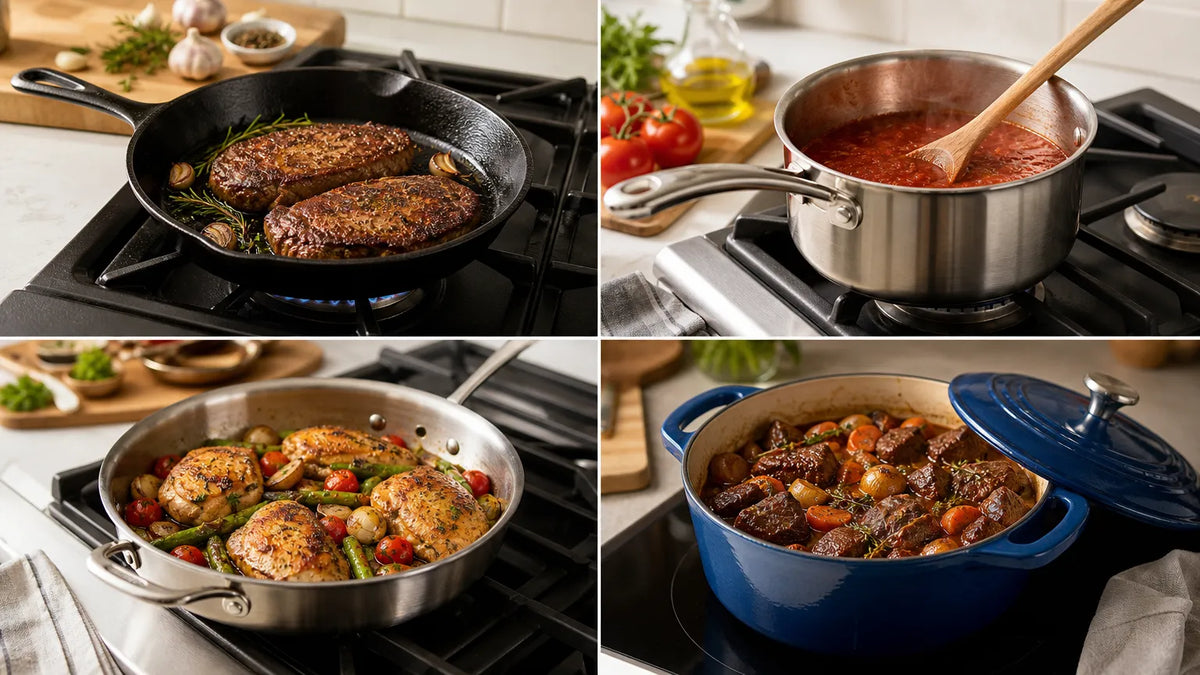
Yes, raw cast iron is one of the safest and most natural options available. It contains no synthetic chemicals or coatings. When properly seasoned with natural oils, it develops a non-stick surface that improves with age. It is a top contender for the safest cookware material for those who don't mind a bit of extra maintenance.
Why are PFAS chemicals called "forever chemicals"?
They are called this because the chemical bonds are so strong that they do not break down in nature. This means they accumulate in soil, water, and human tissue over time. Choosing PFAS-free cookware helps reduce the demand for these substances, preventing more of them from entering the global ecosystem.
Can high heat turn a safe pan into a toxic one?
Yes, if the pan has a PTFE coating. Even a PFOA-free PTFE pan can release toxic fumes if it is heated above 500°F. This is why you should never leave a non-stick pan on a high burner while empty. If you prefer high-heat cooking, stainless steel or cast iron are much safer alternatives.