
The Best Way to Store Frying Pans to Prevent Scratches and Coating Damage
Effective storage is an often-overlooked aspect of kitchen management that directly impacts the lifespan of your culinary tools. Even when investing in the best cookware material, disorganized storage causes friction that damages non-stick surfaces and compromises structural integrity. This guide provides professional insights into organizing your kitchen to ensure your skillets remain in pristine condition for years to come.
1. Don't Stack Pans Directly on Top of Each Other
Stacking cookware without a protective barrier is a primary cause of coating failure. While modern engineering produces exceptionally durable surfaces, the mechanical friction between rough metal bases and delicate cooking surfaces remains a constant threat. Direct nesting creates micro-abrasions that degrade non-stick properties over time.
Understand Mechanical Friction
Every time a skillet is pulled from a nested stack, microscopic coating particles wear away. For advanced hybrid pans featuring raised stainless steel ridges and recessed ceramic valleys, direct stacking places excessive load on the metal framework, gradually compromising surface performance.
The Risk of Rim Chipping
Nesting cookware carelessly causes rim impacts that chip protective finishes. These fractures allow moisture and cooking fats to seep under the non-stick layer, accelerating edge delamination across the entire pan.
Potential for Structural Warping
Heavy nesting stacks exert uneven downward pressure on the base of the lowest pan. Over time, cabinet vibrations and excessive load can cause subtle base distortion, preventing flat contact with glass cooktops and creating hot spots.
2. Use Pan Protectors or Felt Pads
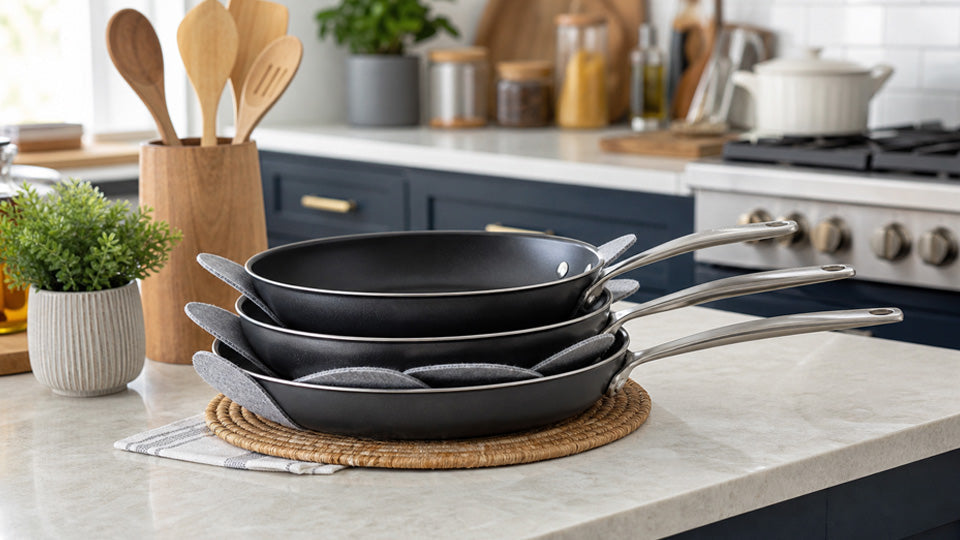
When cabinet space demands nested storage, a protective divider is essential. Cushioning inserts absorb everyday impacts and prevent rough pan bases from scratching adjacent cooking surfaces, preserving the slick finish on high-end ceramic coated pans.

Benefits of Felt and Silicone Dividers
Felt dividers serve as the gold standard for pan storage because they are soft, thick, and breathable. Silicone inserts provide a firm non-slip grip that prevents nested cookware from sliding inside pull-out drawers.
Utilizing Household Alternatives
If commercial protectors are unavailable, thick microfiber cloths or heavyweight paper towels offer temporary protection. Dedicated cookware dividers remain the superior choice because their contoured shape delivers 360-degree coverage across both base and sidewalls.
Full-Coverage Protection Strategies
Select dividers with diameters exceeding the pan base. Flared protector arms should extend up the sidewalls to prevent upper pan rims from gouging the inner coating.
3. Is Hanging Pans Better Than Drawer Storage?
Choosing between hanging racks and deep drawers depends on available kitchen space and your choice of cookware material. While hanging racks eliminate stacking contact completely, customized pull-out drawers provide equally safe storage for an entire pots and pans set.

Advantages of Wall and Ceiling Racks
Hanging cookware on overhead racks promotes excellent airflow and ensures that no two cooking surfaces make contact. Dedicated hooks minimize retrieval scratches while keeping your skillets instantly accessible and dry.
Optimized Drawer and Cabinet Organization
Deep drawers fitted with vertical dividers allow skillets to stand upright like books on a shelf. Vertical storage eliminates base pressure, prevents nesting scratches, and makes identifying individual sizes effortless.
Protect Against Dust and Grease
Open hanging racks can gather airborne kitchen grease and ambient dust over time. Enclosed drawers keep cookware cleaner, provided drawer liners are installed to protect the cookware exterior from cabinet scuffs.
4. Store Lids Separately to Save Space
Metal and tempered glass lid rims can scratch non-stick surfaces if stored upside-down inside skillets. Storing lids in a dedicated organizer protects delicate pan coatings and streamlines cabinet space.

Specialized Lid Organizers
Door-mounted lid racks and wire drawer dividers keep lids upright and separated. This prevents lid handles from scratching the cooking surface of your non-stick skillets and allows neat nesting with felt pads.
Avoid Handle Friction
Inverted lids cause metal handle hardware to rub against interior coatings during drawer movement. Storing lids separately eliminates this wear point and prevents cracked glass rims.
Enhance Air Circulation
Covering nested pans with lids traps residual moisture inside the skillet cavity. Standalone lid storage facilitates complete evaporation, preventing dampness and unwanted odors.
5. Keep Metal Utensils Away from Your Storage Area
Even resilient multi-ply cookware can suffer gouges from loose metal turners or whisks. Keeping a safe distance between your pan storage and metal utensils prevents accidental impacts during daily kitchen routines.

Segregating Tools by Material
Store stainless steel spatulas and tongs in a countertop crock or a dedicated utensil drawer. Compartmentalized trays prevent sharp kitchen tools from sliding into non-stick interiors when drawers close.
Protecting Hybrid Surfaces
While composite surfaces with raised steel peaks resist everyday utensil contact, a sharp corner striking the recessed ceramic valley under force can cause chipping. Proper drawer separation eliminates impact damage.
Creating a Soft-Tool Zone
Keep silicone, wooden, and heat-resistant polymer tools in the drawer nearest your pans. Storing soft utensils nearby encourages safe cooking habits and protects non-stick surfaces.
6. Clean and Dry Pans Completely Before Nesting
Proper cleaning and drying protocols are vital before placing cookware in storage. Moisture and tacky grease can act as bonding agents inside dark cabinets, compromising surface hygiene.

The Importance of Complete Drying
Never store damp cookware. Trapped moisture inside nesting stacks causes water spotting and degrades exterior finishes. Dry your pans thoroughly with a microfiber towel before nesting with protectors.
Managing Thermal Limits and Cleaning
Premium non-stick cookware is engineered for efficient heat distribution below its maximum thermal limit of 250°C. Always let pans cool completely before washing, as thermal shock causes base warping.
Removing Polymerized Oil
Inspect pan surfaces for sticky brown spots of polymerized grease before putting them away. Residual cooking oil bonds to storage dividers and attracts dust, diminishing surface slickness over time.
Store Cookware to Protect Your Investment
Organizing your kitchen cookware preserves non-stick performance and protects your culinary investment. By avoiding direct nesting, using protective felt dividers, and separating metal utensils, your cookware will deliver flawless release and consistent cooking results for years.
FAQs About Storing and Protecting Pans
Can I use bubble wrap as a pan protector?
Yes, bubble wrap works as a temporary divider, but it is not recommended for long-term storage. Plastic traps moisture and can stick to coatings in warm kitchens. Breathable felt or silicone dividers provide better air circulation and cushioning.
Is it safe to store pans inside the oven?
No. Storing pans in the oven creates the risk of accidental preheating, which pushes cookware past safe temperature limits and destroys non-stick coatings. Constant removal also increases the risk of accidental denting.
Why are my pans scratching even when using dividers?
Scratches occur when abrasive salt grains, breadcrumbs, or hard debris settle between the pan surface and the divider. Always ensure both the cookware interior and the felt pads are completely clean before stacking.
Should I store cast iron pans together with non-stick cookware?
No. Heavy cast iron features a rough, abrasive exterior that easily dents and gouges lighter aluminum non-stick pans. Store cast iron pieces on a separate shelf or use heavy-duty felt padding between them.
How do I prevent pan handles from scratching adjacent cookware?
Arrange nesting cookware using a staggered handle layout, alternating handle positions around the clock face so they never rest directly against neighboring sidewalls.


