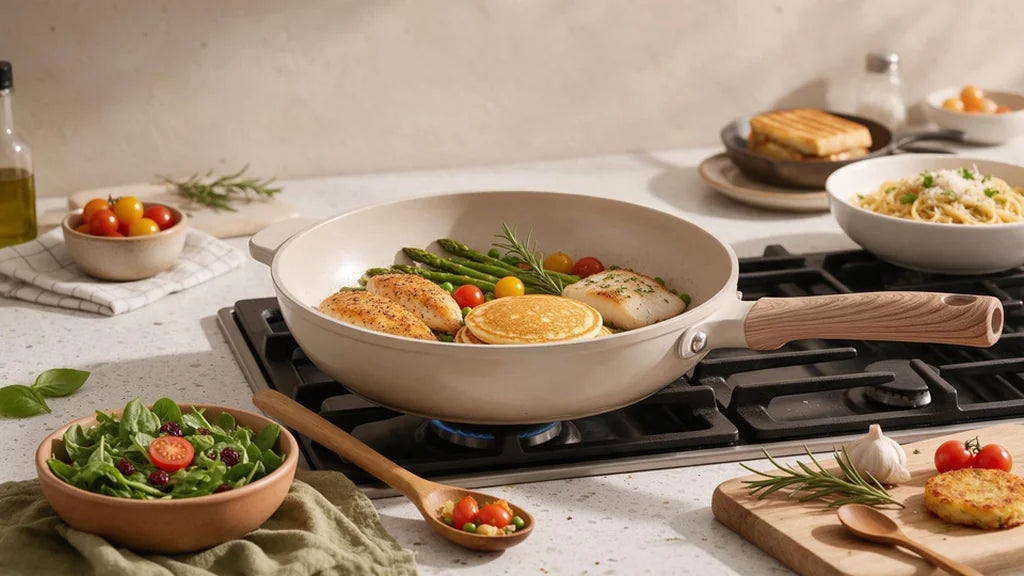
What Can You Cook in a Ceramic Nonstick Pan?
A ceramic nonstick pan is useful for much more than eggs. It works well for chicken, fish, vegetables, pancakes, pasta, sandwiches, and other everyday meals cooked over low to medium heat.
Its smooth cooking surface is designed to support easier food release and simpler cleanup. However, ceramic cookware is not ideal for every cooking method. For extreme high-heat searing or prolonged empty heating, stainless steel, cast iron, or carbon steel may be a better choice.
What Makes a Ceramic Nonstick Pan Useful?
Ceramic nonstick cookware usually consists of a metal pan covered with a ceramic-style coating. It combines:
- Easy food release
- Lower-oil cooking
- Simpler cleanup
The pan is particularly useful for foods that are delicate, sticky, or difficult to flip.

Breakfast Foods
Eggs and Omelettes
A ceramic frying pan works well for fried eggs, scrambled eggs, omelettes, and frittatas. Use a small amount of butter or oil and cook gently to prevent sticking.
Pancakes and French Toast
The smooth surface helps pancakes, crepes, and French toast release without tearing. Use a thin layer of butter or oil instead of aerosol cooking spray, which can leave a sticky residue over time.
Breakfast Potatoes
Ceramic pans can handle hash browns and diced potatoes. For better browning, dry the potatoes first, avoid overcrowding the pan, and do not stir them too frequently.

Chicken, Fish, and Other Proteins
Chicken
You can safely cook chicken in a ceramic pan. Thin chicken breasts, cutlets, tenders, and smaller thighs work especially well.
Brown the chicken gently, then lower the heat or add a lid if the pieces are thick. Always confirm that poultry reaches an internal temperature of 165°F.
Fish and Seafood
Ceramic nonstick pans are useful for salmon, cod, tilapia, shrimp, and other delicate seafood. Dry the surface before cooking and turn the food only after it has formed a light crust.
Tofu and Plant-Based Proteins
The coating can help tofu, veggie patties, and other fragile foods release without breaking apart.

Vegetables and Rice Dishes
Sautéed Vegetables
Use a ceramic pan for zucchini, mushrooms, onions, peppers, asparagus, green beans, broccoli, cabbage, and spinach.
Cook firm vegetables first and add softer ingredients later. A small amount of oil is usually enough.
Fried Rice
A ceramic pan can handle fried rice at moderate heat. Cook the egg and protein separately, sauté the vegetables, then add cold cooked rice and sauce near the end.
For very high-heat stir-frying, a carbon steel or stainless steel wok may be more suitable.
Dal, Beans, and Grain-Based Meals
A deeper ceramic sauté pan is useful for daal, beans, lentils, rice, couscous, quinoa, and vegetable curries. The higher sides help contain liquid while the wide base allows ingredients to cook evenly.

Pasta and One-Pan Meals
A deep ceramic pan can be used for:
- Creamy pasta
- Tomato pasta
- Chicken pasta
- Shrimp pasta
- Gnocchi
- Sausage and peppers
- Chicken and rice
- One-pan orzo
The broad base gives ingredients room to cook, while the higher sides hold sauce and cooking liquid.
Sandwiches and Light Meals
Ceramic nonstick cookware is also useful for:
- Grilled cheese
- Quesadillas
- Panini-style sandwiches
- Flatbreads
- Warm wraps
- Vegetable fritters
Use moderate heat so the exterior browns without burning while the filling heats through.
When Should You Use Another Pan?
A ceramic pan is not the best choice for every recipe.
Use stainless steel, cast iron, or carbon steel for:
- High-heat steak searing
- Smash burgers
- Strong browning
- Long empty preheating
- Deep frying
- High-heat wok cooking
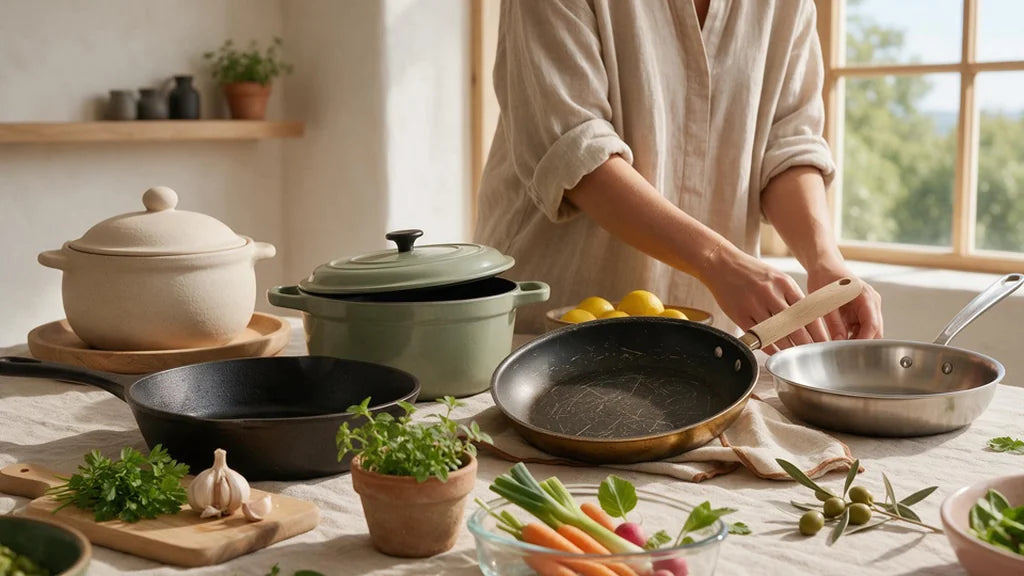
A practical kitchen can use ceramic cookware for delicate foods and daily meals, while stainless steel or cast iron handles high-temperature cooking.

How to Get Better Results
Follow these basic habits:
- Use low to medium heat.
- Add a small amount of oil or butter.
- Avoid heating the pan empty for a long time.
- Use silicone, wood, or nylon utensils.
- Do not use abrasive scrubbers.
- Avoid aerosol cooking sprays.
- Let the pan cool before washing.
For sticky residue, clean the surface with warm water, mild soap, and a soft sponge. A gentle baking soda paste may help remove oil buildup if permitted by the manufacturer.
Is Ceramic Nonstick Cookware Right for You?
Ceramic nonstick cookware is a good option for people who want:
- Easy food release
- Lower-oil cooking
- Simpler cleanup
- One pan for everyday meals
It may not be suitable if your main priority is extreme heat, long-term uncoated durability, or professional-level searing.
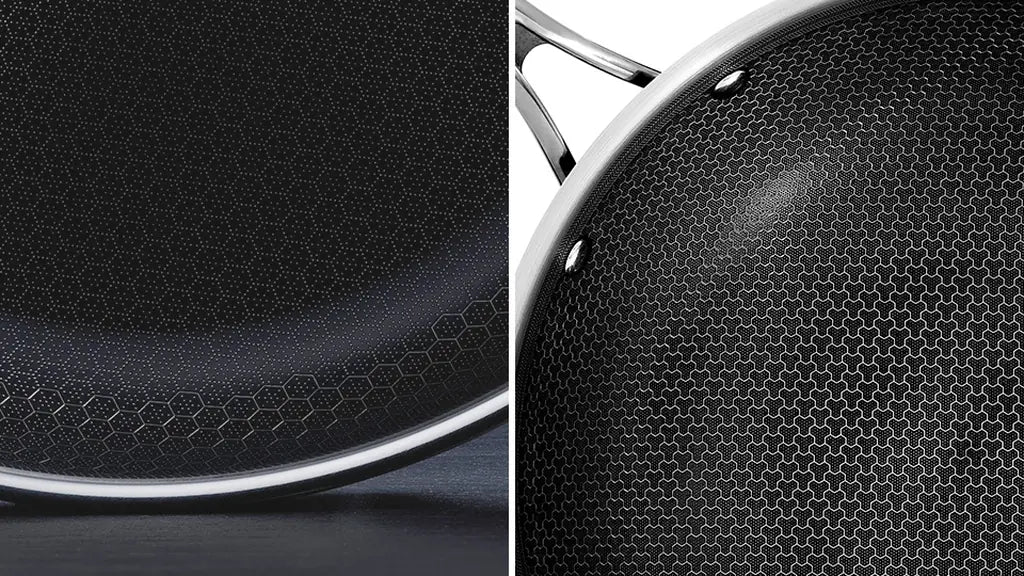
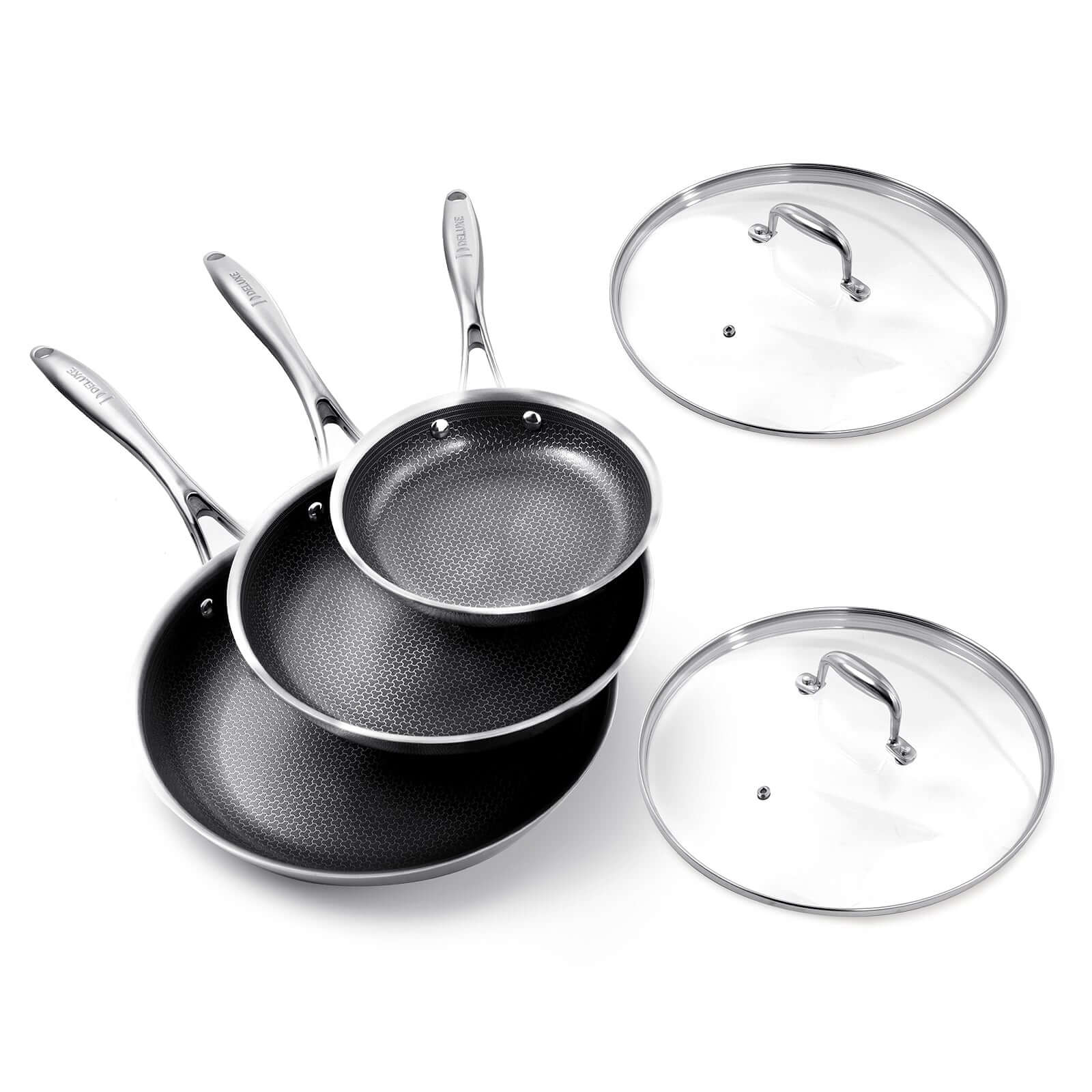
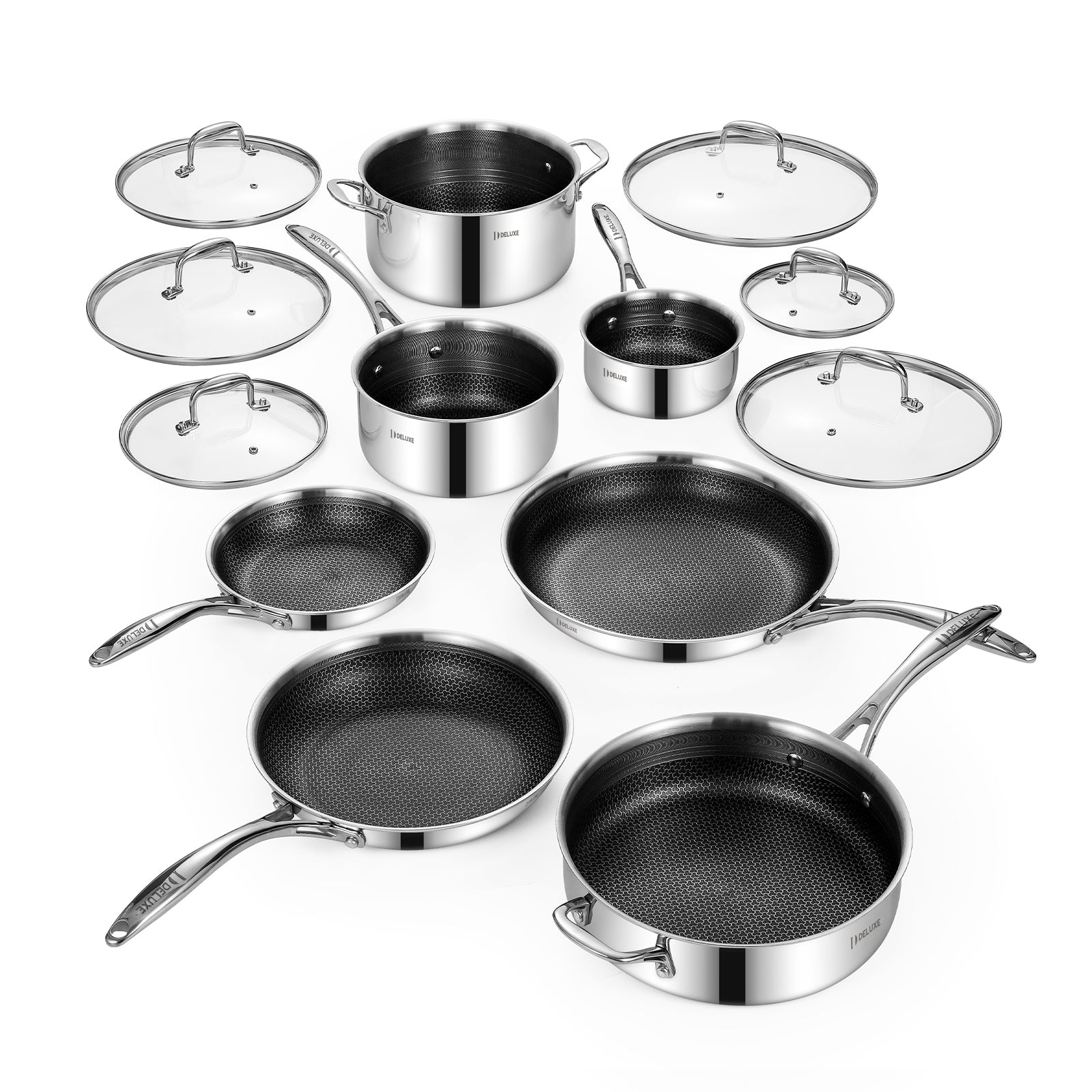
If you want more versatility, a hybrid ceramic pan combines a ceramic coating with a laser-etched stainless steel surface. You can explore our hybrid ceramic cookware collection.
Conclusion
A ceramic nonstick pan is well suited to everyday low-to-medium-heat cooking, including eggs, proteins, vegetables, pasta, rice dishes, pancakes, sandwiches, and one-pan meals.
For better results, use moderate heat, avoid prolonged empty heating, and clean the surface gently. If you need extreme high-heat searing or uncoated durability, stainless steel, cast iron, or carbon steel may be a better fit.
FAQ
Can I Cook Meat in a Ceramic Nonstick Pan?
Yes. Ceramic pans work well for chicken, fish, pork, tofu, and thinner cuts of meat. Use moderate heat and check the internal temperature of thicker pieces.
Can I Use Butter or Olive Oil in a Ceramic Pan?
Yes. Butter works well for eggs, pancakes, and sandwiches. Olive oil is suitable for low-to-medium-heat cooking.
Are Ceramic Pans Good for Gas Stoves?
Yes. Keep the flame below the base of the pan and avoid allowing it to extend up the sides.
Can I Cook Tomatoes in a Ceramic Pan?
Many ceramic-coated pans can handle acidic ingredients such as tomatoes, lemon, and vinegar. Check the manufacturer’s care instructions if the food will simmer for a long time.
Is a Deep Ceramic Sauté Pan Useful?
Yes. It is useful for pasta, chicken with sauce, rice dishes, vegetables, and one-pan meals because the higher sides hold liquid and reduce splatter.
What If Food Starts Sticking?
First, remove oil buildup with warm water, mild soap, and a soft sponge. If sticking continues or the coating is visibly damaged, the pan may need to be replaced.