When Is a Frying Pan With a Lid More Useful?
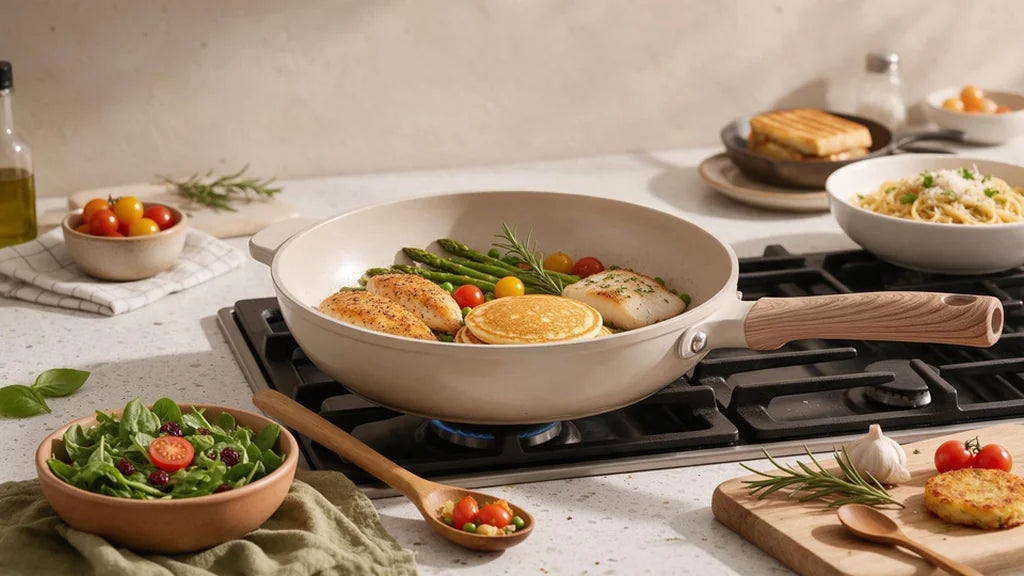
A frying pan with lid is most useful when a meal needs two stages: open-pan browning followed by gentler, moisture-retaining cooking. By slowing evaporation, holding steam, and containing some splatter, it can help vegetables turn tender, thick proteins cook through, and sauces stay fluid. For crisp potatoes or a deep sear, the lid usually belongs off. The right choice depends on the result, pan size, and fit in daily cooking.
When Does a Frying Pan Lid Change the Result?
Adding a lid turns a relatively dry cooking space into a more humid one, making covered and uncovered cooking distinct techniques.
Trap Moisture for Covered Cooking
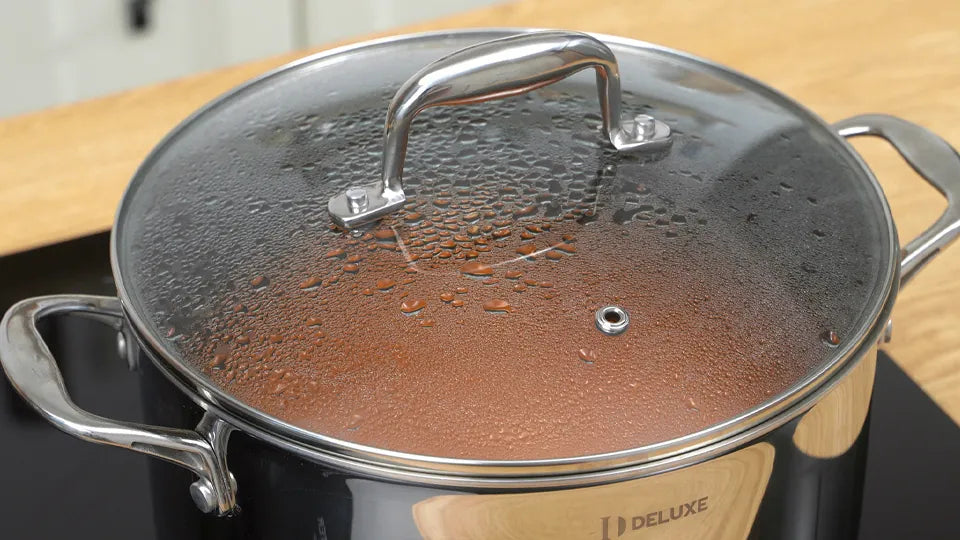
With the lid on, water released by ingredients becomes steam and some condenses back into the pan. This can soften vegetables, loosen browned bits, and help thicker food cook through. Add recipe-specified liquid when needed, keep heat at low to medium, and check periodically.
Limit Splatter While Retaining Visibility
A well-seated glass lid intercepts many droplets from simmering sauce or rendered fat while letting you monitor food. It is not sealed, so steam can escape around the rim or vent. Open the far edge first to direct steam away from your face and hands.
| Lid Position | Pan Environment | Best Suited To | Main Tradeoff |
|---|---|---|---|
| Fully on | Humid, slower evaporation | Gentle finishing, steaming, simmering | Less browning and crispness |
| Slightly ajar | Partial steam retention | Controlled sauce reduction | More splatter than full coverage |
| Off | Drier, faster evaporation | Searing, sautéing, crisping | Greater moisture loss and splatter |

Which Meals Benefit From a Covered Frying Pan?
Covered cooking helps when the outside is ready before the center or when a meal moves from sautéing to steaming.
Finish Thicker Foods More Gently
After browning chicken pieces, meatballs, stuffed vegetables, or a frittata base, lower the heat and add the lid. Trapped warmth helps the center cook while limiting surface drying.
Do not judge meat or poultry through the glass. The USDA safe temperature chart recommends checking the thickest part with a food thermometer. A lid does not change the required endpoint temperature.
Steam Vegetables After Light Browning
Start uncovered to develop color, then add a spoonful of water and cover briefly. This works well for broccoli, carrots, snap peas, and cabbage.
Utah State University Extension distinguishes sautéing for crust from covered steaming for tenderness in its vegetable cooking guidance. Cut pieces evenly and uncover when crisp-tender.
- Preheat the pan over low to medium heat.
- Add oil as needed and brown the vegetables in a single layer.
- Add a small splash of water, then cover.
- Uncover when crisp-tender and let excess moisture evaporate.

When Is an Open Pan the Better Choice?
Leave the pan uncovered when evaporation is part of the technique. Moisture must escape for efficient browning.
Let Moisture Escape During Browning
Steaks, mushrooms, hash browns, and zucchini release water as they cook. An open pan lets vapor escape, while space between pieces prevents collected liquid. Utah State University’s stir-fry guidance likewise advises leaving the lid off to avoid steaming vegetables.
For reliable browning:
- Pat wet ingredients dry before they enter the pan.
- Work in batches instead of covering the whole surface.
- Wait for one side to color before turning.
- Add the lid only after the browning stage, if the center still needs time.
Keep Crisp Foods From Softening
Fried cutlets, toasted sandwiches, and crisp-skinned fish can soften when condensation falls back. Keep the lid off during the final minutes. If splatter is the concern, a fitted mesh screen can release more vapor than a solid lid.
How Should the Lid Fit the Pan?
A useful lid must match the actual rim. Diameter starts the comparison; rim profile and seating determine stability.
Match Diameter, Rim, and Seating
Measure across the inside upper rim and compare it with the lid maker’s stated fit. The same nominal diameter can conceal different rolled edges or flared walls.
| Size Example | Typical Role | Lid Check That Matters Most |
|---|---|---|
| 8-inch frying pan | One egg, a small side, or a single portion | Confirm a lid is included; compact pans are often sold open |
| 10- to 12-inch pan | Everyday meals for one to four people | Check rim profile and handle clearance |
| 14-inch frying pan | Batch cooking and larger family portions | Confirm stable seating and manageable combined weight |
| Deep frying pan | Saucy meals and covered finishing | Check capacity, sidewall shape, and steam escape path |
An 8 inch frying pan with lid can be convenient for a single portion, but the words “8 inch” alone do not guarantee compatibility. Check the exact product listing or buy a lid specified for that model.
Check Vent, Knob, and Handle Clearance
Look for an oven-mitt-friendly knob and clearance between the lid and long handle. A vent may direct vapor, but it does not prevent condensation. Also check that knobs, helper handles, and lid overhangs will not interfere with neighboring cookware.
What Changes in Handling and Storage With a Frying Pan Lid?
The lid adds a hot component to lift, clean, dry, and store, especially with large pans.
Account for Lid Weight During Draining
Do not use an ordinary lid as a locking strainer. Tipping a heavy pan can shift food, send steam toward your hand, or let the lid slide. Use a colander or slotted utensil unless the product is designed for draining.
Before buying, simulate the loaded movement safely:
- Check whether the main handle feels balanced with the lid installed.
- Look for a helper handle on wide or deep pans.
- Make sure you can move the lid one-handed without reaching over steam.
- Plan where the hot lid will rest without trapping moisture on a countertop.
Plan Cabinet Space for a Separate Lid
Glass lids are less nestable than pans. Use a vertical rack or padded divider. For a 14-inch frying pan, verify cabinet depth and door clearance before purchase.
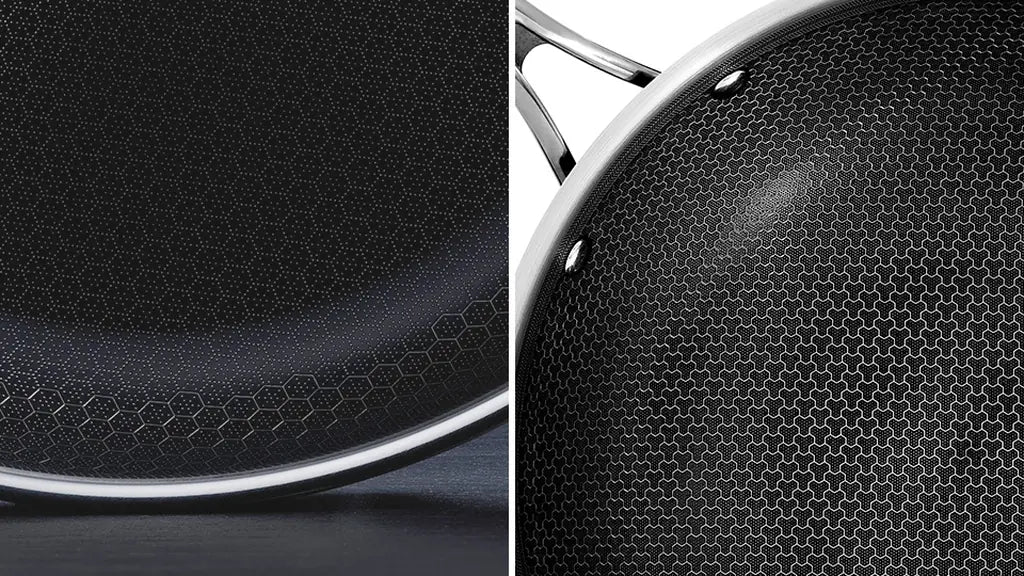
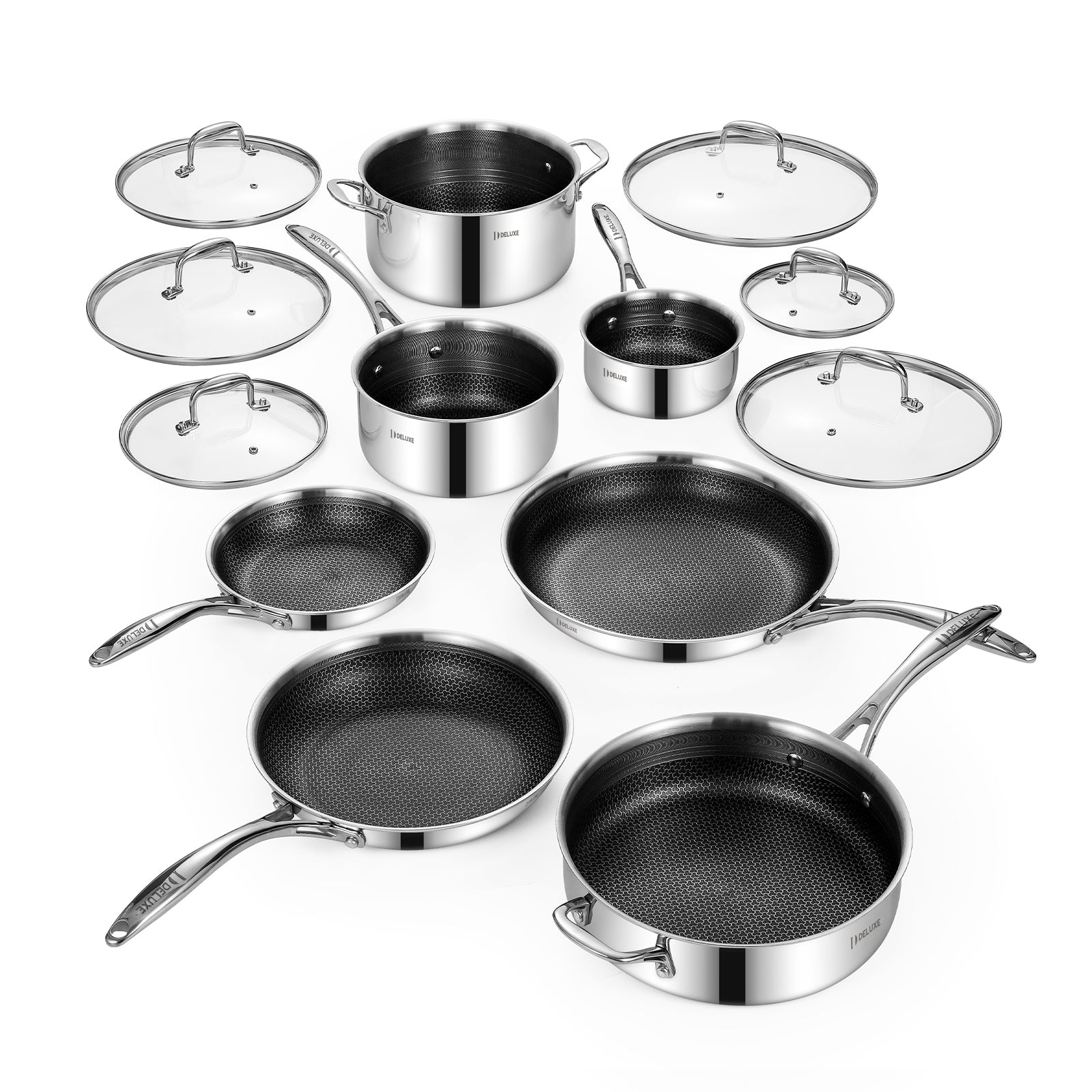
Our cookware design starts with everyday handling. A stainless steel cookware frying pan with a ceramic nonstick surface, magnetic base, riveted handle, and glass lid still needs comfortable lifting and practical storage.

What Should You Verify Before Buying a Frying Pan With Lid?
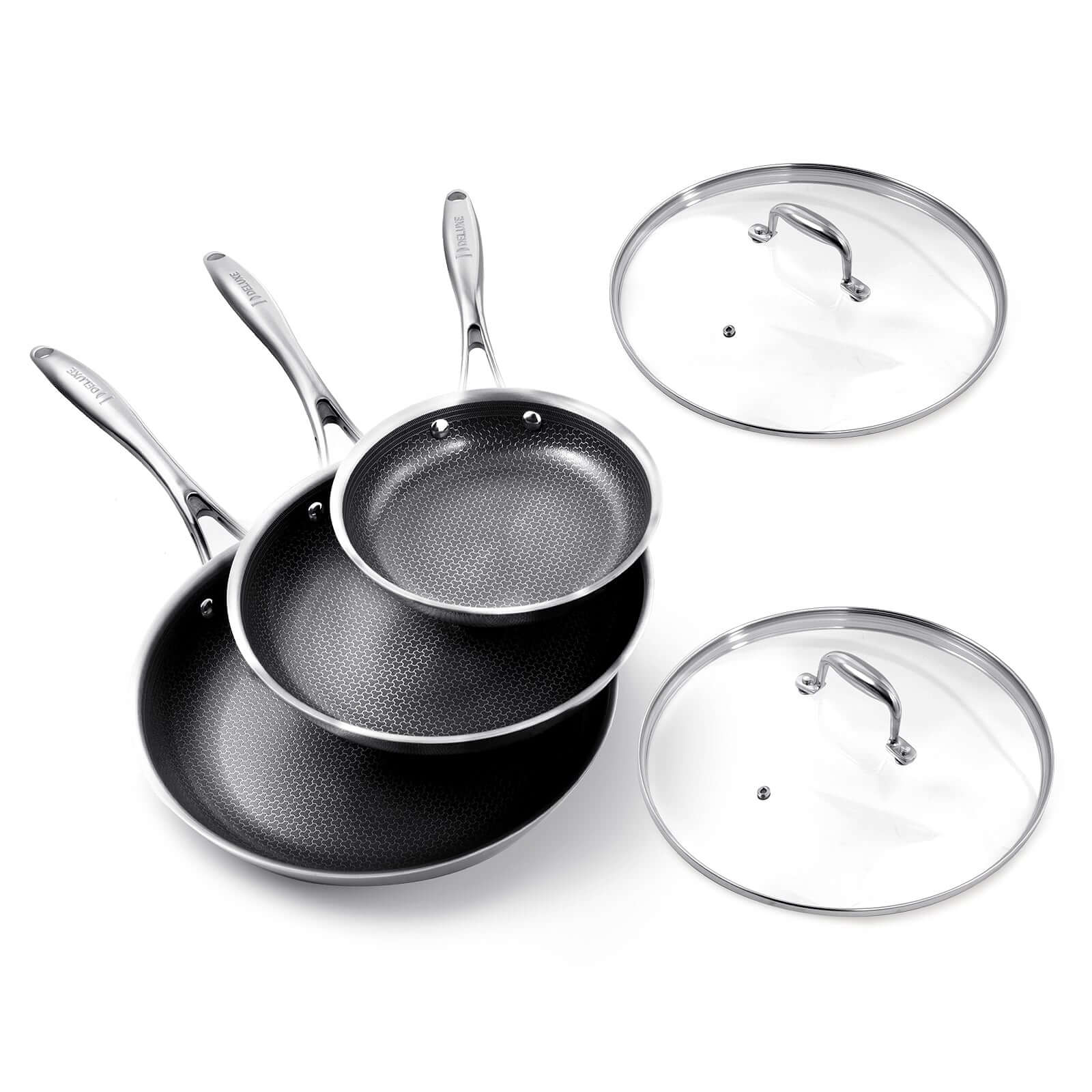
Photos can imply a complete set when components are separate. Read the exact variant details and compare body and lid specifications.
Confirm That the Exact Pan Includes a Lid
Check package contents for the selected size and color. Shared photography may show pieces not included in one variant. Also distinguish a shallow skillet from a straight-sided sauté pan suited to deep frying tasks.
For cooks who regularly brown and then cover, our 3.7 Qt Hybrid Sauté Pan with Lid is a natural DELUXE fit for saucy work. Its included lid, deep walls, aluminum core, 304 stainless steel reinforcement, hybrid ceramic nonstick surface, and 430 magnetic stainless steel base support one-pan meals across major cooktops. Explore our frying pan collection when lower walls or more open surface suit the meal.
Check Component Care and Oven Limits Separately
A body, lid, knob, and handle may have different limits. Follow the lowest applicable limit for the exact model; an oven-safe pan does not prove every lid shares its rating.
Review the DELUXE care guide. For our hybrid cookware, start with low to medium heat, use a little oil when needed, cool before washing, and clean with warm soapy water and a soft sponge.
Choose a Frying Pan With the Right Lid
Choose by cooking sequence. An 8-inch frying pan suits small tasks; a fitted covered model adds value for single portions needing gentle finishing. A 10- or 12-inch pan covers common dinners. A 14 inch frying pan adds batch space but demands storage, while a deep frying pan better contains sauces and taller ingredients.
Compare these points in order:
- Decide whether your usual meals need browning, covered finishing, or both.
- Match the cooking surface area and wall height to your portions.
- Verify that the selected variant actually includes a stable, compatible lid.
- Confirm cooktop fit and the separate care and oven limits of every component.
Ready to simplify sear-to-simmer meals? Shop a DELUXE frying pan with lid that matches your portions, handling needs, and cooktop.

FAQs About Frying Pans With Lids
Q1: Can a Frying Pan Lid Be Used While Deep-Frying?
No. Do not cover a pan while food is actively deep-frying because condensation can drip into hot oil and cause dangerous splattering. Keep a suitable metal lid nearby for emergency fire control, but never pour water on a grease fire.
Q2: Does a Vented Lid Reduce Condensation?
A vent lets some water vapor escape, so it may reduce pressure pulses and heavy fogging, but it will not keep the glass clear at all temperatures. Condensation also depends on food moisture, heat level, and the temperature difference between the steam and lid.
Q3: Can a Glass Lid Go From Stovetop to Oven?
Only when the manufacturer explicitly approves that exact lid for the intended oven temperature. Glass type, metal rim, knob material, and rapid temperature changes all matter. Avoid assuming the lid shares the pan body’s rating, and never expose ordinary glass cookware to a broiler unless specifically permitted.
Q4: Why Does a Lid Rattle During Cooking?
Escaping steam can briefly lift a light lid, especially during a vigorous boil. Lower the heat and reposition the lid so it seats evenly. Persistent rocking can also indicate a mismatched diameter, residue on the rim, or a warped pan or lid.
Q5: Should a Frying Pan Lid Be Stored on or Off the Pan?
Store it off or slightly ajar after both pieces are clean and dry. Airflow limits trapped odors and moisture. If the lid rests upside down on the pan, add a soft divider to protect the glass, rim, and cooking surface.