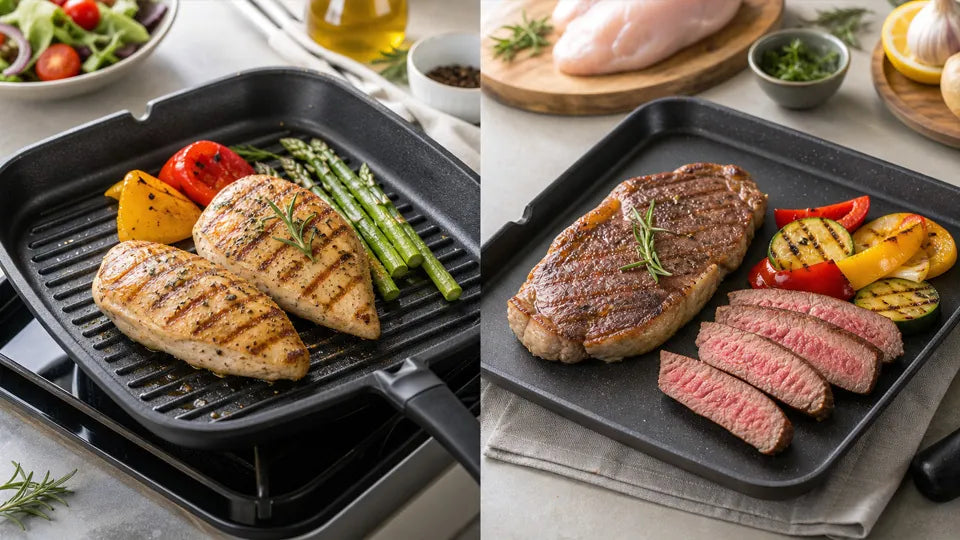
5 Ways a Griddle Pan Helps You Cook Healthier Meat and Poultry
A griddle pan can support healthier meat and poultry meals by helping you use less added fat, manage portions, and build flavor without relying on heavy sauces. The benefits depend on the pan design, the protein you choose, and your cooking technique. A ridged grill-style pan can channel some rendered fat away from food, while a flat griddle provides broad contact for even cooking. Neither design automatically makes a meal healthy, but both can be useful parts of a balanced cooking routine.
Way 1: Move Rendered Fat Away From Protein
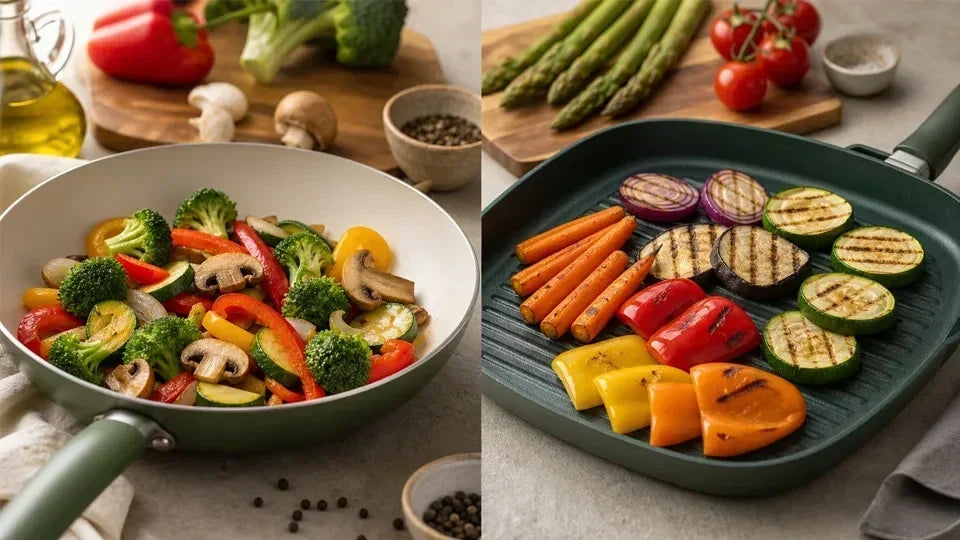
A ridged griddle or grill pan can keep part of the meat above the fat and juices released during cooking. This separation may reduce how much rendered fat remains in contact with the food, especially when cooking burgers, chops, sausages, or skin-on poultry.

How Ridges Handle Drippings
The benefits of ridges in griddle pans for fat reduction depend on the depth and spacing of the channels. Pronounced ridges create gaps where liquid can collect, while shallow surface textures may primarily affect contact and browning. After cooking, move the protein to a clean plate instead of letting it sit in the collected drippings.
How a Flat Griddle Manages Fat
A flat griddle works differently. Because it has no deep channels, rendered fat remains on the cooking surface until it is removed. Tilt the pan only if its design and handle allow safe control, or carefully spoon away excess liquid between batches.
Protein Choice Still Matters
Pan shape is only one part of fat management. The American Heart Association recommends choosing lean cuts, trimming visible fat, and removing poultry skin when appropriate. Its guidance also suggests draining fat after browning when using less-lean ground meat.
Way 2: Limit Added Fat Without Sacrificing Flavor
Low-fat cooking with griddle pans is possible because a well-maintained nonstick or hybrid surface may need only a light coating of oil. This can give you more control over added fat than shallow-frying meat in a visible layer of oil.

Measure and Apply Oil
Use a brush or folded paper towel to spread a small amount of oil across the active cooking area. You can also apply oil lightly to the protein rather than coating the whole griddle. Measure the oil when nutritional precision matters, since free-pouring makes the amount difficult to judge.
Consider the Whole Meal
Less added oil does not guarantee a low-calorie meal. The total still depends on the cut of meat, portion size, skin, marinade, sauce, and side dishes. A fatty burger cooked without added oil may contain more fat than a lightly oiled skinless chicken breast.
The American Heart Association’s advice on reducing saturated fat prioritizes lean or extra-lean meat, limited processed meat, trimmed visible fat, and skinless poultry. Cookware can support those choices, but it cannot replace them.
Manage Portions and Seasoning
A griddle’s broad surface can also help with portion planning. Instead of filling every available space, leave room between pieces and cook only the servings needed for the meal. Open space allows moisture to escape and makes each portion easier to monitor.
Flavor does not have to come from butter or rich finishing sauces. Try a measured amount of liquid vegetable oil with black pepper, paprika, cumin, garlic, thyme, rosemary, or citrus zest. Check packaged spice blends for sodium if reducing salt is part of your eating plan.
Way 3: Protect Texture With Controlled Cooking
A griddle can help preserve texture by cooking meat evenly and allowing you to monitor each piece. It does not guarantee better nutrient retention, and intense or prolonged cooking should not be promoted as a nutritional advantage.
Cooking changes the water, fat, and nutrient composition of meat. The result varies with the protein, thickness, preparation method, cooking time, and final internal temperature. Claims that rapid searing “locks in” nutrients or juices oversimplify what happens during cooking.
Prepare Evenly Sized Portions
Use pieces of similar thickness so they finish at approximately the same time. If one chicken breast is much thicker than another, pound the thicker section to a more even profile or cook the pieces separately. Turn the meat as needed to avoid developing heavily charred areas.
Verify Safe Internal Temperatures
Color and grill marks cannot confirm that poultry or ground meat is safe to eat. Use a food thermometer and check the thickest part without touching bone. USDA food-safety guidance calls for poultry to reach 165°F, ground beef, pork, veal, and lamb to reach 160°F, and whole cuts of beef, pork, veal, and lamb to reach 145°F followed by a three-minute rest.
Remove each portion when it reaches its required temperature rather than continuing to cook every piece for the same fixed time. This helps prevent dry edges and overcooked centers while still making food safety the priority.
Protect the Cooking Surface
Temperature control also matters for the cookware. DELUXE recommends low to medium heat for its hybrid ceramic products because excessive heat may shorten the life of the nonstick surface. A gently preheated griddle and properly sized portions can produce browning without subjecting the pan to unnecessary stress.
Way 4: Manage Smoke More Effectively
A griddle pan does not automatically decrease kitchen smoke. Smoke is influenced by burner temperature, oil choice, food residue, rendered fat, ventilation, and how long the protein remains on the cooking surface.
Ridged pans can separate meat from some liquid, but fat collected in the channels can still overheat and smoke. A flat griddle can also smoke when drippings, marinade, or old residue burns against the surface. No pan shape eliminates the need for temperature control and ventilation.

Prevent Smoke at the Pan
Start with a clean, dry pan and use only the amount of oil needed for a light coating. Pat meat dry before cooking, particularly when a watery marinade would otherwise run across the pan. If the oil or drippings begin smoking steadily, reduce the burner setting and move the pan away from the heat briefly.
Avoid Excessive Charring
Avoid deliberately charring meat. The National Cancer Institute explains that certain compounds can form when meat and poultry are cooked at very elevated temperatures or exposed to smoke. Its meat-cooking guidance recommends limiting prolonged cooking, avoiding direct flame exposure, turning meat regularly, and removing charred portions when reducing exposure is a concern.
Use Ventilation and Monitor Flavor
Ventilation remains important. Use a range hood that vents outdoors when available, open a nearby window if conditions allow, and keep the cooking area clear. Never leave a pan of meat unattended, particularly when fat is accumulating on the surface.
Smoke management also protects flavor. Light browning can add savory notes, while burned oil and carbonized residue often create bitterness. Moderate cooking gives you more opportunity to stop at the desired color rather than pushing the surface toward scorching.
Way 5: Build Flavor With a Balanced Approach
A griddle’s broad cooking area can create direct contact between the protein and the pan, helping develop browned flavor without requiring a thick coating, breading, or heavy sauce. This makes it easier to prepare simple meals around lean meat or poultry.
Prepare Protein for Browning
Dry the surface of the protein before seasoning it. Excess water must evaporate before browning can begin, so a wet surface tends to steam. Allow space between pieces for the same reason.
Add Flavor Without Heavy Sauces
Seasonings can supply variety without substantially changing the cooking method. Lemon zest and thyme suit chicken, while cumin and smoked paprika can complement turkey. Black pepper, garlic, rosemary, mustard powder, or a small amount of vinegar can add contrast to lean beef or pork.
Marinades can add flavor, but their ingredients still matter. Measure oil, watch the sodium in bottled sauces, and avoid allowing sweet marinades to burn. Reserve a clean portion for serving before raw meat touches the mixture. Do not reuse marinade that contacted raw poultry or meat unless it is boiled according to food-safety guidance.

Match Material to Cooking Method
The best cookware material for health cannot be identified by one label alone. Healthy cookware is cookware whose complete construction is transparent, whose surface is intact, and whose care directions match the way you cook. Stainless steel, ceramic nonstick, cast iron, and hybrid cookware each have different handling requirements.
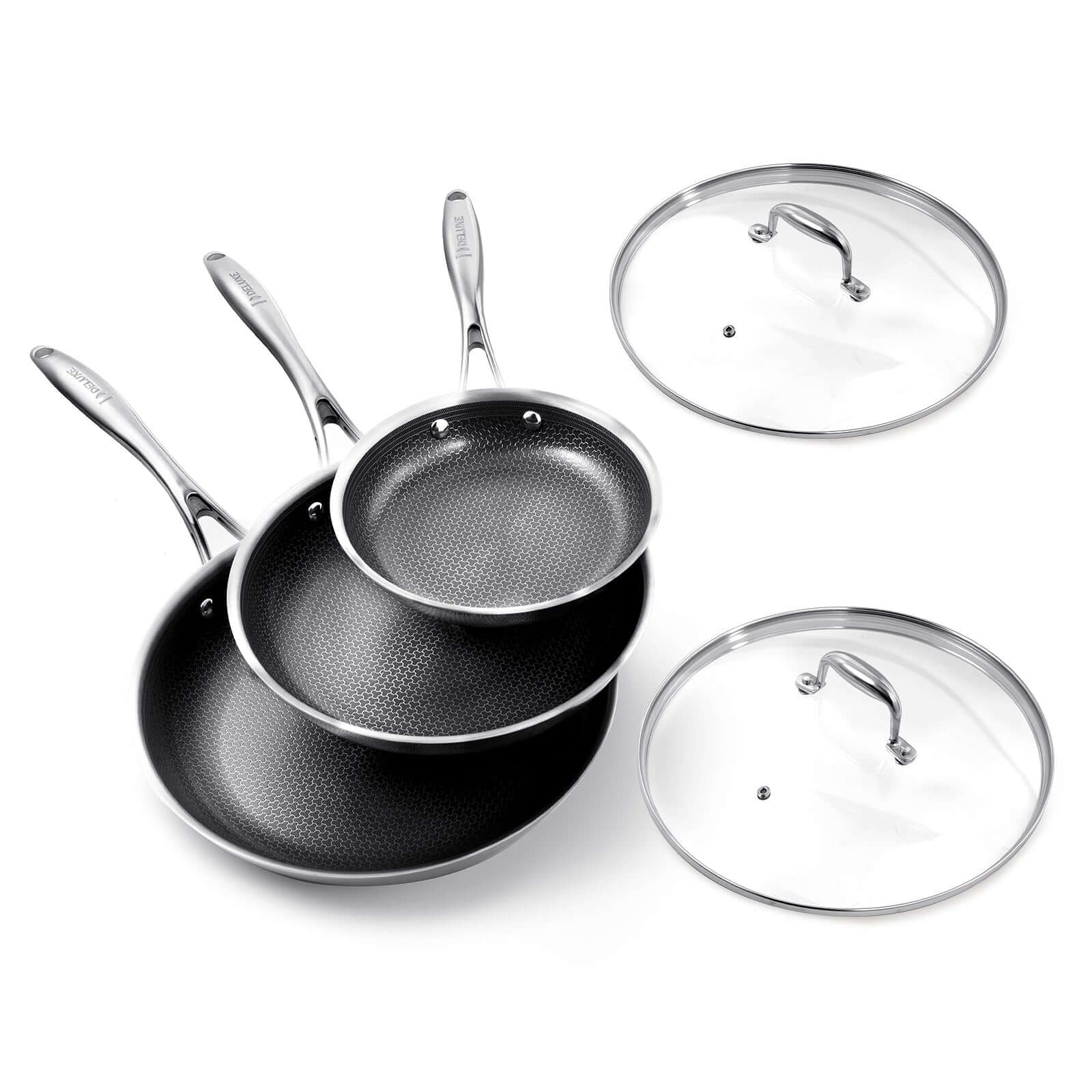
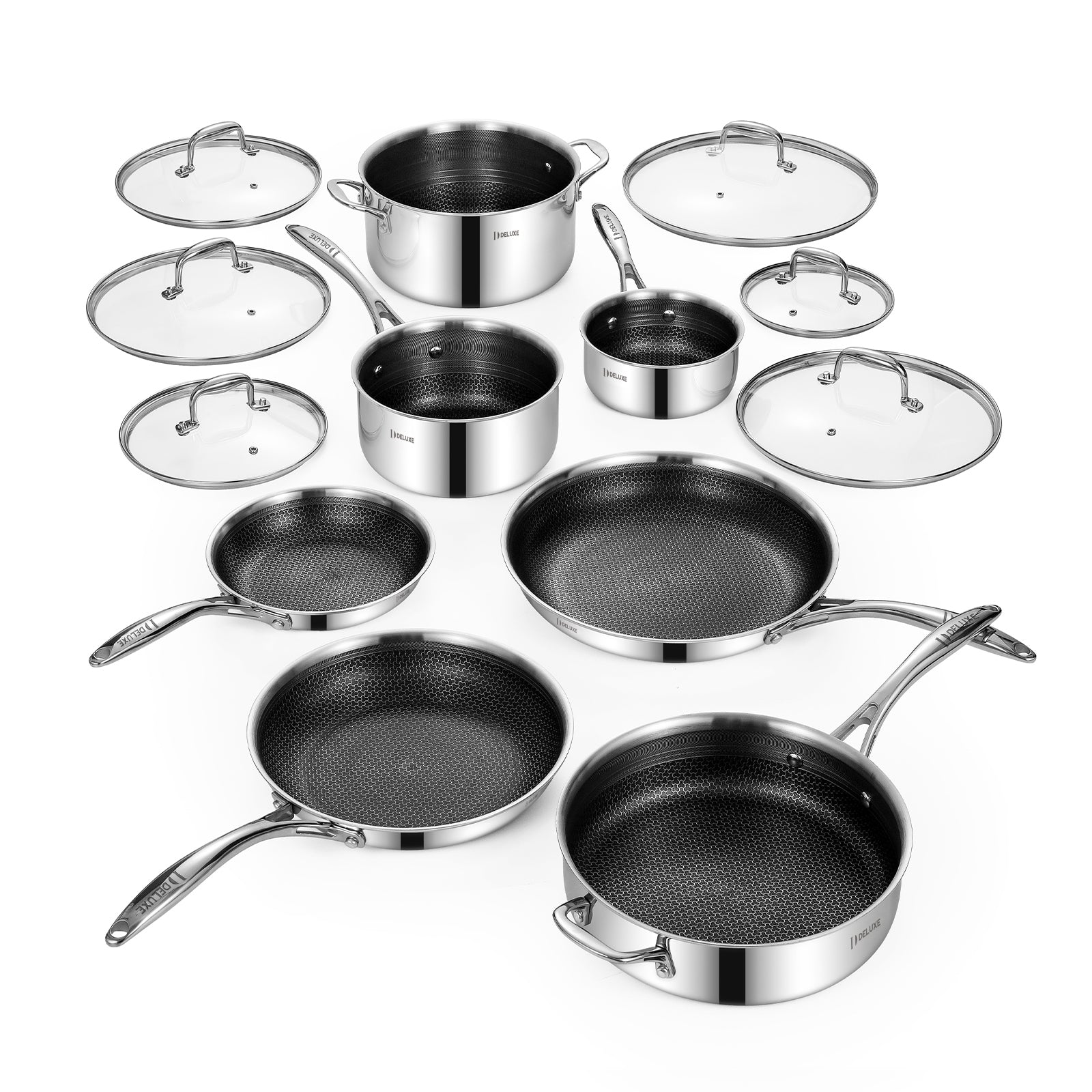
The DELUXE griddle is hybrid cookware rather than a pan made from only one material. Its verified construction includes a 304 stainless steel and ceramic nonstick surface layer, reinforced 304 stainless steel, an aluminum core, and a magnetic 430 stainless steel base. This combination provides a broad flat surface for everyday cooking, but it should still be used according to the product’s temperature and care instructions.
Clean the Griddle to Protect Its Surface
Regular, gentle cleaning helps preserve a griddle’s cooking surface and prevents old grease or food residue from affecting later meals. Cleaning does not create or restore “non-toxic” properties, but it can support the condition and performance of the pan.
Cool and Wash Gently
Allow the griddle to cool before exposing it to water. Sudden temperature changes may affect durability, while washing a hot pan also increases the risk of burns and splashing.
The DELUXE cookware care guide recommends warm, soapy water and a soft sponge or cloth. It advises against sharp or rough metal utensils and aerosol cooking sprays, which may leave residue that reduces nonstick performance over time.
For routine care:
- Remove food and loose drippings after cooking.
- Let the griddle cool completely.
- Wash it with warm water, dish soap, and a soft sponge.
- Rinse away all detergent and food residue.
- Dry the pan before storing it.
Handle Stubborn Residue Carefully
Do not scrape stubborn residue with a knife or abrasive pad. Soaking the cooled pan in warm, soapy water is the gentler first step. Follow the exact product instructions before using baking soda, acidic cleaners, a dishwasher, or any stronger cleaning method.
Inspect for Physical Damage
Inspect the surface periodically. Stop using cookware with serious peeling, serious damage, distortion, or a loose handle until you have consulted the manufacturer’s guidance. Proper care cannot reverse substantial physical damage.
Choose the Right Griddle for Healthier Meals
A griddle pan can support healthier cooking habits, but its benefits come from the full process: choosing lean protein, measuring added oil, managing rendered fat, avoiding burned surfaces, and confirming doneness with a thermometer. Deep ridges may channel some fat away, while a flat griddle offers broad contact and flexible portion placement.
Compare DELUXE griddle pan options by surface design, size, construction, and care requirements. Match the pan to the cooking result you need, then use moderate settings and gentle cleaning to protect its hybrid surface.
FAQs About Griddle Pan Healthier Cooking
Q1. Do Griddle Pan Ridges Remove All Fat From Meat?
No, ridges can channel some rendered fat away from the protein, but they cannot remove fat contained inside the meat. Choosing a lean cut and trimming visible fat generally has a greater effect.
Q2. Is a Flat Griddle Suitable for Chicken?
Yes, if the chicken fits securely on the cooking surface and reaches 165°F internally. Use a food thermometer rather than judging doneness from browning alone.
Q3. Can You Cook Meat on a Griddle Without Oil?
Sometimes, depending on the protein and cooking surface. A small amount of oil may improve contact and release, so follow the pan’s care instructions instead of assuming oil is never needed.
Q4. Are Grill Marks a Sign That Meat Is Safe?
No, grill marks only show that parts of the surface browned. The center may still be undercooked, so verify the required internal temperature with a thermometer.
Q5. Is Ceramic the Best Healthy Cookware Material?
It depends on the product’s complete construction, condition, and intended use. Material transparency, appropriate temperature control, an intact cooking surface, and correct care matter more than relying on the word “ceramic” alone.