
Cooking for One: How Many Pots and Pans Do You Actually Need?
Most cookware guides written for solo cooks recommend three to seven pieces. For people actually cooking for one, two pieces cover most everyday cooking. This guide covers which two pieces to buy, what each one handles, when a third is worth adding, and what to skip.
Why Most Cookware Sets Are Wrong for One Person
A cookware set is priced per piece, but its value should be measured per piece you actually use. For one person, that gap is usually large enough to cancel out the discount.
The Math Behind a Set
There is one formula that settles this question faster than any list:
Effective Cost Per Piece = Set Price ÷ Pieces You Actually Use
A set looks cheap per piece because the price is spread across every item in it. Spread that same price across only the pieces you use in a normal week, and the per-piece cost can climb past what those pieces would cost on their own. That number, not the total piece count, is what you're paying for.
Brands rarely run this math themselves: sets are what they sell most of, and a per-used-piece number makes them look worse than a sticker price does.
What Happens to the Unused Pieces
Unused cookware is not neutral. It takes up cabinet space, it makes the two pans you actually use harder to find, and it becomes weight to pack the next time you move. A kitchen with four pans you use beats one with twelve where eight sit untouched.
The Minimum Setup: Two Pieces
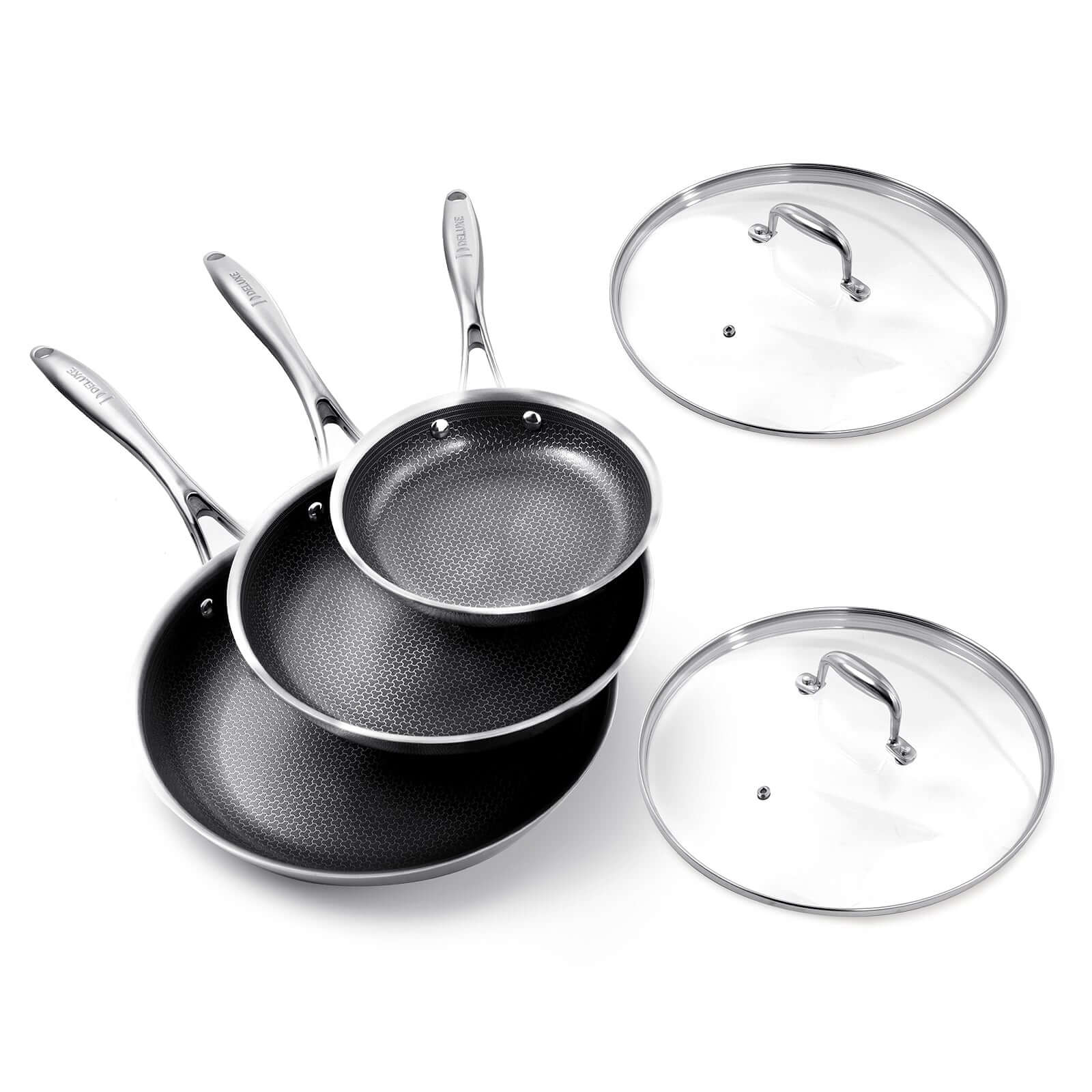
Two pieces cover most of what one person cooks in a normal week: a 10-inch frying pan, plus a deep vessel — either a 3-quart saucepan or a 3.7-quart sauté pan, depending on how you cook.

Piece One — The Frying Pan: 10 Inches
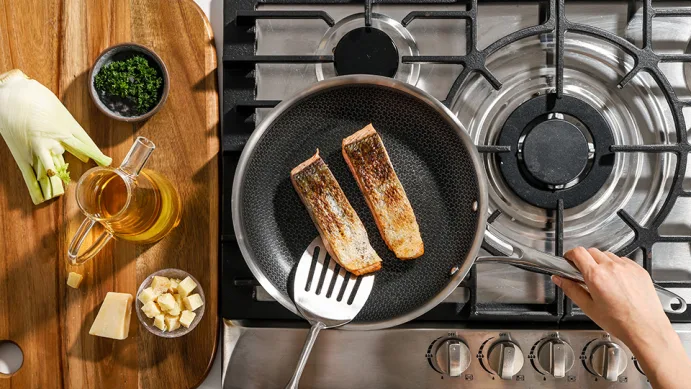
Ten inches is the practical starting point for one person. A chicken breast, two fillets, a serving of stir-fried vegetables, or two eggs all fit without crowding.
Eight inches can feel limiting when you want to cook a protein and vegetables together. Depending on portion size, you may need to cook the ingredients in separate batches.
Twelve inches goes the other way. A pan that size runs 2 to 5 pounds in most materials and closer to 8 in cast iron. It is hard to handle with one hand, takes up more burner space, and leaves roughly 45% more surface to wash.
Ten inches is the compromise that works: light enough to handle, wide enough to finish a meal in one pass.
Material is a separate decision. A nonstick or hybrid surface makes eggs and fish easier; bare stainless or carbon steel handles higher heat and metal utensils. Pick based on what you cook most.

Piece Two — 3 Qt Saucepan or 3.7 Qt Sauté Pan
This is the piece people get wrong most often, and the usual reason is that they compare the two on capacity. Capacity is the one thing that shouldn't decide it — both hold enough for a one- or two-person meal. What separates them is shape.
A 3-quart saucepan is roughly 8 inches across and 4 inches deep: tall and narrow. That shape is built for liquid — boiling pasta, cooking rice, simmering soup, making noodle soup, braising a small batch of curry. The tall walls help contain bubbling liquids, and the water level is easy to read at a glance.
A 3.7-quart sauté pan is roughly 10 inches across and under 3 inches deep: wide and shallow, with straight sides and a lid. That shape is built for the surface doing the work — searing chicken, browning fish, setting an omelet, reducing a sauce, or a one-pan dish where everything finishes together.
Put simply: the saucepan is for what you cook in liquid. The sauté pan is for what you cook on the surface, and maybe add liquid to afterward.
There is overlap. A tomato risotto or a braised noodle dish works in either, just with a different feel — deeper and wetter in the saucepan, wider and more reduced in the sauté.
If you are choosing only one, look at a normal week. If you boil, simmer, or cook rice more often, take the saucepan. If you sear, brown, or finish dishes in the oven more often, take the sauté.
Why These Two
One covers the surface: searing, frying, and quick cooking. The other covers the depths: boiling, simmering, and one-pot meals.
Together they can stack in the space of one large pot. The third slot in your kitchen is better left open until you know what you actually need there — not filled in advance.
What to Add Third
The first two pieces cover frying, simmering, and boiling. A third is worth buying only if it adds a cooking method those two cannot do well — roasting, steaming, or high-heat stir-frying.

If You Roast or Bake: A Dutch Oven
A Dutch oven handles roasting, bread baking, and large-batch soups in one vessel. 5 to 6 quarts is the range most one-person kitchens settle on: larger than a single serving needs, but the size that leaves room for a whole loaf or a braise that simmers for hours.
It is worth considering if you use it more than four times a month.
If You Stir-Fry Often: A Wok
A 12-inch flat-bottom wok makes tossing easier than a frying pan does — the sloped sides keep food moving instead of letting it sit and steam. It is worth adding if you stir-fry more than once a week.
If You Steam Regularly: A Steamer Basket
A basic steamer basket insert fits inside a pot and costs a fraction of a new pot or pan. Try that first. Only consider a standalone steamer or a larger pot if you need to steam a whole fish or a large batch of vegetables at once.
When the Answer Is "Nothing"
If none of the three above is something you do every week, two pieces is enough. The point of a third piece is to fill a real gap in what you cook — not to bring the count up to three.
What You Can Live Without
Most one-person kitchen lists include pieces that rarely get used, plus appliances that promise to replace cookware outright. These are the ones worth skipping.
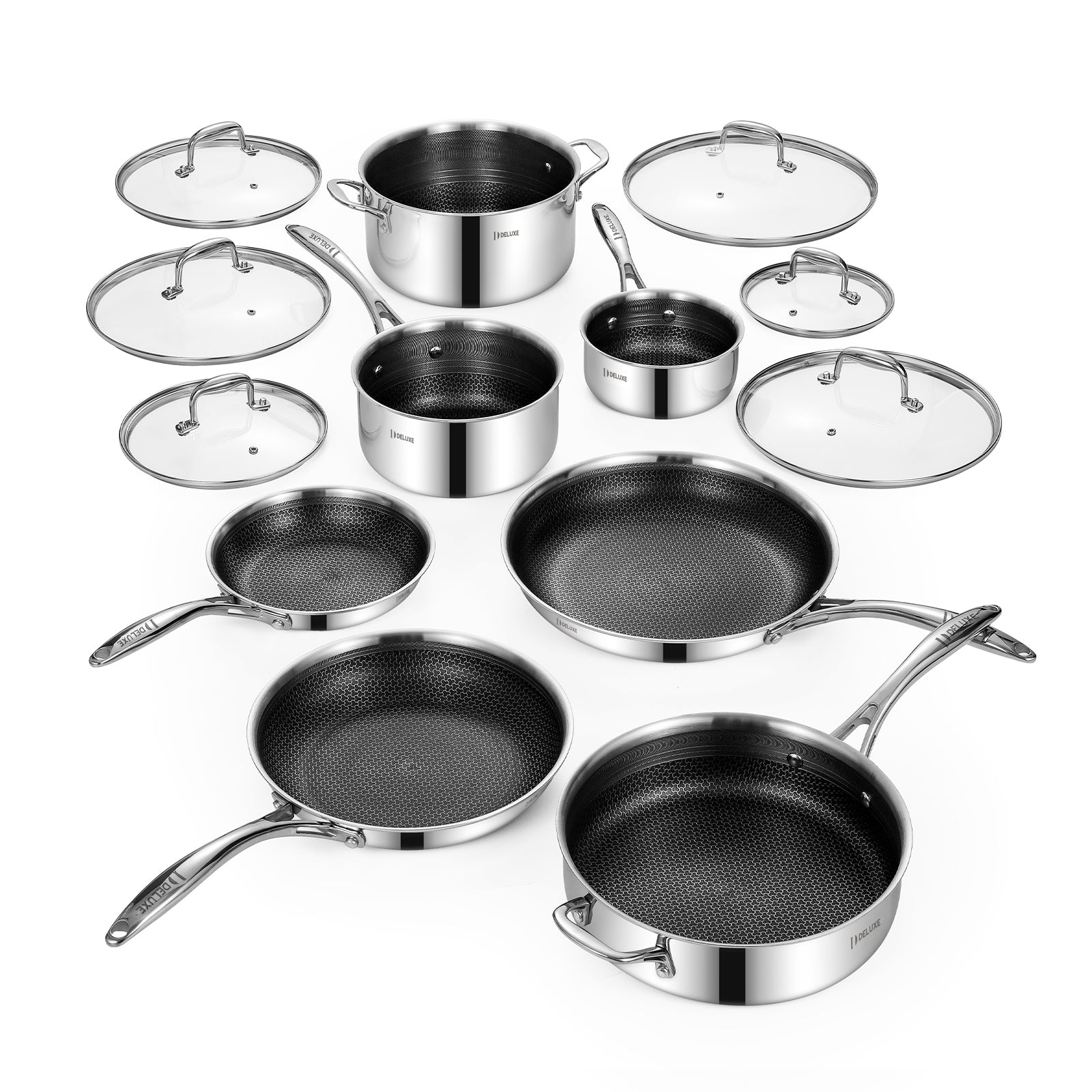
A Full Cookware Set
This comes back to the formula in the first section. A set is worth considering only if you expect to expand to cooking for two or more within a year or two. If you are not sure, wait.
A Second Pan in a Smaller Size
A 1.3- or 2-quart saucepan works well for sauces, oatmeal, rice, reheating, and other small portions, but many of those tasks overlap with what a 3-quart saucepan can already handle. If you already have the 3-quart, a smaller one mostly repeats what you can already do.

Specialty Pans You'll Use Once a Year
A crepe pan, a dedicated fish pan, or a separate small baking dish each solves a narrow problem. If you make crepes twice a year, borrow or improvise. Buy the pan when the frequency changes.
Appliances That Claim to Replace Cookware
Air fryers, multi-cookers, and countertop grills often get marketed as replacements for stovetop pans. In practice, they add a second set of cleaning and storage requirements rather than removing the first. Consider them additions, not substitutes.
How to Build Up Without Waste
Buy the frying pan and one deep vessel. Do not buy the third at the same time. Two pieces cover the majority of everyday cooking, and buying more upfront mostly means guessing.
After a month, you will know two things: which of the two you reach for most, and which methods you keep skipping because neither piece handles them well. That second answer is what names the third piece — or tells you that you don't need one.
Conclusion
Two pieces cover most of what one person cooks. The formula in the first section is the reason a set usually does not pay off at this scale: price per piece only looks low when the denominator includes pieces you never touch.
Add the third piece when a specific cooking method becomes a weekly habit. Until then, the two-piece setup is not a compromise — it is the correct number.
Frequently Asked Questions
What size frying pan is best for one person?
Ten inches. It fits a chicken breast, two fish fillets, a serving of vegetables, or two eggs without crowding. 8 inches fills up with a single chicken breast; 12 inches is heavy enough to be hard to handle with one hand.
Is a Dutch oven worth it for one person?
It can be, if you bake bread or cook braises regularly. A 5.4-quart Dutch oven is larger than a single serving requires, but that extra room is what makes bread and long braises work. It is worth adding if you would use it more than four times a month.
What material is best for cookware for one person?
There is no single best material. Nonstick and hybrid surfaces make eggs, fish, and low-fat cooking easier and need less fat to release food. Bare stainless and carbon steel take a little practice, but they handle higher heat, and they last longer because there is no coating to wear out. The right choice depends on what you cook most often.
How do you cook for one person without wasting food?
Cook in single-serve portions and use smaller pans. A 10-inch pan and a 3-quart pot are sized for one or two servings, so there is less left over. When a recipe makes more than one serving, portion it out and refrigerate the rest for a second meal rather than scaling the recipe down, since most recipes do not divide cleanly.
If you could only buy one pan, what should it be?
A 3.7-quart sauté pan with a lid. It is the closest a single piece gets to a whole kitchen: wide enough to sear, deep enough to simmer, and covered for one-pot dishes. Two pieces still beat it — a 10-inch frying pan plus a saucepan covers more ground — but if one pan is the constraint, this is the one.

Leave a comment
This site is protected by hCaptcha and the hCaptcha Privacy Policy and Terms of Service apply.