What Is a Wok and What Is It Used For?
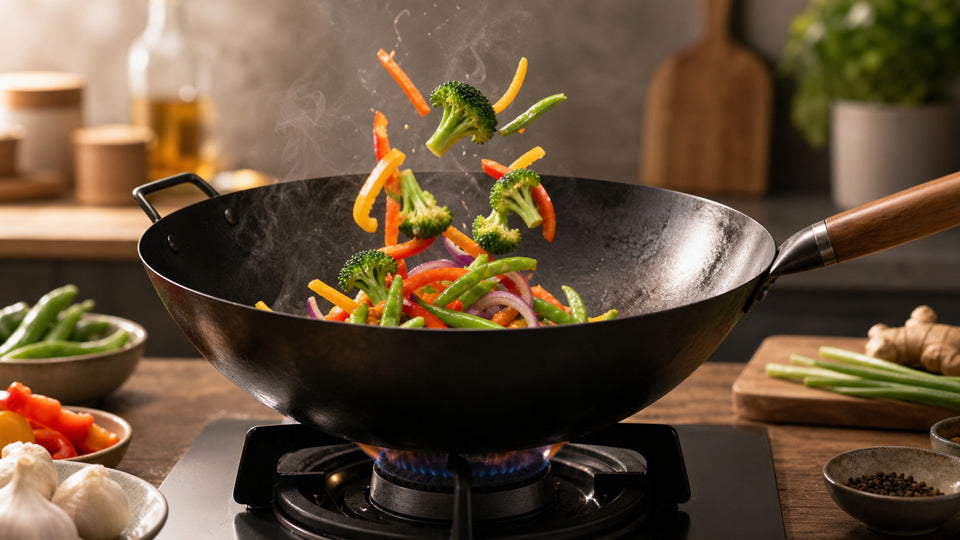
If you have seen frozen “wok vegetables” with carrots, broccoli, or green beans and wondered whether those foods really belong in a wok, the answer is yes. A wok is a cooking vessel, not a fixed recipe. Traditional dishes vary by country and region, but the pan itself is flexible.
The real question is not only “what is a wok?” It is also “do I need one, what type should I buy, and can I use it on my stove?”
What Is a Wok?
A wok is a cooking pan with high, sloped sides and a rounded or flat bottom.
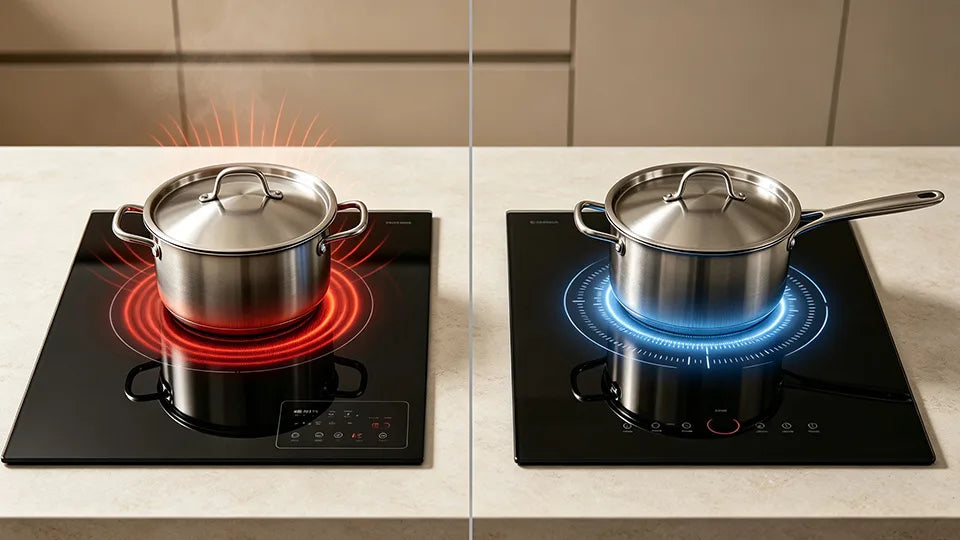
Traditional woks are round-bottomed and are used over strong gas flames. Modern home woks often have flat bottoms so they can sit safely on electric, induction, and glass top stoves.
The shape is the main difference between a wok and a regular frying pan.
A frying pan has a flatter cooking surface. A wok has a smaller hot bottom and wide sides that let you toss and move food quickly.
Why Is a Wok Shaped Like a Bowl?
The bowl shape creates different heat zones.
The bottom gets very hot. The sides are cooler.
This lets you sear ingredients at the bottom, then push them up the sides while other ingredients cook.
That is why a wok pan is so useful for stir-frying. You can cook quickly without everything sitting in one flat layer.

What Is Wok Hei?
Wok hei is often translated as “the breath of the wok.”
In practical terms, it refers to the smoky, browned flavor that comes from high heat, quick cooking, and good technique.
It is especially important in classic dishes like dry-fried beef noodles.
But you do not need a restaurant burner to make great wok food at home.
What Is a Wok Used For?
A wok is best known for stir-frying, but it can do much more.
You can use a wok for quick vegetables, fried rice, noodles, deep-fried chicken, dumplings, steaming, soups, and even simple braises.
Stir-Frying
Stir-frying is the most common wok use.
You cook small pieces of food quickly over high heat with a small amount of oil.
Good stir-fry ingredients include chicken, beef, shrimp, tofu, broccoli, carrots, green beans, onions, peppers, mushrooms, cabbage, bok choy, and snap peas.
This is why frozen vegetable blends often say they are for wok cooking. They are designed for quick, high-heat environments.
Fried Rice
A wok is excellent for fried rice because the wide sides make tossing easier.
Use day-old rice if possible.
Fresh rice is often too wet and can turn mushy.
Cook your eggs first, remove them, stir-fry the vegetables and protein, then add the rice and sauce.
Noodles
A wok is useful for lo mein, chow mein, pad see ew, drunken noodles, yakisoba-style noodles, and simple garlic noodles.
The high sides help keep the noodles inside the pan while tossing.
Deep Frying
A wok can be used for deep frying because the deep shape holds oil well and reduces splatter.
One home-friendly example is Korean butter-fried honey chicken.
You can fry chicken pieces twice in the wok, drain them, wipe the wok clean, and then make a sauce with butter, garlic, soy sauce, brown sugar, and honey. Add the chicken back, toss to coat, and finish with green onions and sesame seeds.
This shows how flexible a wok can be: fry first, sauce second, toss at the end.
Steaming
You can steam in a wok by adding water and placing a bamboo steamer or steaming rack above it.
This method works for dumplings, buns, fish, vegetables, and eggs.
Braising
A wok can handle short braises, especially dishes that start with stir-frying aromatics and then simmer in a sauce.
However, for long braises, a Dutch oven, stainless steel pot, or other dedicated cookware may be better.
Long simmering can weaken the seasoning on a carbon steel wok.

Common Types of Woks
The best wok depends on your stove, cooking style, and maintenance preferences.
There is no single perfect wok for everyone.
Carbon Steel Wok
Carbon steel is the most traditional and popular wok material.
It heats quickly, cools quickly, is lighter than cast iron, and can become naturally more nonstick with proper seasoning.
For most people who want a traditional wok, carbon steel is the best choice.
It does require care. You need to season it, dry it thoroughly after washing, and wipe it with a little oil to prevent rust.
Cast Iron Wok
A cast iron wok holds heat well, but it is heavy.
It can work, but many home cooks find it harder to toss food with a heavy cast iron wok.
Cast iron also heats and cools more slowly than carbon steel.
Stainless Steel Wok
A stainless steel wok is durable, but it is not usually the best choice for classic stir-frying.
Food can stick more easily, especially when cooking rice, noodles, or proteins.
A stainless steel wok may be useful for braises, boiling, or steaming, but for everyday stir-fry, carbon steel is generally easier.
If you already use stainless steel cookware, you may prefer stainless steel pans for searing and a carbon steel wok for stir-frying.
Ceramic Coated Wok
A ceramic-coated wok or ceramic nonstick cookware option can be easy to clean and useful for lower-oil cooking.
However, like other ceramic cookware, it may not be designed for extreme high heat.
If you are considering ceramic cookware, always check the heat rating and care instructions.
Ceramic nonstick pans can be excellent for eggs and delicate cooking, but a carbon steel wok is usually better for high-heat stir-fries.
Hybrid Nonstick Wok
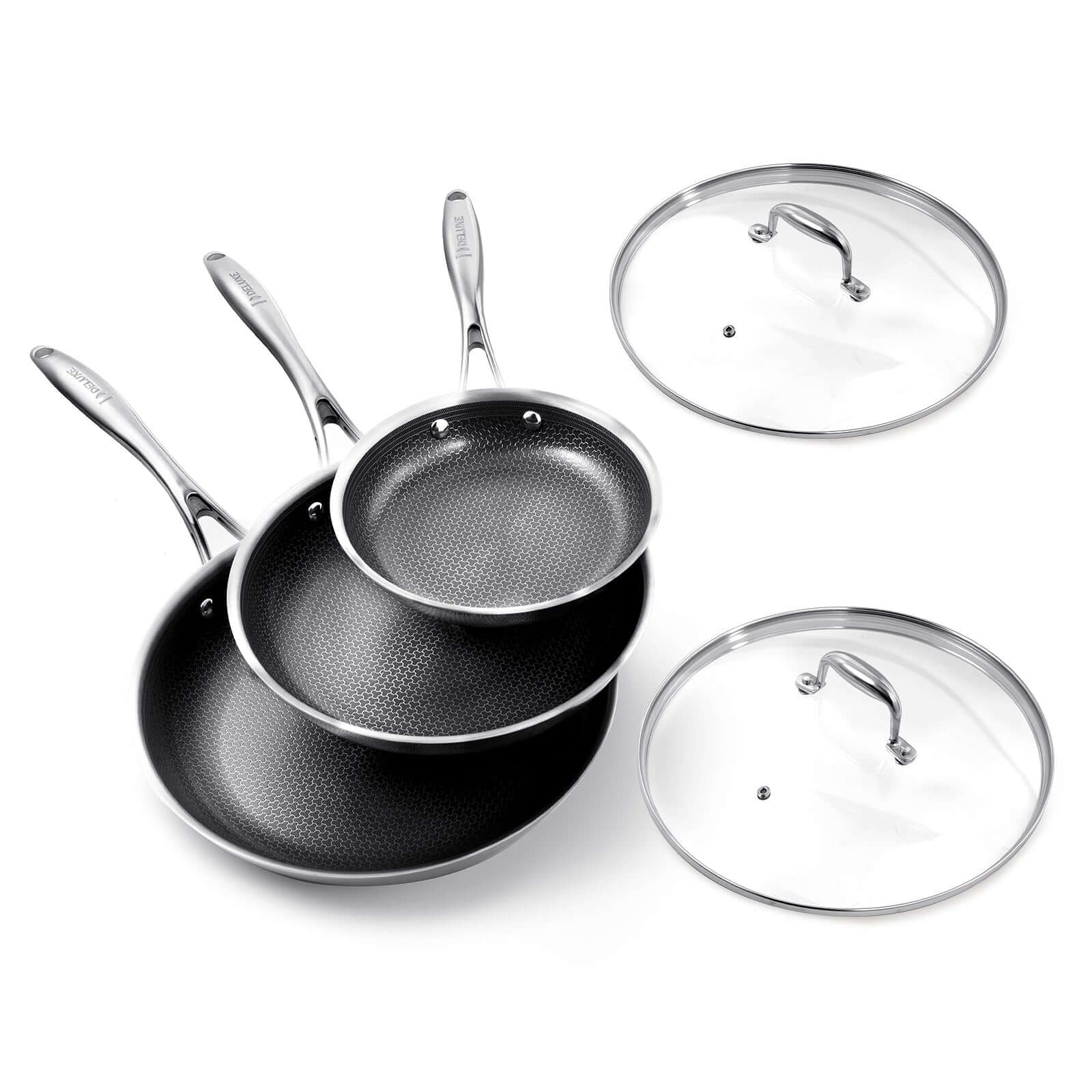
A nonstick wok is easy for beginners and simple to clean.
It can work well for gentle stir-fries, noodles, and vegetables.
However, most nonstick cookware is not ideal for very high heat. If you use a nonstick wok, follow the manufacturer’s temperature guidance and avoid metal utensils.
Nonstick pans are great for eggs and delicate foods, but they are not always the best cookware for serious high-heat wok cooking.

Round Bottom Wok vs. Flat Bottom Wok
This choice depends mostly on your stovetop.
Round Bottom Wok
A round bottom wok is the traditional design.
It creates strong heat zones and makes tossing easier.
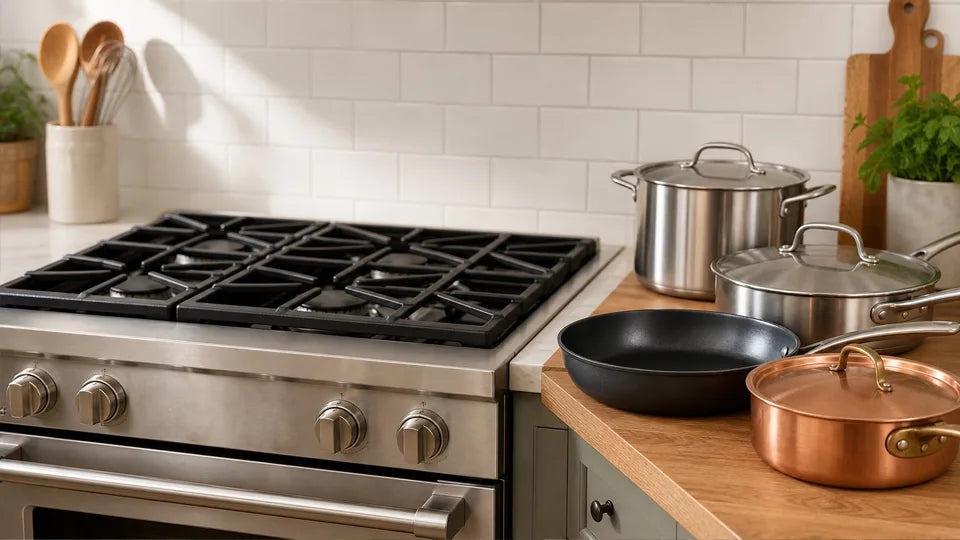
It works best with a gas burner and a wok ring.
Flat Bottom Wok
A flat bottom wok is more practical for modern home kitchens.
It sits directly on the stove and works much better on electric, glass, and induction cooktops.
If you are new to wok cooking, a flat bottom wok is usually easier to handle.
Which One Should You Buy?
Choose a round bottom wok if you have a strong gas burner and want a more traditional setup.
Choose a flat bottom wok if you use electric, induction, or glass top cooking.
For most home cooks, a 14-inch flat bottom carbon steel wok is a safe and practical starting point.

What Size Wok Should You Buy?
For most home kitchens, a 14-inch wok is the best size.
It is large enough for stir-frying without overcrowding, but still small enough to fit comfortably on a home stove.
Small Wok
A small wok can work for one person or smaller portions.
But it can get crowded quickly.
Crowding causes food to steam instead of sear.
14-Inch Wok
A 14-inch wok is the most common size for home cooks.
It works perfectly for vegetables, noodles, fried rice, chicken, shrimp, and family meals.
16-Inch Wok
A 16-inch wok gives you more room, but it may be too large for smaller stoves.
If the burner cannot heat it properly, the extra size will not be helpful.

How to Cook With a Wok
Wok cooking is fast.
The biggest mistake you can make is starting before everything is ready.
Prep Everything First
Cut all your ingredients before turning on the heat.
Have your sauce mixed and ready.
Keep your aromatics, vegetables, protein, and garnishes nearby.
Once the cooking starts, you will not have time to chop.
Cut Food Into Small Pieces
Small pieces cook quickly and evenly.
Slice meat thinly.
Cut vegetables into similar sizes.
This prevents one ingredient from burning while another stays raw.
Preheat the Wok
A hot wok helps food sear instead of steam.
Heat the wok completely before adding oil.
For carbon steel, the oil should shimmer quickly as soon as it is added.
Cook in Batches
Do not overcrowd the wok.
If you add too much food at once, the temperature drops, and the food releases water.
That creates a soggy stir-fry.
Cook the protein first, remove it, cook the vegetables, and then bring everything back together with the sauce.
Keep Food Moving
Stir, toss, and push food around the wok continually.
Use the hot bottom for searing.
Use the cooler sides to hold food that needs less heat.
Add Sauce Near the End
Do not add your sauce too early.
Sauce can burn or make the food soggy if it cooks for too long.
Add it near the end of the process and toss quickly to coat.
How a Wok Fits Into a Cookware Set
A wok does not replace every pan in your kitchen.
It solves a specific cooking problem: fast, high-heat, high-volume cooking.
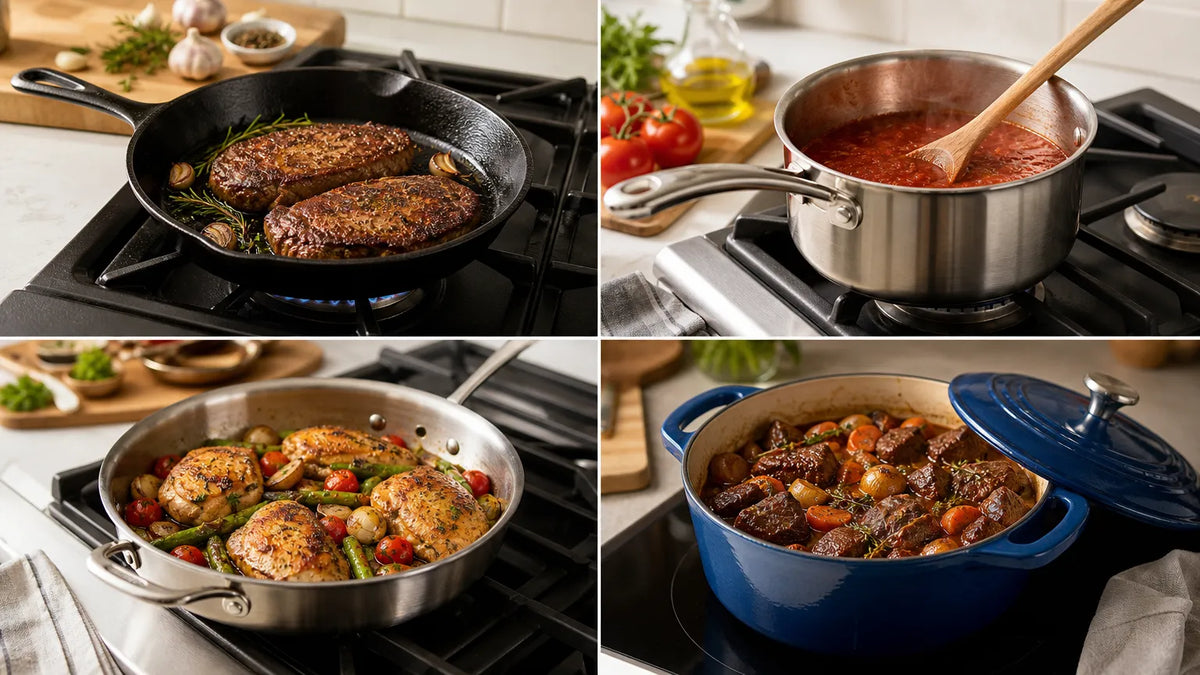
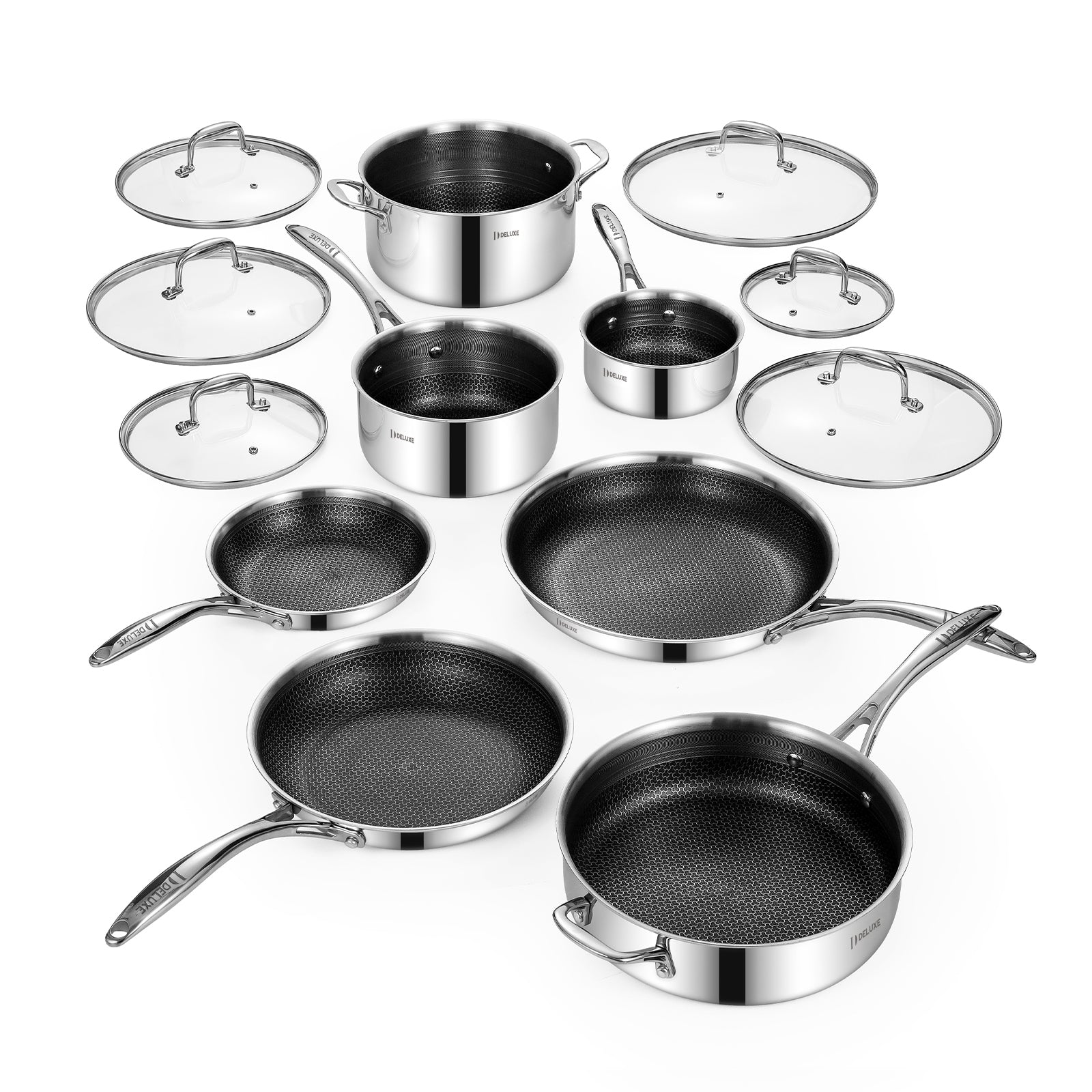
A balanced pots and pans set might include a wok pan for stir-frying, a stainless steel frying pan for steak, a ceramic pan for eggs, a saucepan for sauces, and a large stainless steel pot for pasta or soup.
That kind of curated cookware set is much more useful than trying to make one pan do everything.
A Gentle Buying Note
If you are upgrading your kitchen pots and pans, choose pieces based on how you actually cook.
For stir-fries, look for a good wok.
For eggs, look for ceramic nonstick cookware or dedicated nonstick pans.
For searing, look for stainless steel pans or hybrid cookware.
For induction setups, choose induction-compatible cookware.
The best cookware is not always the most expensive. It is the cookware that perfectly matches your stove, recipes, and cleaning habits.
Choose the Right Wok
For most home cooks, a 14-inch flat-bottom carbon steel wok is the best starting point. If you want easier maintenance, a nonstick wok can still be highly useful. If you cook on induction or glass-top stoves, make sure the wok is flat-bottomed and completely compatible with your cooktop.
A wok is not magic. Good technique matters more than expensive equipment.
Preheat well, cook in batches, keep the food moving, and clean the wok properly. If you do that, a wok can easily become one of the most practical pieces in your kitchen.
FAQ About Wok Cooking
Is a Wok Only for Chinese Food?
No. Woks are strongly associated with Chinese cooking, but similar fast, high-heat cooking methods are used across many Asian cuisines.
You can seamlessly cook Chinese stir-fries, Korean fried chicken, Thai noodles, Vietnamese-style vegetables, Japanese-inspired fried rice, and simple weeknight meals in a wok.
Do You Need a Huge Burner for Wok Cooking?
No. A powerful burner helps, but technique matters significantly more.
If your stove is not very powerful, you can still make an excellent stir-fry. You may just need to cook your ingredients in smaller batches instead of all at once.
Can I Cook Broccoli and Carrots in a Wok?
Yes. Broccoli, carrots, green beans, cabbage, onions, and many other vegetables work incredibly well in a wok. Cut them evenly and ensure you cook the harder vegetables first.
Is Carbon Steel Better Than Nonstick for a Wok?
Carbon steel is better for high-heat stir-frying and long-term performance. Nonstick is easier to use and clean but should never be overheated.