

7 Signs It’s Time to Replace Your Old Frying Pan
Knowing when to upgrade your kitchen equipment is essential for maintaining culinary performance and household safety. While high-quality skillets are designed for durability, every non-stick surface has a finite functional lifespan. Cooking with a degraded pan leads to hot spots, stubborn sticking, and compromised meals. This guide outlines the seven critical indicators that your skillet has reached the end of its usable life.
1. Notice Visible Peeling or Flaking
The most unmistakable sign that you need a replacement is the coating disintegration on your skillet's interior. Whether you cook with traditional PTFE or ceramic nonstick pans, the nonstick surface is a specialized layer bonded to an aluminum or steel base. When this bond fails, microscopic coating flecks can lift off directly into your food.
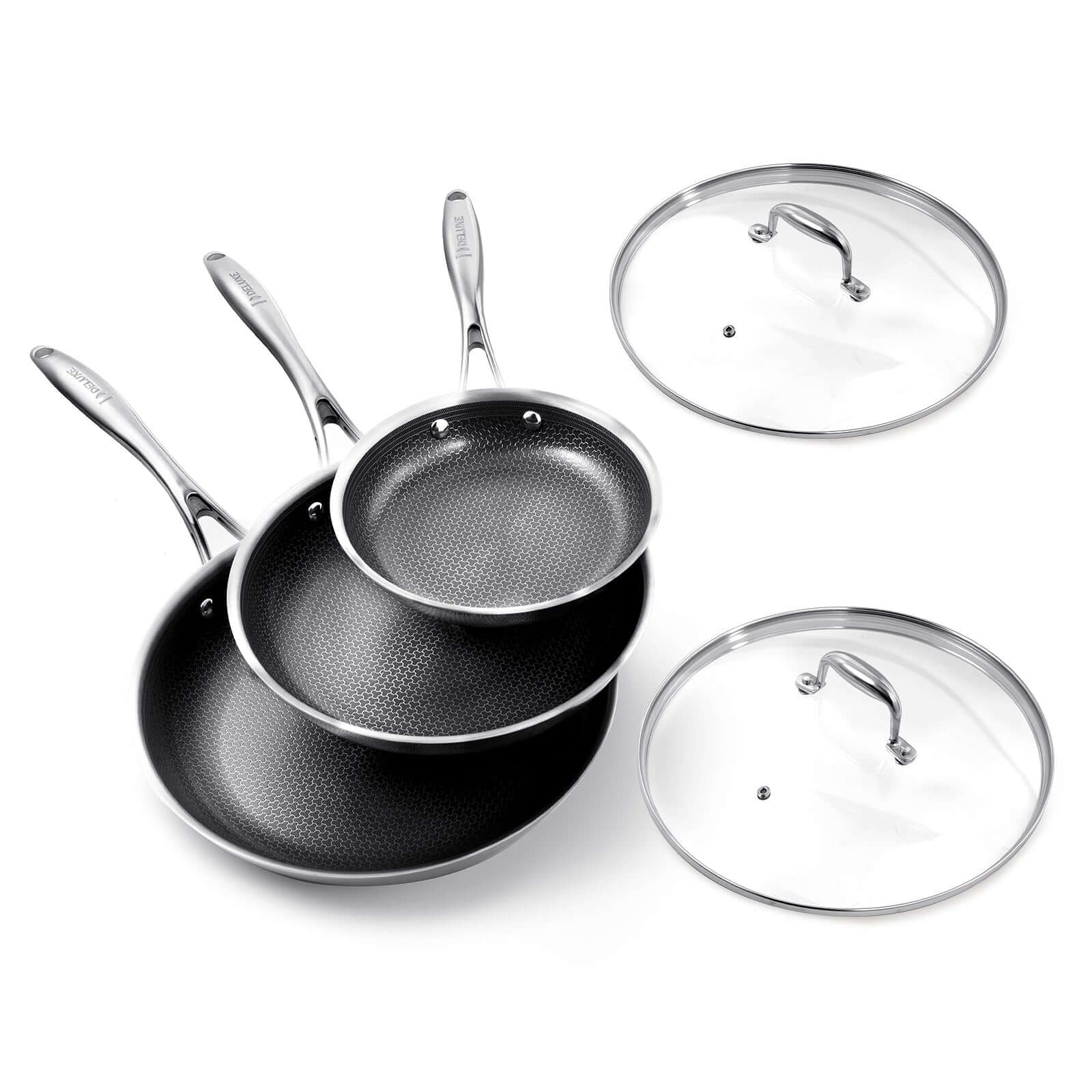
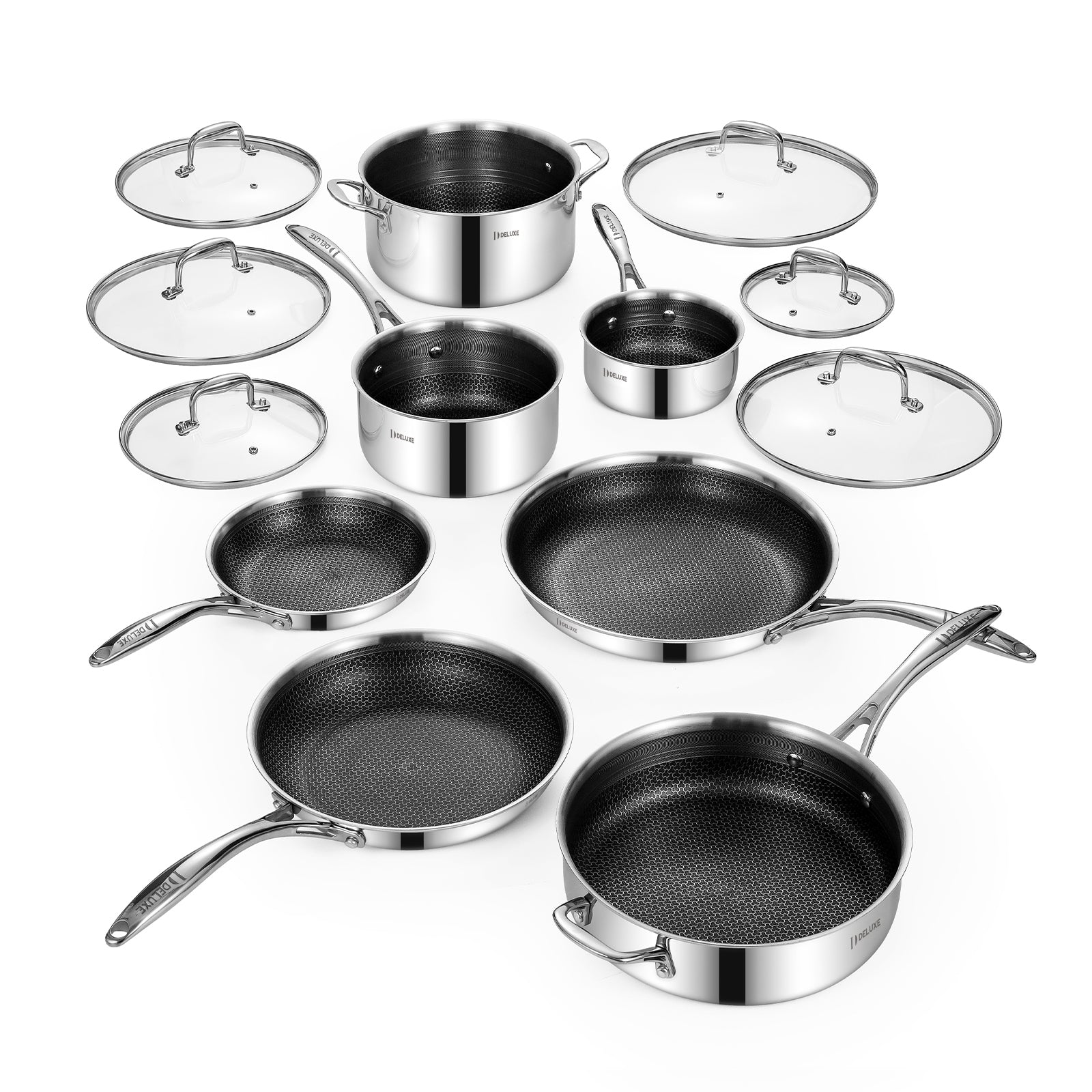
Once surface peeling begins, the degradation is irreversible. Advanced hybrid pans protect against this by utilizing raised stainless steel hex peaks that shield the recessed non-stick matrix from utensil abrasion. In a traditional pan, peeling signals complete coating failure, meaning the pan should be retired immediately.

2. Does Food Stick Even With Extra Oil?
A quality non-stick surface is engineered to minimize surface friction. If delicate foods like eggs tear and proteins adhere stubbornly despite adding oil, the surface has suffered thermal degradation. Over repeated heating cycles, the non-stick polymer chains break down permanently, as detailed in our guide on how long frying pans last.
When cooking residue binds directly to the pan matrix, no amount of gentle re-seasoning will restore the original glide. Once the low-friction layer is exhausted, the pan functions as a rough metal skillet that causes frustrating food buildup.

3. Check for a Warped or Wobbly Base
A skillet must maintain complete planar contact with your burner to distribute heat evenly. If your pan wobbles on a glass cooktop or cooking oil pools around the edges, the base has warped. This mechanical distortion frequently occurs when thin pans undergo thermal shock, such as running cold tap water over a blazing hot skillet.
A warped base permanently disrupts heat transfer between the stove and your ingredients, leading to uneven cooking and potential glass cooktop damage.

Uneven Heat Distribution
Warped metal creates air gaps between the burner and the pan base, producing localized hotspots where ingredients scorch while adjacent areas stay undercooked. Even a heavy aluminum core cannot overcome physical warping once the base loses full surface contact.
Incompatibility with Modern Cooktops
Induction and smooth glass-ceramic cooktops require a flat surface for magnetic coupling and energy transfer. A wobbly pan can fail to activate induction cooktop sensors or scratch delicate glass cooktop surfaces during regular cooking.
Oil Pooling and Burned Edges
When a pan crowns in the center, cooking oils migrate outward toward the perimeter. This leaves the center dry and prone to burning, while ingredients near the sidewalls simmer in excess fat.
Accelerated Coating Stress
A distorted base exerts mechanical tension across the non-stick surface during thermal expansion and contraction. This localized stress accelerates coating delamination along warped sections.
4. Look for Deep Scratches and Exposed Metal
While micro-abrasions from standard cleaning are normal, deep gouges that reveal the bare core metal indicate a compromised barrier. Exposing raw aluminum or steel eliminates the protective boundary between acidic ingredients and reactive base metals.
Tri-ply hybrid skillets prevent this problem by using raised stainless steel laser-etched patterns to shield recessed non-stick layers from metal utensils. On a standard skillet, deep grooves create several long-term cooking problems.

Potential for Metallic Leaching
Exposed base metals can react with acidic sauces containing citrus, tomatoes, or vinegar, imparting a noticeable metallic aftertaste and discoloring delicate sauces.
Bacterial Accumulation in Grooves
Narrow gouges trap microscopic food fibers and polymerized cooking oils that standard dishwashing sponges cannot clear. Over time, these crevices can harbor bacteria and stale odors.
Accelerated Flaking Along Seams
A deep gouge breaks the continuous surface film, allowing moisture and cooking fats to seep underneath the non-stick layer. As these liquids vaporize during cooking, they force the surrounding coating to blister and lift.
Permanent Loss of Food Release
Proteins bond directly to bare metal within scratch lines, creating anchor points that cause food to stick and tear during flipping.
5. Is the Handle Loose or Melting?
Cookware performance relies on physical safety as much as non-stick properties. A loose or damaged handle presents a burn hazard, especially when maneuvering a skillet filled with hot cooking liquids.
Inspect handle attachment points regularly. If mounting rivets or screws loosen and cannot be tightened securely, or if silicone and Bakelite grips show heat charring from gas burners, the handle's structural safety is compromised. A pan that cannot be held securely should be replaced immediately.

6. Identify Stubborn Stains and Carbon Buildup
Persistent brown or black discoloration across the cooking surface points to polymerized grease buildup. When cooking oils exceed their smoke point, they undergo chemical bonding with the pan surface, creating a hard, sticky varnish that prevents food from releasing cleanly.
High-heat exposure is the main contributor to this issue. Non-stick surfaces, including ceramic nonstick pans, should generally remain below 250°C (480°F). Because quality pans retain heat efficiently through an aluminum core, cooking on medium heat preserves the non-stick surface far longer.

7. Detect Strange Odors When Heating
A clean skillet should remain odorless when preheated. If placing a dry pan over medium heat produces a harsh, acrid, or chemical odor before ingredients are added, the synthetic coating is undergoing thermal breakdown.
At high temperatures or after years of wear, degraded coatings can emit chemical fumes. If your skillet smells unnatural during routine cooking temperatures, it indicates that the non-stick polymers have permanently deteriorated. Discard the pan and upgrade to a reliable, modern skillet.
Replace Your Frying Pan Today
Upgrading your cookware ensures consistent cooking results, effortless cleanup, and safety in the kitchen. If you spot flaking, base warping, or stubborn sticking, invest in high-performance nonstick frying pans to restore efficiency and enjoyment to your daily cooking routine.
FAQs About Replacing Nonstick Pans
Is it safe to use a nonstick pan with light surface scratches?
Minor superficial scuffs from everyday cleaning are generally harmless. However, if scratches penetrate down to the shiny metal substrate, replace the pan to avoid sticking, chemical wear, and coating flaking.
How long should a quality nonstick pan last?
A premium non-stick pan typically lasts between 2 to 5 years, depending on maintenance, utensil use, and heat control. When foods begin adhering even with cooking oil, the surface has reached the end of its useful lifespan.
Can you fix a warped frying pan base by hammering it?
No. Hammering a warped pan will fracture the brittle non-stick coating and weaken the metal core. Once thermal shock deforms the base, the pan will no longer distribute heat evenly on flat cooktops.
Why does my frying pan emit a chemical odor during preheating?
Chemical fumes indicate that the coating polymers are actively decomposing due to overheating, excessive age, or severe surface degradation. Discontinue use immediately and ensure proper kitchen ventilation.
Are ceramic nonstick pans more durable than traditional PTFE pans?
Ceramic pans provide high heat tolerance and are free of fluoropolymers, but their mineral coatings are more brittle. Dropping them or using metal utensils can cause chipping, which requires replacing the skillet.


