How to Choose a Sauté Pan With a Lid
A sauté pan with lid combines the broad cooking surface of a skillet with straight sides and a cover that can manage splatter, moisture, and gentle simmering. The useful choice is not simply the largest or heaviest model. It is the pan whose lid fits securely, capacity suits your meals, handles remain manageable when the pan is full, and components are compatible with your cooktop and oven. This guide explains how to compare those details without mistaking a material label or headline dimension for the complete answer.
What Should a Sauté Pan Lid Accomplish?
A lid should make the pan more versatile without making it awkward to monitor or move. Its first job is mechanical: it must sit securely on the rim. Its second job is culinary: it should slow evaporation when a recipe needs retained moisture, while still letting the cook manage pressure, steam, and visibility.
Fit the Rim Without Rocking
Set the lid on the empty pan and press lightly at several points around its edge. A well-matched lid should remain centered and should not seesaw across the rim. A small amount of movement can be normal, especially with a glass lid seated in a metal band, but a large gap allows more steam to escape and may produce distracting rattling during a simmer.
Balance Visibility, Venting, and Moisture Retention
A glass lid lets you check a simmer without lifting the cover, although steam can fog the view. A metal lid is opaque but may be lighter or more resistant to impact, depending on its construction. Neither option is automatically better. The practical question is how the lid supports the recipes you cook most often.
- For braises and covered simmering, look for a secure fit that limits rapid moisture loss.
- For foods that release abundant steam, a vent provides an additional path for vapor to escape, although it also increases moisture loss.
- For oven finishing, verify the lid, rim, knob, and any vent insert separately rather than judging the pan body alone.
Which Diameter and Capacity Fit Your Meals?
Sauté pans are commonly described by diameter, capacity, or both. Diameter indicates how much stovetop space the pan occupies, while capacity better reflects the volume available for sauce, vegetables, or liquid. Comparing both figures helps prevent a pan from looking spacious online but feeling cramped in use.
Estimate Portions and Liquid Volume
Before choosing a large sauté pan, picture its filled weight. A wider model holds more food and liquid, but the added load changes how comfortably it can be lifted, poured, or moved to the oven. Capacity should therefore be assessed together with handle design, not as an isolated selling point.
Match the Base to the Burner
The cooking base should sit stably over a suitable heating zone. A pan that greatly overhangs a burner can heat less evenly, while a very small pan on a broad gas flame may expose its sides and handle area to unnecessary heat. Utah State University Extension similarly advises keeping cookware diameter close to burner diameter in its cook-surface guidance. Induction models also require a magnetic base; see the induction cookware guidance.

How Do Straight Sides Change Cooking?
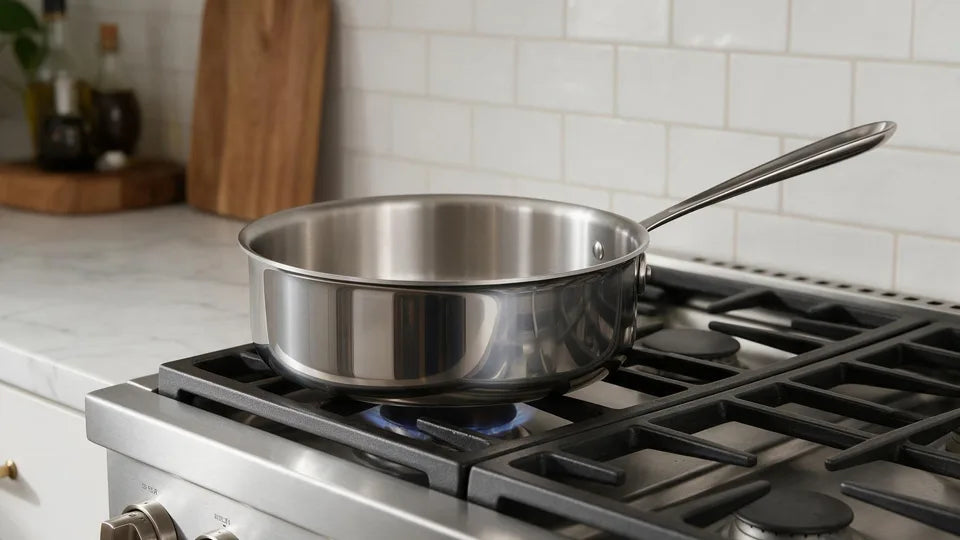
The defining difference between many sauté pans and slope-sided skillets is the wall shape. Straight sides increase usable volume and help contain sauces. They also change access for utensils, tossing, and evaporation, which is why a sauté pan and a frying pan with lid may overlap in purpose without behaving identically.
Hold Sauces and Ingredients Securely
Vertical walls make it easier to stir saucy dishes, shallow-braise vegetables, or turn pieces of meat without sending liquid over the edge. They are especially useful when a recipe moves from browning to deglazing and simmering in the same vessel. The lid then extends that control by slowing evaporation during the covered stage.
Provide a Broad Base for Browning
Construction influences how evenly the base responds. A stainless steel sauté pan may refer to exposed stainless steel or to a layered body with a conductive core. A ceramic sauté pan with lid may describe a ceramic-coated cooking surface rather than a pan made entirely from ceramic. Read the construction details instead of treating either phrase as a complete material specification.

Which Handle Setup Is Easier to Control?
Handle comfort is most meaningful when the pan is full. An empty display model can feel balanced even though several quarts of food make it front-heavy. Grip shape, attachment, clearance from neighboring burners, and the presence of a helper handle all affect real-world control.
Assess the Long Handle When Loaded
Check whether the main handle offers enough length for leverage without making the pan difficult to store. Its angle should keep knuckles away from the pan wall, and its surface should remain easy to grasp with a dry oven mitt. Metal handles can become hot, particularly near the oven or an adjacent gas flame, so a stay-cool description is not a substitute for sensible handling.
Use a Helper Handle When Provided
A helper handle gives the second hand a secure place to support a heavy load. It is particularly useful for transferring a large sauté pan, draining carefully, or carrying the pan from cooktop to table. Check that there is enough clearance for a mitt and that both handle attachments feel solid.
- Hold the long handle with your dominant hand and the helper handle with the other.
- Keep the pan level while lifting, especially when it contains hot liquid.
- Set it on a stable, heat-safe surface before releasing either grip.

What Must Be Checked for Oven Use?
Oven compatibility belongs to the complete assembly, not just the metal body. A pan may tolerate one temperature while its glass lid, knob, silicone insert, or handle covering has a lower limit. The lowest verified limit controls how the assembled pan should be used.
Verify Body, Handles, Lid, and Knob
Look for explicit oven guidance for every component and note whether the instructions distinguish covered from uncovered use. If the product page is unclear, consult the manufacturer before placing the lid in the oven. Never infer oven compatibility from appearance, and do not assume a replacement or universal lid shares the pan’s rating.
Treat Maximum Limits as Boundaries
A published maximum is a boundary under specified conditions, not a recommended everyday setting. Moderate heat is usually sufficient for coated cookware, and gradual preheating gives the cook more control. Follow the maker’s duration, lid, and preheating qualifications rather than repeating a temperature number without its context.
For our hybrid cookware, our official use and care guide emphasizes gentle preheating and low to medium heat. That guidance is more relevant to routine cooking than testing a maximum limit.

What Should You Confirm Before Buying?
The final comparison should be based on the exact listing, not on a category name or search snippet. Product families often include different diameters, capacities, handles, and lid packages. A short checklist helps separate confirmed details from assumptions.
Verify Exact Lid Inclusion
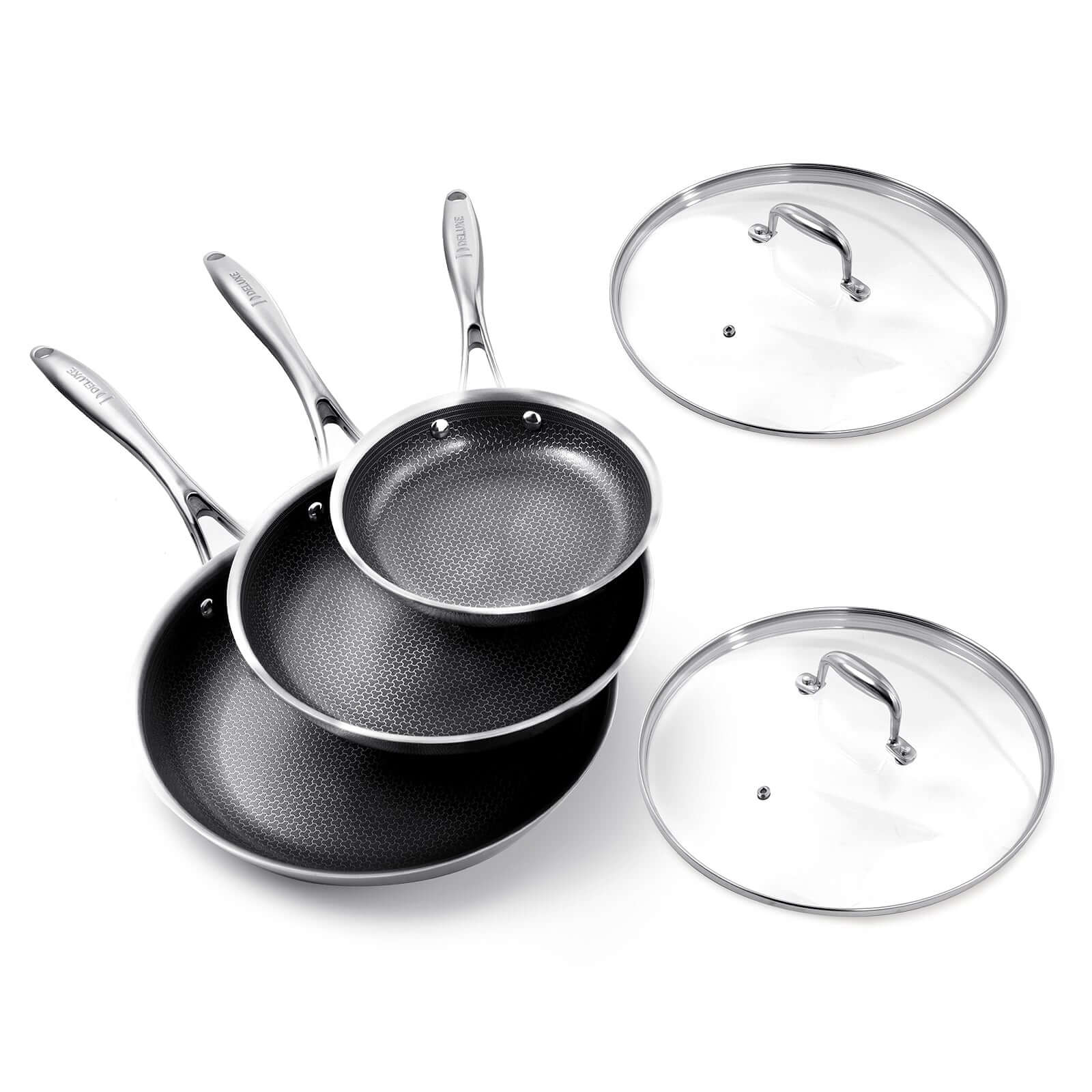
Read the product title, package contents, images, and specifications together. The words “with lid” should appear on the exact variant being purchased, and the images should show the same configuration. Also confirm whether the lid has a vent, what its knob is made from, and whether replacement lids are available.
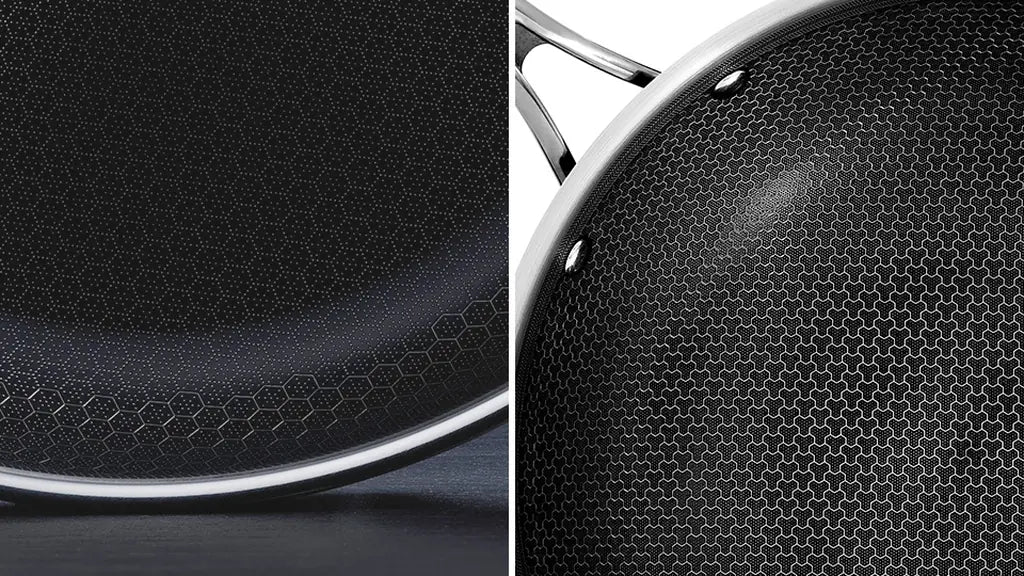
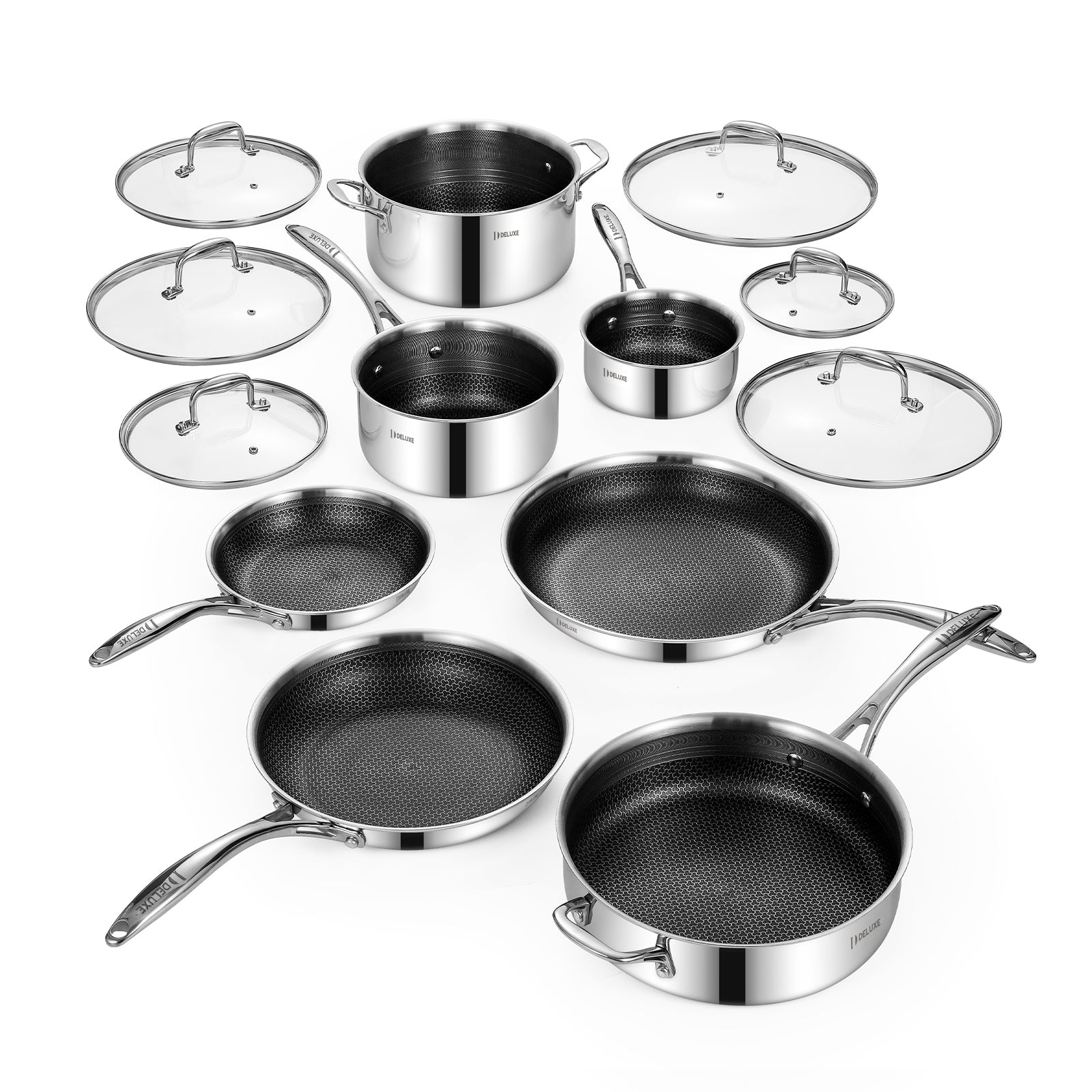
Our 3.7 Qt Hybrid Sauté Pan with Lid combines a ceramic nonstick surface with stainless steel layers, an aluminum core, and a magnetic stainless steel base. So it should be described as hybrid cookware rather than as a purely ceramic or purely stainless pan.
Compare Weight, Storage, and Care
A lid adds another piece to wash and store, while a helper handle increases the pan’s overall span. Measure the intended cabinet, oven, and cooktop area before ordering.
| Check | Why It Matters | Evidence to Find |
|---|---|---|
| Lid fit | Controls moisture and stability | Exact model name, rim fit, vent details |
| Capacity and base | Affects portions and burner coverage | Quarts, diameter, base dimensions |
| Handles | Affects lifting a filled pan | Grip shape, helper handle, attachment |
| Oven use | Lowest-rated component sets the limit | Body, lid, knob, handle instructions |
| Care | Protects coating and performance | Manufacturer cleaning and heat guidance |
Select a Sauté Pan With a Well-Fitted Lid
Start with the recipes you make, then compare lid fit, usable capacity, burner match, handle control, and verified oven guidance. A well-chosen sauté pan with lid should feel manageable when full and should support both uncovered browning and covered simmering. Explore our hybrid sauté pan collection to compare currently available lidded options, and confirm the exact size and package contents before adding one to your kitchen.
Frequently Asked Questions About a Sauté Pan With a Lid
Q1: Should I Store a Sauté Pan With the Lid On?
Usually, leaving the lid slightly open or storing it separately allows trapped moisture to escape. If you stack cookware, place a soft pan protector between pieces so the lid, rim, and cooking surface are not scratched during storage.
Q2: How Should a Glass Lid Be Cleaned Around the Rim?
Usually, warm soapy water and a soft sponge are sufficient. Pay attention to the area where glass meets the metal rim, since residue can collect there. Avoid sharp tools or aggressive scrubbing, and stop using the lid if the glass or rim becomes loose.
Q3: Can a Sauté Pan With a Lid Be Used for Steaming?
Sometimes, provided the pan is deep enough for a compatible rack or steamer insert and the lid closes securely above the food. Keep enough water in the pan to generate steam without touching the food, and follow the instructions for the insert and cookware.
Q4: Is Cosmetic Discoloration a Sign That the Pan Has Failed?
Usually not. Exterior discoloration or mineral residue may affect appearance without making the pan unusable. Inspect the base, rim, handle, and cooking surface separately. Warping, loose hardware, cracks, or peeling material require more attention than a color change alone.
Q5: When Should a Sauté Pan Lid Be Replaced?
Replace it when the glass is cracked, the rim is badly distorted, or the handle can no longer be secured. A damaged lid may fit unpredictably or worsen with heating, so it should not be treated as a minor cosmetic problem.